Post by : Monika
The situation for mothers and newborn babies in Gaza has reached a breaking point. According to UNICEF, the condition of health services for women and infants is now worse than ever before. Hospitals are running out of supplies, doctors are overwhelmed, and many babies are fighting for their lives without enough oxygen or medicine.
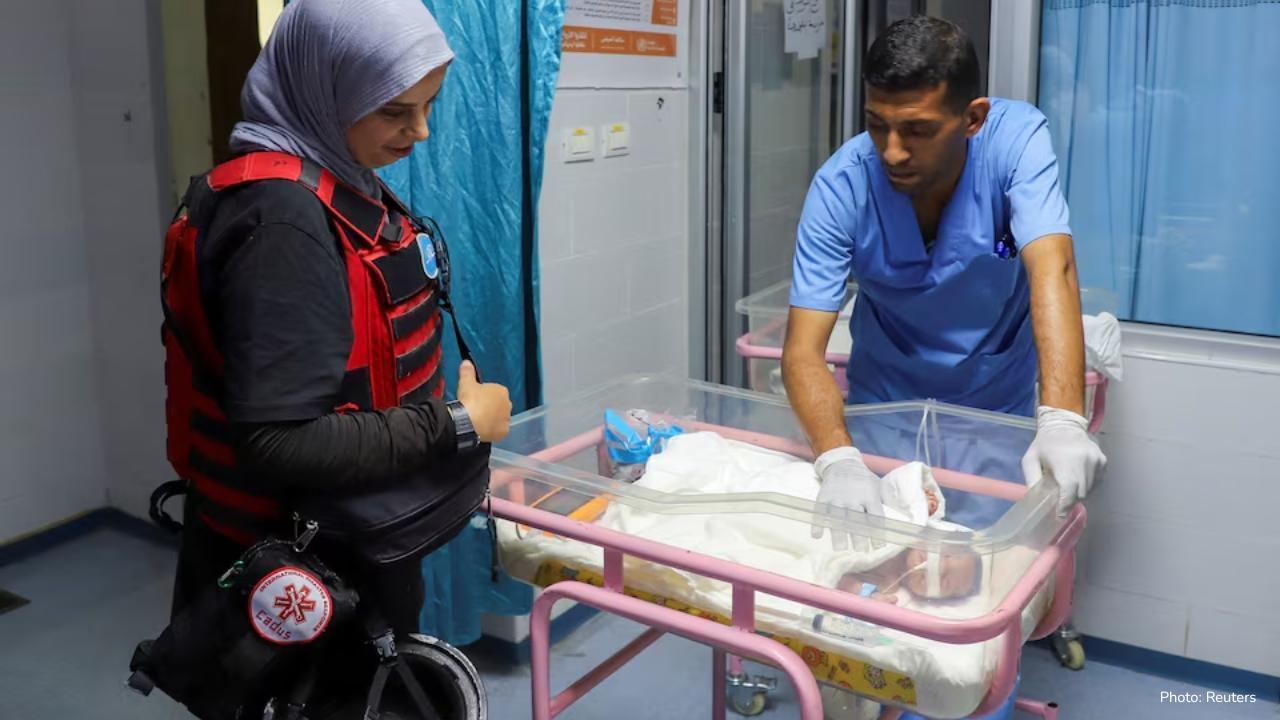
In the southern city of Khan Younis, Nasser Hospital has become one of the last major medical centers still functioning in Gaza. It is filled with mothers who have just given birth, many of whom are not even in hospital beds. Instead, they are lying on blankets spread across the corridors. Nurses are doing their best to care for them, but the situation is chaotic.
The World Health Organization (WHO) has described the Gaza health system as being on the edge of total collapse. Out of 36 hospitals across the Gaza Strip, only 14 are still partly functional. That means more than half the hospitals cannot provide full care for patients. Some have been damaged in airstrikes, while others have no electricity, clean water, or medical supplies left.
A Life-and-Death Struggle for Newborns
One of the most shocking reports comes from Nasser Hospital’s neonatal unit, where premature babies are kept alive using oxygen. Due to the shortage of oxygen supplies, doctors were forced to make an impossible choice. Three babies had to share a single oxygen tube. Each baby was given about 20 minutes of oxygen before the next one took a turn. Nurses said that while one baby was breathing, the other two cried and gasped for air.
Doctors say that these babies have almost no chance of survival without stable oxygen and proper care. The staff has been working nonstop, often without sleep or food, because there are not enough workers to handle the crisis.
The hospital’s maternity ward, which was built for about 30 patients, now holds more than 100 mothers and newborns. Many women give birth without pain medicine or clean equipment. There are reports that mothers are bleeding heavily after childbirth, and doctors have no blood transfusion supplies left.
The Humanitarian Situation in Gaza
The humanitarian crisis in Gaza has been worsening for months. Bombings, blockades, and shortages of fuel have left hospitals unable to function properly. Power cuts last for hours every day, and generators often run out of fuel. Without electricity, incubators for premature babies stop working. Many newborns die simply because machines turn off.
Health workers say that they are living through the most difficult time of their lives. Every day, they have to decide who receives treatment and who cannot. Many patients die waiting for surgery or medicine that never comes.
Mothers are also suffering from malnutrition. With little food available, pregnant women are weak and undernourished, which increases the risk of complications during childbirth. Some women have not eaten proper meals for days, surviving only on bread and water.
UNICEF and WHO Raise Alarm
UNICEF officials have said that the situation in Gaza for mothers and babies “has never been worse.” The organization is calling for an immediate ceasefire to allow humanitarian aid to enter freely. UNICEF representatives warn that if help does not reach hospitals soon, thousands of children and mothers may die in the coming weeks.
WHO has also sent warnings that Gaza’s health system cannot survive much longer under current conditions. Its representatives described the scenes at Nasser Hospital as heartbreaking — with patients lying on the floor, nurses crying out of exhaustion, and families begging doctors to save their loved ones.
A WHO official who recently visited Gaza said he had never seen the hospital so overcrowded. People from the north, where fighting is heavier, are fleeing to the south in search of safety and medical care. But hospitals in the south are already stretched beyond capacity. Every corner is packed with patients — operating rooms, hallways, and even staircases.
The Struggle for Aid
International aid organizations have been urging for the safe delivery of medical and food supplies into Gaza. However, trucks carrying aid often face long delays at the borders. Some aid convoys are stopped for inspections, while others are unable to pass due to damaged roads or security concerns.
Israel says that there is no limit on humanitarian aid allowed to enter Gaza, but claims that some of it is being seized by Hamas instead of reaching civilians. Hamas, on the other hand, denies this accusation and says Israel is intentionally slowing down or blocking the aid.
As the argument continues, ordinary people in Gaza suffer the consequences. Hospitals are begging for oxygen tanks, medicines, and surgical supplies. Doctors say they are forced to reuse old bandages and sterilize them with limited resources. Many surgeries are being performed without anesthesia because supplies have run out.
The Lives of Mothers in Gaza
For mothers in Gaza, giving birth has become a terrifying experience. With hospitals overwhelmed, some women are giving birth at home or in temporary shelters. These births are often unsafe because there are no trained doctors or clean tools available.
Many women have lost babies due to complications that could have been prevented with proper medical care. Nurses say that some mothers are so weak after giving birth that they faint or go into shock. The emotional trauma is immense — women who have lost their homes, their families, and now their newborns are left hopeless and broken.
A midwife working at Nasser Hospital said she has never seen anything like this in her 20 years of work. “We try to help everyone, but we have no tools, no medicine, no space,” she said. “We cry every day.”
Children Caught in the Crisis
Children are the most affected by this humanitarian disaster. UNICEF estimates that hundreds of thousands of children in Gaza are suffering from hunger, trauma, and lack of medical care. Many have lost their parents in the bombings. Others are growing up in shelters without clean water or proper food.
Schools are closed, and playgrounds have turned into shelters. The sound of explosions and the sight of destruction have become normal for many children. Psychologists say that the trauma of war could affect these children for the rest of their lives.
Calls for Immediate Action
UNICEF, WHO, and several international organizations are calling for an urgent ceasefire to allow aid into Gaza safely. They say that medical supplies, food, and fuel must reach hospitals immediately to prevent further loss of life.
They also urge all parties in the conflict to protect civilians, especially women and children. Humanitarian corridors must remain open so doctors and nurses can do their work without fear.
Several countries have expressed concern about the worsening situation. World leaders and humanitarian groups are discussing ways to deliver emergency aid faster. But on the ground, time is running out. Every minute counts for newborns who depend on machines and oxygen to survive.
A Plea for Humanity
The story from Gaza is not just about politics — it is about human lives. Behind every statistic is a mother holding her newborn, praying that the electricity stays on for another hour. It is about doctors who work through the night without rest, and children who cry not from hunger alone but from fear.
As one UNICEF spokesperson said, “No mother should ever have to watch her baby die because there is no oxygen or medicine. The world must not turn away.”
The crisis in Gaza is now one of the worst humanitarian emergencies in the world. The suffering of mothers and babies shows how fragile the healthcare system has become. Without urgent international help, thousands more lives could be lost.
For Gaza’s families, each new day brings the same struggle — to find food, medicine, and safety. And for the doctors and nurses who remain, it is a daily battle to save as many lives as they can with whatever little they have left.









Mattel Revives Masters of the Universe Action Figures Ahead of Film Launch
Mattel is reintroducing Masters of the Universe figures in line with its upcoming film, tapping into

China Executes 11 Members of Criminal Clan Linked to Myanmar Scam
China has executed 11 criminals associated with the Ming family, known for major scams and human tra

US Issues Alarm to Iran as Military Forces Deploy in Gulf Region
With a significant military presence in the Gulf, Trump urges Iran to negotiate a nuclear deal or fa

Copper Prices Reach Unprecedented Highs Amid Geopolitical Turmoil
Copper prices soar to all-time highs as geopolitical tensions and a weakening dollar boost investor

New Zealand Secures First Win Against India, Triumph by 50 Runs
New Zealand won the 4th T20I against India by 50 runs in Vizag. Despite Dube's impressive 65, India