Post by : Priya
Photo:Reuters
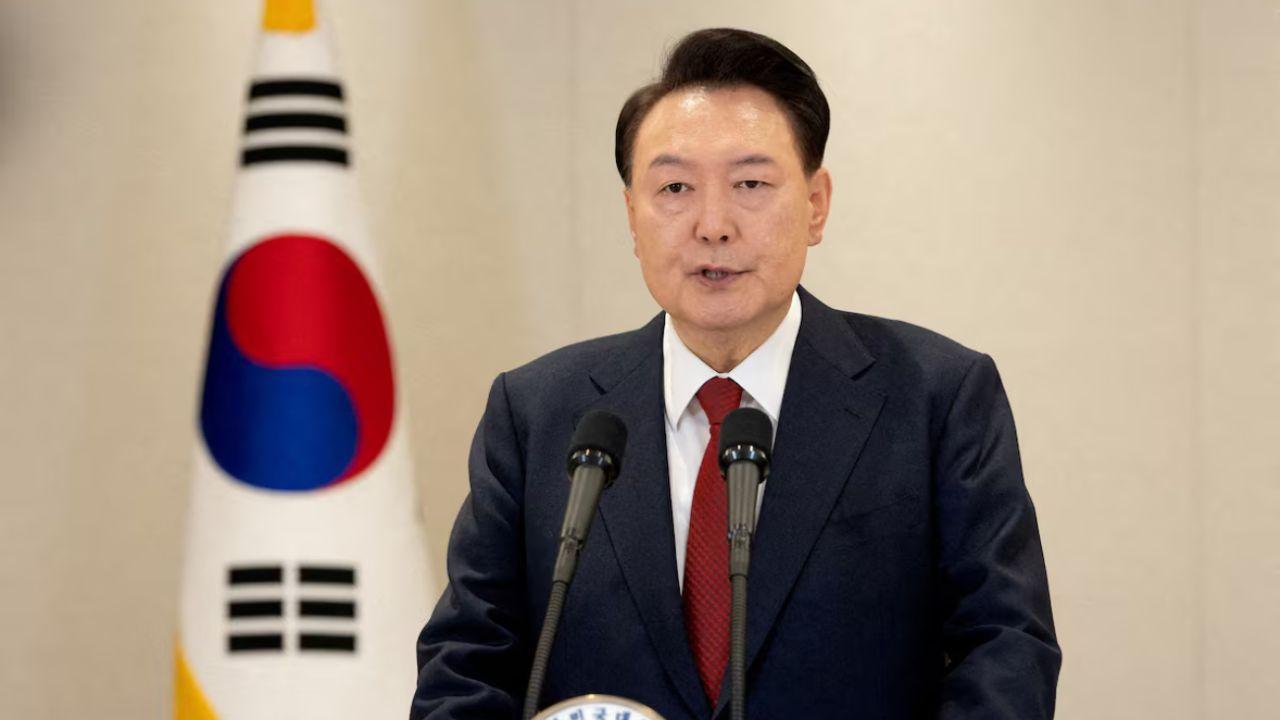
In a country known for its rapid development, strong democratic institutions, and proud civic spirit, South Korea has once again found itself facing a political storm. Former President Yoon Seok-youl, who once held the nation’s highest office, has been arrested for the second time. This time, the allegations are extremely serious: he is accused of helping plan to impose martial law to stay in power during public protests.
The news has caused widespread shock and raised deep questions about the nature of leadership, the responsibility of elected officials, and the power of the military in a democratic society. The arrest of a former leader for plotting against the very foundation of democracy is not just a legal case — it is a test of South Korea’s values and its commitment to truth, justice, and transparency.
In this comprehensive editorial, we explore the full background of this case, the significance of the charges, the political history of South Korea, and the larger meaning this situation holds not only for the Korean people but for democracies around the world.
Who is Yoon Seok-youl?
Yoon Seok-youl, a former prosecutor general, rose quickly in South Korean politics. Known for his tough image and bold public statements, he built a political identity as someone who would clean up corruption and protect law and order. In 2022, he was elected President of South Korea as a conservative candidate, defeating his progressive rivals in a close race.
During his time in office, Yoon focused on strengthening ties with the United States, taking a hard stance against North Korea, and promoting business-friendly policies. However, his leadership was often criticized as being too rigid. Many felt he was dismissive of public opinion and unwilling to compromise. Protests against some of his policies grew louder, especially from students, labor unions, and human rights activists.
While his supporters saw him as a strong protector of national interests, his critics viewed him as someone unwilling to listen to the people — a trait that now takes on darker meaning as fresh accusations come to light.
What Is Martial Law — And Why It’s Serious
Martial law is when a government temporarily hands over control of the country to the military during a time of crisis. It is a rare and extreme measure. Under martial law, normal laws are suspended, military forces control the streets, and basic freedoms such as protests, media activity, and public gatherings can be banned.
South Korea has a painful history with martial law. During the 1970s and 1980s, the country was ruled by military dictators. Students, workers, and civilians often faced violence for protesting. It was only through long, brave struggles that South Korea moved toward democracy.
To hear that a modern leader may have secretly planned to bring back martial law — not because of war, but to crush protests — is a deeply disturbing possibility.
The Allegations Explained
According to prosecutors and reports from South Korean media, the investigation against Yoon has revealed documents, meetings, and communications suggesting that his administration considered imposing martial law during the height of protests in Seoul in 2023.
The protests, while loud and disruptive at times, were peaceful and part of the democratic process. Protesters were demanding more transparency, justice for corruption cases, and better protection for workers and students.
Instead of opening a dialogue, some members of the government — allegedly including Yoon — are believed to have discussed calling in the military. Their goal, prosecutors say, was to shut down the protests quickly and forcefully, allowing the government to stay in control without facing political pressure.
If this is proven true, it would mean a direct attack on the democratic rights of South Korean citizens.
The Second Arrest
This is not Yoon’s first time facing legal trouble. He has previously been questioned and briefly detained on other corruption-related charges. However, he was released due to lack of strong evidence at the time.
Now, with new documents and testimonies reportedly coming from within his own administration, prosecutors say the case is much stronger.
In early July 2025, Yoon was officially arrested again and taken into custody. He is now being held in a secure detention center in Seoul while investigators continue to collect evidence.
The court has approved his arrest, stating that the charges are serious enough to justify detention, and that Yoon might influence witnesses or destroy evidence if he remains free.
Legal Process Ahead
Under South Korean law, even a former president has no special legal protection once out of office. Yoon will face a full trial, likely beginning later this year. If convicted, he could face many years in prison.
The charges against him may include:
Conspiracy to subvert democratic order
Abuse of power
Interference with civilian government processes
Misuse of military authority
His legal team has denied all allegations, saying that any discussions of martial law were only hypothetical and never intended to be acted upon. They argue this is a political attack aimed at damaging Yoon’s image.
However, prosecutors insist they have hard evidence that goes beyond speculation — including meeting notes, internal memos, and possible witness testimonies.
Public Response and Protests
The news of Yoon’s arrest has led to mixed feelings across South Korea. Some citizens are angry and feel betrayed. They say they trusted Yoon as a leader, only to discover he may have plotted against the people.
Others feel hopeful. They see this as a sign that the justice system works and that no one — not even a former president — is above the law.
Civic groups, university students, and opposition political leaders have organized peaceful rallies in support of the investigation. They are calling for full transparency and a public release of the findings.
Meanwhile, Yoon’s loyal supporters claim he is being unfairly targeted and warn that the arrest could be used to silence conservatives.
South Korea’s Democratic Journey
South Korea’s road to democracy has not been easy. From colonial rule to military dictatorship and finally free elections, the country has paid a high price for its current freedoms.
This is why any attempt to bring back military control, even for a short time, is seen as dangerous. For many South Koreans, democracy is not just a system of government — it is a hard-won right passed down from the generations who fought for it.
The current crisis has made many people reflect on the lessons of the past. They are asking important questions: Can democracy survive if leaders are willing to destroy it to keep power? What protections are in place to stop this from happening again?
International Reaction
World leaders and international human rights groups are closely watching the situation in South Korea. Many nations, especially those in Europe and North America, have expressed concern.
The United Nations Human Rights Office has issued a statement supporting the investigation and urging South Korea to protect its democratic institutions.
At the same time, analysts warn that this case could weaken South Korea’s global image as a stable and fair democracy — at least in the short term.
However, if handled properly, it could also strengthen that image in the long run by showing the world that South Korea holds even its top leaders accountable.
The Role of the Military
The military’s role in this situation is also under investigation. So far, no top military officials have been arrested, but prosecutors are looking into whether some generals were involved in the planning discussions.
South Korea’s modern military has mostly stayed out of politics in recent decades. If it is found that senior officers were willing to help enforce martial law on civilians, it could lead to a major reshuffling of the military leadership.
This could also impact the trust between the public and the armed forces, something that has remained strong since the transition to democracy.
A Crossroads for South Korea
The next few months will be crucial for South Korea. The trial of a former president for allegedly plotting to use military power against his own people is not something any country takes lightly.
The court’s decision, and the public’s reaction, will shape the nation’s future for years to come.
Will this moment be remembered as a dark chapter, or as a turning point toward stronger accountability? That depends not only on judges and lawyers but on the courage of the media, the patience of the public, and the strength of democratic institutions.





Anticipated Dates for UAE Eid Al Adha 2026 Unveiled by Astronomical Experts
Experts predict Eid Al Adha 2026 in the UAE to start on May 27, prompting early holiday planning amo

DAE Achieves Remarkable Growth in Q1 2026 With Record Revenue
Dubai Aerospace Enterprise announces impressive financial results for Q1 2026, reflecting a surge in

Price Increase for Sony PS5 in Southeast Asia Effective May 1
Sony announces a price increase for the PS5 across Southeast Asia starting May 1, 2026, impacting ga

Potential ‘Super El Niño’ in 2026: Understanding the Climate Risks
Could a Super El Niño emerge in 2026? Discover its implications and potential global climate impacts

Global Energy Crisis Intensifies: Markets React to Oil Supply Challenges
Markets are on edge as oil disruptions escalate, influencing prices and economic stability. Explore

Must-See Tourist Spots in London You Can't Overlook
Explore London's essential attractions, from royal landmarks to vibrant markets, ensuring an unforge




