Post by : Anees Nasser
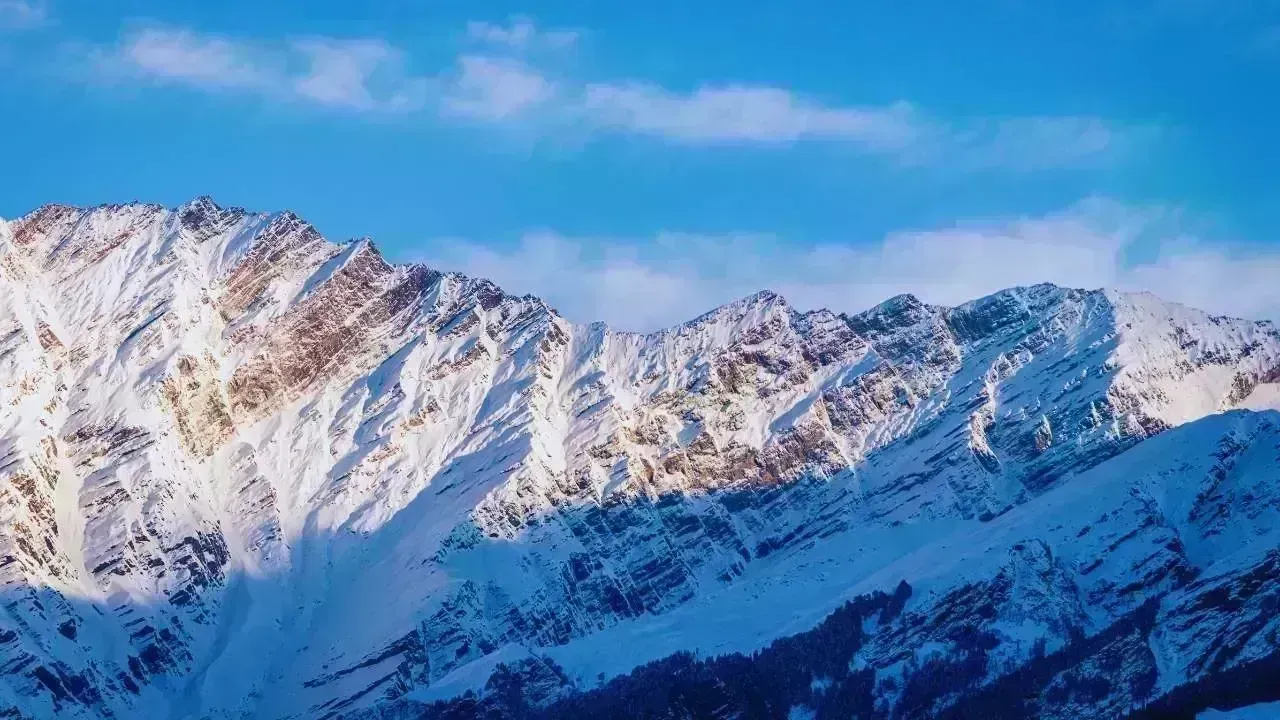
Historically, the Eastern Himalayas were reliable. Winters brought light snowfall, summers offered refreshing coolness, and rivers operated in a predictable rhythm that residents knew well. Local markets thrived with seasonal visitors, while forests provided a sanctuary against extreme weather.
Now, the landscape experiences a dramatic transformation.
Temperatures rise. Rainstorms strike unexpectedly with intensity. Natural springs run dry. Once-lush slopes become vulnerable to wildfires, and shrinking glaciers create lakes that threaten inundation. Hill towns, which once seemed immune to climate chaos, now find themselves at risk.
From Sikkim and Arunachal Pradesh to northern West Bengal, as well as parts of eastern Nepal and Bhutan, communities recognize a hard truth backed by science: the Eastern Himalayas are warming at an alarming rate.
This article delves into how this rapid warming is altering life in hill towns, the increasing likelihood of disasters, and the reason physical maps are evolving to portray a starkly different future.
The Eastern Himalayas fulfill multiple essential roles:
They regulate climate
They supply freshwater
They serve as biodiversity corridors
They represent cultural sanctuaries
They act as geological buffers
The rivers originating from these heights sustain millions downstream. Forests bind soil, modulate rainfall, and cool vast regions. When this area changes, half of eastern South Asia experiences the repercussions.
Global scientific bodies, including the Intergovernmental Panel on Climate Change, have marked these mountainous areas as warming even faster than their lowland counterparts.
Higher elevations encounter shifts in temperature sooner and with greater intensity, making the nature of warming distinct.
In the last two decades, the Eastern Himalayas have seen consistent temperature rises, particularly in winter. Winters are shortening, snowlines are shifting upwards, and colder nights are becoming rare.
This is critical because colder temperatures naturally govern:
Icy formations
Stability in river flows
Soil moisture levels
Cycles of forest growth
Without cold, the entire system risks destabilization.
Rainfall patterns are increasingly erratic; instead of steady, gradual rainfall, communities experience sudden deluges. Long stretches of dryness now culminate in violent downpours.
This leads to:
Flash floods
Landslides
Erosion of soil
Bridges being washed away
Surges in river levels
Communities struggle to adjust to this unpredictability.
Glaciers, crucial for gradually feeding rivers, are diminishing rapidly, which leads to two significant issues:
Water supply becomes irregular
Glacial lakes form and quickly expand
The threat of glacial lake bursts is no longer a remote possibility; as lakes grow, the risk of catastrophic floods escalates.
Most hill towns were established under predictable weather norms. Roads were built close to slopes without robust support, and homes used traditional materials without flood-proof measures. Marketplaces thrived beside calm rivers.
Today, torrential rains, soil erosion, and overflowing rivers present new challenges.
Structures that were never meant to withstand climate swings are now crumbling.
Previous maps identified low-lying areas as flood risks and steep hillsides as landslide threats. These premises have altered dramatically due to recent warming.
Consequently:
New landslide threats emerge where none had been previously marked
Flooding zones now encroach upon areas once thought safe
Forest fire threats expand into previously moist regions
River behavior becomes unpredictable
Old boundaries for hazard assessments provide little guidance in this shifting environment.
Local authorities and urban planners are now increasingly depending on updated risk assessments, utilizing:
Satellite imaging
Studies of rainfall trends
Simulations of river flows
History analyses of landslides
Agencies like the India Meteorological Department often provide scientific backing for this critical process, monitoring long-term climatic signals in the mountains.
These updated maps are now vital in determining:
Safe construction zones
Necessary relocations of roads
Placement of emergency shelters
Undeveloped zones for safety
Maps have evolved from simple geographic tools to essential manuals for survival.
Many towns in the Himalayas rely on underground springs rather than rivers. These springs:
Recharge at a slow pace
Rely on consistent rainfall
Are vulnerable to temperature shifts
Rising temperatures disrupt groundwater flow, causing drier conditions as less rainfall penetrates the surface.
This results in:
Water rationing
Dependence on water tankers
Conflict over dwindling resources
Migration away from vulnerable regions
Scarcity of water alters settlement patterns drastically.
Species accustomed to colder climates are in decline as invasive plants take root with shifting weather.
Consequences include:
Weakened soil stability
Increased risk of fires
Fragmentation of ecosystems
Erratic migration of wildlife
Forests are becoming less protective, transforming from climate shields into vulnerable ecosystems themselves.
Landslides give little warning, arising from:
Saturated soils
Excessive rainfall
Deforestation
Road infrastructure
Vibrations from construction
The effects of climate change exacerbate all these contributing factors.
Hill towns are just realizing the dangers that arise not through sudden chaos, but through the inevitability of landslides.
Tourism is a key economic driver for Eastern Himalayan towns, encompassing:
Local accommodations
Trekking opportunities
Transportation
Winter recreational activities
Adventure sports
However, escalating landslides and unpredictable rain:
Disrupt transportation
Diminish tourist confidence
Impact seasonal revenue
Threaten jobs
Climate instability poses a significant threat to livelihoods.
Climate change brings forth:
Increased incidence of mosquito-borne diseases
Respiratory illnesses linked to wildfire smoke
Mental health challenges from disaster exposure
Waterborne diseases following flash floods
Health infrastructure remains ill-equipped for these climate-related crises.
Barriers arise when:
Roads are washed away
Landslides occur
Power outages are frequent
Water scarcity become severe
Students leave schools behind as education suffers quietly amid climate challenges. Long travel routes in hazardous conditions make regular attendance impossible.
New constructions are now:
Built at higher elevations
Enhanced with reinforcements
Designed to withstand weather extremes
Equipped with proper drainage
Traditional techniques are merging with modern engineering solutions.
Communities are proactively:
Relocating to higher ground
Avoiding proximity to rivers
Leaving unstable slopes behind
It is a painful yet necessary choice for the sake of survival.
Hill towns are now employing:
Alerts for rainfall
Monitoring river levels
Community radio operations
Siren alarms
Mobile alerts
Enhanced preparedness is crucial for reducing panic.
Residents are becoming aware of:
Evacuation routes
Warning signs in the environment
Indicators of potential landslides
Emergency communication strategies
Awareness is proving to be a critical protective measure.
If current trends continue:
Villages may need to relocate entirely
River patterns could change dramatically
Forest ecosystems will alter significantly
Tourism revenue may drastically decline
Increased migration may occur
The Eastern Himalayas could be virtually unrecognizable.
Cities and agricultural regions downstream rely heavily on the stability provided by the Himalayas.
Alterations in the mountains lead to:
Floods impacting urban areas
Sediments compromising dam efficiency
Shifts in water patterns
Negative impacts on agriculture
The challenges of these hills resonate beyond their physical boundaries.
Unmeasured development exacerbates disaster impacts.
Trees serve as:
Climate regulators
Soil stabilization agents
Natural flood barriers
Biodiversity protectors
Neglect of forest conservation is perilous in a warming climate.
Visitors must:
Honor the fragile ecosystems
Minimize waste generation
Support local conservation initiatives
Refrain from visiting during hazardous seasons
Tourism needs to evolve responsibly to sustain itself.
The options are clear:
Adapt to new realities now
Or
Face dire consequences later
Neutrality is not an option in a warming climate.
Mountains have historically symbolized stability.
Yet today, they are changing at a pace unparalleled by plains.
The Eastern Himalayas are undergoing transformation—not just as an abstract notion, but as a concrete reality. As disaster maps shift, it signals more than just geographic changes; it represents a reorganization of life around emerging risks.
Hill towns are taking action.
They are relocating homes.
They are reshaping schools.
They are redesigning roads.
They are envisioning new futures.
Maps are evolving.
And with them, the narrative of the mountains themselves.
This article is intended solely for informational purposes and should not act as scientific or legal advice. Since climate conditions differ regionally, it is advisable for readers to consult local authorities and official disaster management organizations for advice tailored to their situation.








Anticipated Dates for UAE Eid Al Adha 2026 Unveiled by Astronomical Experts
Experts predict Eid Al Adha 2026 in the UAE to start on May 27, prompting early holiday planning amo

DAE Achieves Remarkable Growth in Q1 2026 With Record Revenue
Dubai Aerospace Enterprise announces impressive financial results for Q1 2026, reflecting a surge in

Price Increase for Sony PS5 in Southeast Asia Effective May 1
Sony announces a price increase for the PS5 across Southeast Asia starting May 1, 2026, impacting ga

Potential ‘Super El Niño’ in 2026: Understanding the Climate Risks
Could a Super El Niño emerge in 2026? Discover its implications and potential global climate impacts

Global Energy Crisis Intensifies: Markets React to Oil Supply Challenges
Markets are on edge as oil disruptions escalate, influencing prices and economic stability. Explore

Must-See Tourist Spots in London You Can't Overlook
Explore London's essential attractions, from royal landmarks to vibrant markets, ensuring an unforge




