Post by : Anees Nasser
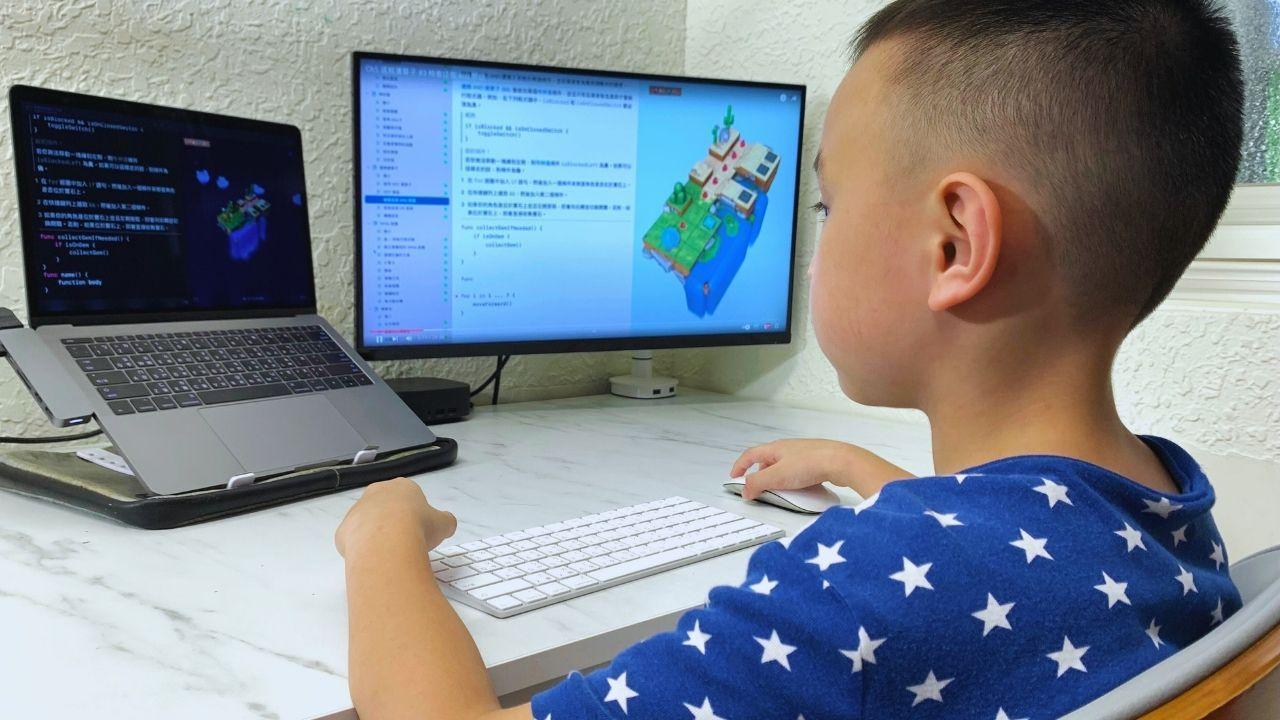
In the modern era, technology has become as essential to our lives as reading and writing once were. Screens are now a part of early education, and parents across the globe are reimagining what “learning” should look like for their children. Among the most fascinating developments is the push to teach coding to children before they even enter kindergarten.
This movement, once reserved for gifted programs or high-school electives, has moved into nurseries, living rooms, and preschools. Parents are enrolling their toddlers in “baby coding boot camps,” apps are being designed to gamify programming logic for three-year-olds, and educators are debating what this shift means for cognitive development. The question isn’t whether children can learn to code early—it’s whether they should.
Parents today are navigating a world defined by algorithms, automation, and artificial intelligence. They want their children to not just use technology but understand how it works.
The motivation behind early coding stems from the belief that coding is the “new literacy.” Just as reading opens doors to communication, coding is seen as the key to creativity and problem-solving in a digital age. It teaches logic, sequencing, and persistence — skills that go far beyond writing lines of code.
For many parents, introducing coding is not about turning children into software engineers; it’s about helping them develop structured thinking early on. A three-year-old might not understand JavaScript, but they can learn patterns, cause-and-effect, and digital logic through fun activities.
The rise of coding toys and platforms for toddlers has accelerated this trend. Brands have launched screen-free coding kits that use colorful blocks, interactive storybooks, and robotic toys to teach the basics of computational logic.
Apps like those that feature drag-and-drop programming are also simplifying the process. Children can move visual elements on screens to make characters perform actions, gradually building an intuitive understanding of how coding works.
Preschools too are jumping on board, integrating digital playrooms equipped with programmable robots and visual coding platforms. The idea is to merge play with learning, allowing children to explore technology naturally instead of forcing structured lessons.
Parents are no longer just consumers of educational technology; they are facilitators. Many parents who work in tech or digital industries see coding as an essential skill for the future, one that should be nurtured as early as possible.
For them, learning code is comparable to learning a second language. The earlier children are exposed, the easier it becomes for them to internalize the logic. Some parents also view coding as a bonding activity — instead of bedtime stories, they build mini digital games together or experiment with programmable toys.
However, not every parent shares the same enthusiasm. Critics argue that pushing young children too early into structured digital activities can hinder imagination, emotional intelligence, and outdoor play. The debate remains divided between innovation and traditionalism.
Child development experts emphasize that early exposure to coding concepts can indeed support cognitive growth — but with balance. Coding builds executive functions such as memory, focus, and flexible thinking. It encourages children to break problems into smaller parts and persist through trial and error.
However, most specialists agree that such learning should be experiential, not academic. For instance, instead of sitting children in front of computers, educators recommend physical coding activities — like guiding a toy robot through an obstacle course or using story cards to create “if-then” sequences.
The key takeaway: children benefit most when learning feels like play. Coding, when presented creatively, becomes a natural extension of curiosity rather than an academic burden.
Countries like Japan, Singapore, and Finland have already incorporated coding fundamentals into their early education systems. In India, the United States, and the UAE, startups are racing to introduce accessible coding programs for young learners.
The motivation is largely economic and futuristic. Governments and parents recognize that tomorrow’s job market will rely heavily on digital literacy. Whether in art, architecture, or agriculture, technology will drive efficiency and creativity — and coding acts as the universal translator across fields.
Interestingly, this movement also reflects cultural values. In tech-forward nations, coding represents empowerment and innovation; in developing regions, it symbolizes opportunity and mobility. Across contexts, the message is clear: digital fluency is becoming as vital as linguistic fluency.
While the enthusiasm for coding is high, experts warn against overexposure to screens at too young an age. Studies have linked excessive screen time to shorter attention spans, sleep disruption, and social delays.
This has led to the rise of “screen-light coding” — activities that teach logical sequences without digital devices. Parents are encouraged to balance coding games with traditional toys, storytelling, and outdoor experiences.
Another concern is economic disparity. Not all families can afford expensive coding kits or private tech classes. This raises questions about digital inequality — if some children grow up fluent in technology while others are left behind, the gap could widen even further.
Coding, at its essence, is not just about computers; it’s about creativity. It’s the act of turning imagination into function — transforming ideas into interactive realities. When children learn to code early, they’re not simply learning how to program; they’re learning how to think differently.
In fact, creative coding is fast becoming an art form. Kids are now using programming tools to design animations, interactive stories, and even simple video games. These activities don’t just nurture logic but also storytelling, design, and empathy.
The goal, as many educators now believe, isn’t to produce future developers but future problem-solvers — individuals capable of thinking critically and adapting to complex challenges.
The next decade will likely see early childhood education merge more closely with technology. Coding, robotics, and digital ethics might soon sit alongside alphabet lessons and arithmetic. Schools are already experimenting with hybrid models that blend traditional play with interactive learning systems.
Still, experts remind parents to prioritize balance. Emotional development, empathy, and physical play remain crucial parts of growth. Technology should serve as a tool — not a replacement for human interaction.
As the “learn-to-code-before-kindergarten” trend continues, society must ensure that it nurtures creativity and curiosity, not competition and pressure.
For parents considering introducing coding early, moderation is key. Choose activities that encourage curiosity rather than rigid lessons. Encourage exploration through storytelling, puzzles, and creative play.
A child’s first experience with technology should be empowering, not overwhelming. Let them experiment, make mistakes, and celebrate small victories. The goal isn’t mastery — it’s confidence, creativity, and the spark of discovery.
The movement to teach coding before kindergarten reflects how rapidly childhood is evolving in the digital age. Parents want to prepare their children for a future where technology is not just a tool but a language.
Yet the essence of education remains timeless: curiosity, exploration, and joy. Whether coding or coloring, what truly matters is helping children see learning as an adventure. If done right, coding can be another path toward that same goal — a bridge between imagination and innovation.
This article is intended for informational purposes only. It does not promote or endorse any specific educational program or product. Parents are advised to consult qualified educators or child development experts before introducing structured digital learning at an early age.










Anticipated Dates for UAE Eid Al Adha 2026 Unveiled by Astronomical Experts
Experts predict Eid Al Adha 2026 in the UAE to start on May 27, prompting early holiday planning amo

DAE Achieves Remarkable Growth in Q1 2026 With Record Revenue
Dubai Aerospace Enterprise announces impressive financial results for Q1 2026, reflecting a surge in

Price Increase for Sony PS5 in Southeast Asia Effective May 1
Sony announces a price increase for the PS5 across Southeast Asia starting May 1, 2026, impacting ga

Potential ‘Super El Niño’ in 2026: Understanding the Climate Risks
Could a Super El Niño emerge in 2026? Discover its implications and potential global climate impacts

Global Energy Crisis Intensifies: Markets React to Oil Supply Challenges
Markets are on edge as oil disruptions escalate, influencing prices and economic stability. Explore

Must-See Tourist Spots in London You Can't Overlook
Explore London's essential attractions, from royal landmarks to vibrant markets, ensuring an unforge




