Post by : Raina Nasser
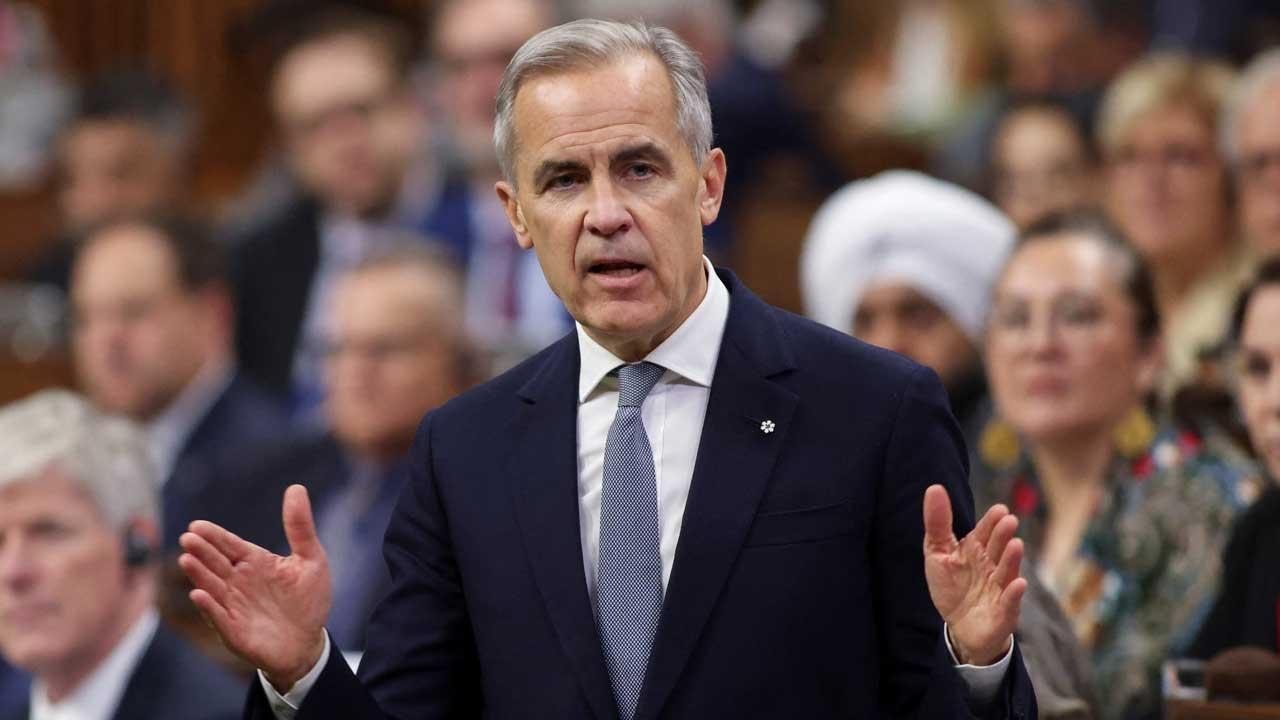
Prime Minister Mark Carney will present his administration’s first federal budget on Tuesday, urging Canadians to accept some “sacrifices” as he attempts to revive an economy unsettled by U.S. tariffs and global volatility.
A former central banker, Carney says the plan aims to pair targeted spending reductions with long-term investments to position Canada as a leading G7 economy. Key priorities include lessening reliance on U.S. markets, strengthening supply chains and lifting productivity.
The budget will detail how Ottawa plans to fund substantial increases in defence outlays to reach a NATO goal of 5% of GDP by 2035 — a pledge that has provoked heated debate in political circles.
Analysts warn the federal deficit could top C$70 billion, rising from C$51.7 billion last year, as Ottawa accelerates spending on infrastructure, housing and sectors damaged by tariff measures.
In a pre-budget address last month, Carney urged a return to bolder national economic choices, saying Canada must be willing to “swing for the fences” as it builds resilience.
Finance Minister François-Philippe Champagne underlined a “made-at-home” approach during a pre-budget visit to a Quebec footwear plant that supplies the Canadian Armed Forces and the RCMP.
Champagne framed the strategy as a shift in posture: moving the economy from dependency toward resilience and aiming to convert uncertainty into broader prosperity.
While the government highlights growth and diversification, Carney has committed to restoring balance to the operating budget within three years to maintain fiscal discipline. Ministries were instructed over the summer to identify up to 15% in savings to reallocate to strategic priorities.
Carney’s economic agenda includes an ambitious objective to double exports to non-U.S. markets within ten years, a hedge against the impact of a 35% U.S. tariff on certain Canadian imports. Though the USMCA exempts many items, industries such as autos, lumber and metals have faced significant pressure.
Political observers note Carney’s minority Liberal government will require backing from at least one opposition party to pass the budget. The New Democratic Party, in the midst of a leadership transition after disappointing election results, is viewed as the most probable partner.
If Ottawa cannot secure parliamentary support, a snap election could follow, although most experts judge such an outcome unlikely so soon after the spring vote.
Economic indicators are posing additional challenges: unemployment has risen and the Bank of Canada forecasts subdued growth of 1.2% in 2025, 1.1% in 2026 and 1.6% in 2027.
Observers regard the forthcoming budget as a pivotal test of Carney’s stewardship — whether he can deliver an economic rebound while avoiding deeper fiscal strain for everyday Canadians.









Four Fatalities from Cebu Landfill Disaster; Rescue Efforts Ongoing
A landfill disaster in Cebu has left four dead and many missing, as rescue teams navigate hazardous

Netanyahu Envisions Ending US Military Assistance in the Next Decade
Benjamin Netanyahu announces a goal for Israel to become independent from US military aid within ten

Dhurandhar Surges Past ₹844 Crore: A Record-Breaking Journey for Ranveer Singh's Spy Thriller
Ranveer Singh's Dhurandhar collects ₹3.6 Cr on Day 36, reaching ₹844.45 Cr in India. The spy drama r

FCC Greenlights SpaceX to Deploy 7,500 Additional Starlink Satellites Globally
The FCC has approved SpaceX's plan to launch 7,500 new Starlink satellites, enhancing global interne

Indonesia Halts Access to Elon Musk's Grok AI Due to Content Safety Issues
Indonesia has temporarily halted Elon Musk’s Grok chatbot over concerns of unsafe AI-generated conte

PV Sindhu's Journey at Malaysia Open Ends in Semifinal Against Wang Zhiyi
PV Sindhu's Malaysia Open bid concludes in the semifinals as she falls to China's Wang Zhiyi with sc