Post by : Shakul
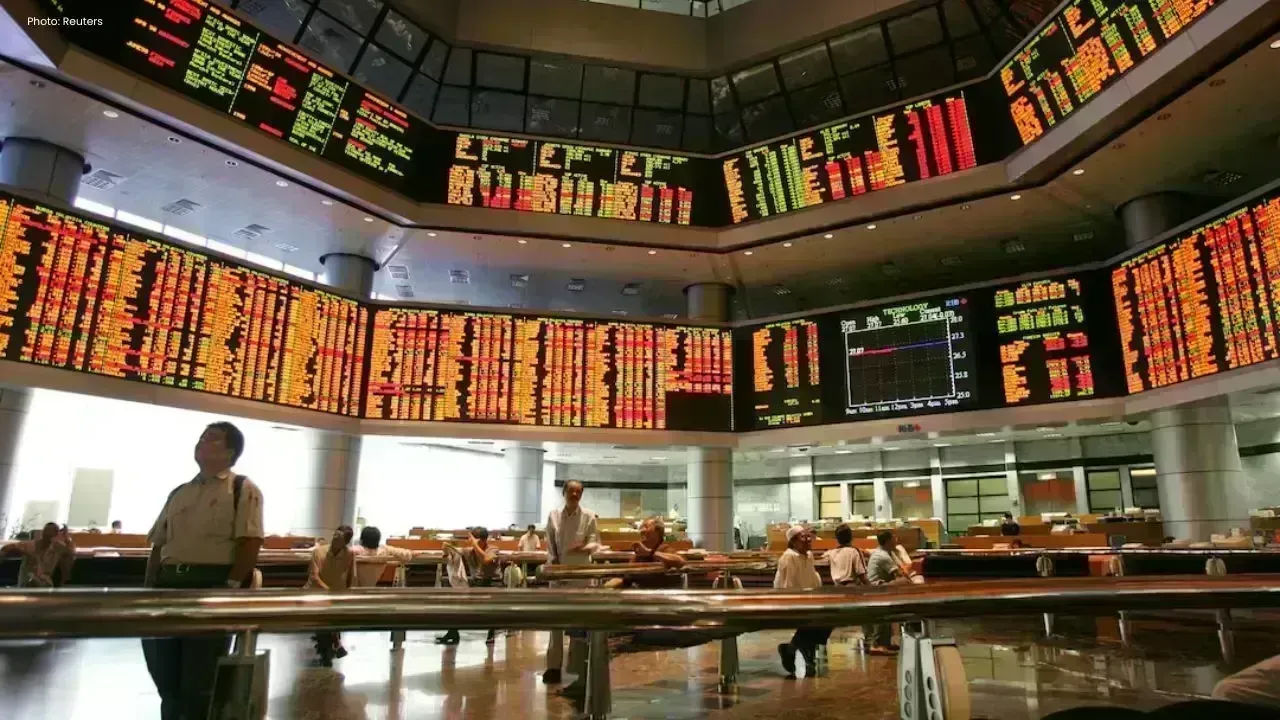
On Wednesday, Bursa Malaysia concluded the trading session lower as investor sentiment waned due to escalating global economic uncertainties, increasing bond yields, and worsening geopolitical tensions. Market observers noted that a cautious atmosphere prevailed throughout the day's trading as investors opted for safer financial instruments.
At the end of trading, the FTSE Bursa Malaysia KLCI was down by 9.58 points or 0.56 percent, closing at 1,717.69 compared to yesterday's closing figure of 1,727.27. The benchmark index fluctuated between 1,716.47 and 1,727.50 during the day after an initial dip at the opening.
Market breadth was negative, with losing stocks significantly outweighing gainers. A total of 840 shares saw declines, while only 366 recorded gains, indicating substantial selling pressure on various major sectors like technology, finance, and export-driven companies.
Economists indicated a notable decline in global sentiment, triggered by sell-offs in the semiconductor and technology sectors worldwide. Investor anxieties about escalating inflation and the likelihood of major central banks retaining high interest rates for an extended period, thereby increasing borrowing costs and limiting market liquidity, also contributed to this downturn.
Furthermore, renewed geopolitical concerns following U.S. President Donald Trump's comments about potential military actions involving Iran added additional strain. Analysts warned that fears regarding disruptions in energy supply and broader financial instability drove investors towards more defensive strategies across the region.
Among key stocks, Maybank and Public Bank each fell by two sen, while CIMB dropped by eight sen during the trading session. Tenaga Nasional and IHH Healthcare also faced losses as selling persisted throughout the day. Conversely, select stocks such as Malaysian Pacific Industries and Fraser & Neave managed to gain ground despite the overall market downturn.
Trading volume remained robust, totaling 4.15 billion units with a valuation of RM4.29 billion, up from 3.36 billion units worth RM3.24 billion in the previous session. Market participants observed that the increased trading activity reflected heightened volatility and investor repositioning due to uncertain global scenarios.
Financial analysts predict that investors will continue adopting a cautious approach in the near term as they keep close tabs on inflation trends, central bank strategies, movements in global bonds, and geopolitical dynamics. They suggested that regional equity markets might continue to experience fluctuations until there is clearer insight regarding global economic stability.








Anticipated Dates for UAE Eid Al Adha 2026 Unveiled by Astronomical Experts
Experts predict Eid Al Adha 2026 in the UAE to start on May 27, prompting early holiday planning amo

DAE Achieves Remarkable Growth in Q1 2026 With Record Revenue
Dubai Aerospace Enterprise announces impressive financial results for Q1 2026, reflecting a surge in

Price Increase for Sony PS5 in Southeast Asia Effective May 1
Sony announces a price increase for the PS5 across Southeast Asia starting May 1, 2026, impacting ga

Potential ‘Super El Niño’ in 2026: Understanding the Climate Risks
Could a Super El Niño emerge in 2026? Discover its implications and potential global climate impacts

Global Energy Crisis Intensifies: Markets React to Oil Supply Challenges
Markets are on edge as oil disruptions escalate, influencing prices and economic stability. Explore

Must-See Tourist Spots in London You Can't Overlook
Explore London's essential attractions, from royal landmarks to vibrant markets, ensuring an unforge




