Post by : Saif Nasser
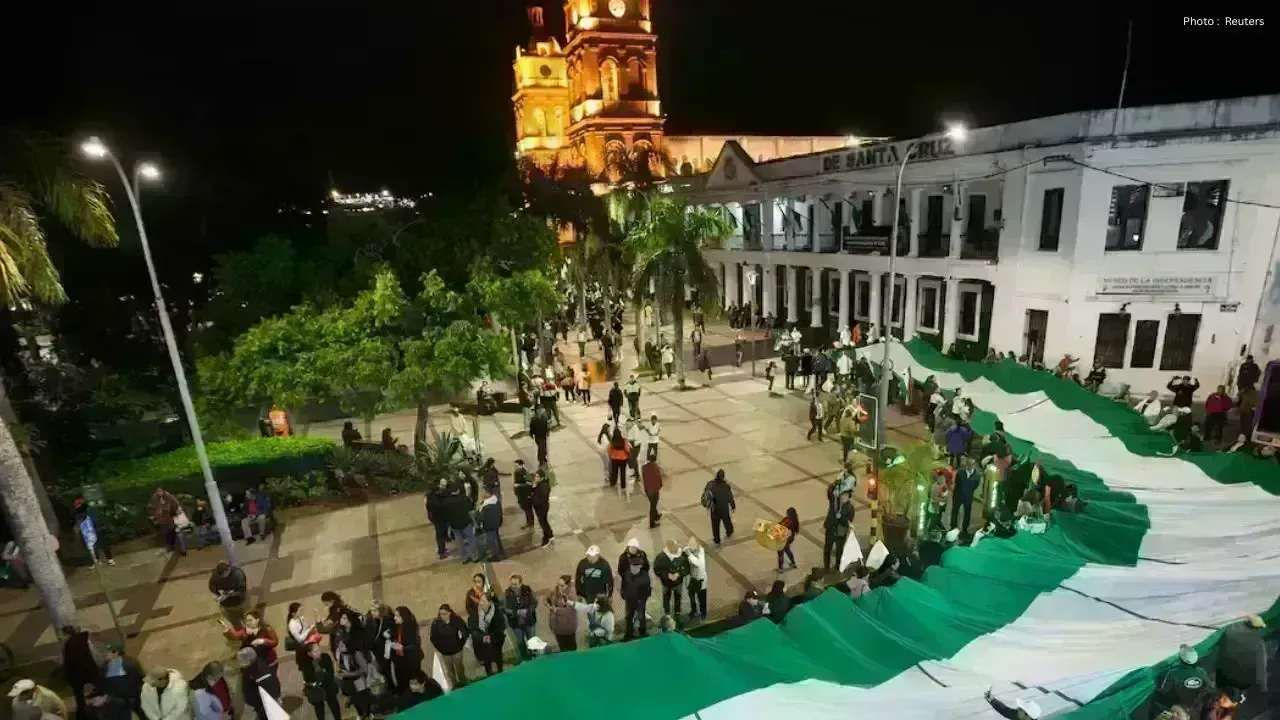
The government of Bolivia has announced the opening of humanitarian corridors to allow food, medicine, oxygen, and other basic supplies to move through blocked roads after weeks of protests across the country. The decision comes during one of the most difficult political and economic periods faced by the South American nation in recent years.
Authorities said police and armed forces would begin operations in the La Paz region to help trucks and emergency vehicles pass safely through protest areas. Officials stressed that the effort would remain peaceful and would focus mainly on the important highway connecting Oruro and La Paz. Representatives from the Red Cross and the Catholic Church are also expected to support the process.
The demonstrations first started in early May as labor strikes but later expanded into a wider national movement. Workers’ unions, miners, transport groups, teachers, and rural communities joined together to express anger over rising living costs and government spending cuts. Many people say daily life has become harder because prices of fuel, food, and essential goods continue to increase.
President Rodrigo Paz has defended his economic policies, saying they are necessary to stabilize the country’s struggling economy. His administration introduced austerity measures and reduced fuel subsidies in an effort to control public spending. However, many citizens believe these policies have placed a heavy burden on ordinary families already facing financial pressure.
Road blockades have become one of the biggest problems during the unrest. Protesters have blocked major highways and transport routes, slowing the movement of fuel trucks, medical supplies, and food deliveries. Several cities reported shortages of basic goods, while hospitals warned about low oxygen supplies. Banks also reduced operations in some areas because of security concerns and transportation difficulties.
The situation has also raised concern outside Bolivia. International observers and diplomats have called for calm discussions between the government and protest leaders. The United States and European representatives encouraged peaceful dialogue to prevent more violence and economic damage. Washington has closely watched the growing tension because continued instability could affect the wider region.
Security operations earlier this month already showed how serious the crisis had become. Thousands of police officers and soldiers were deployed to remove blockades around La Paz. Clashes between demonstrators and security forces led to arrests and injuries. Human rights groups warned that the use of force could worsen anger among citizens if political leaders fail to find long-term solutions.
Another important factor behind the protests is Bolivia’s weakening economy. Experts say the country is facing one of its worst economic crises in decades. Foreign currency reserves have fallen sharply, exports have slowed, and fuel shortages have increased public frustration. Many businesses are struggling to operate normally because transport routes remain blocked for long periods.
Former president Evo Morales has also remained a major figure during the crisis. His supporters continue to influence political debates and public demonstrations. Analysts believe the ongoing tension reflects deep divisions inside Bolivian society between different political groups and economic interests.
The opening of humanitarian corridors may provide temporary relief for families waiting for supplies, but it is unlikely to end the broader conflict. Bolivia’s leaders still face the difficult challenge of rebuilding trust with protesters while protecting economic stability. Many citizens want immediate relief from high prices and shortages, while the government argues that tough reforms are necessary for long-term recovery.
For now, the humanitarian operation represents an attempt to reduce suffering and prevent shortages from becoming even more severe. The coming days will show whether peaceful negotiations can replace confrontation on the streets. Without meaningful dialogue, the crisis could continue to damage Bolivia’s economy, public services, and political unity for months ahead.




Meta Unveils Subscription Plans for Instagram, Facebook, and WhatsApp
Meta introduces new subscription plans for users of Instagram, Facebook, and WhatsApp, featuring enh

Suvarna Joy on Education Leadership, Resilience, and Building Purpose Through Adversity in the UAE
Suvarna Joy shares her journey of education leadership, motherhood, faith, and resilience within the

Anticipated Dates for UAE Eid Al Adha 2026 Unveiled by Astronomical Experts
Experts predict Eid Al Adha 2026 in the UAE to start on May 27, prompting early holiday planning amo

DAE Achieves Remarkable Growth in Q1 2026 With Record Revenue
Dubai Aerospace Enterprise announces impressive financial results for Q1 2026, reflecting a surge in

Price Increase for Sony PS5 in Southeast Asia Effective May 1
Sony announces a price increase for the PS5 across Southeast Asia starting May 1, 2026, impacting ga

Potential ‘Super El Niño’ in 2026: Understanding the Climate Risks
Could a Super El Niño emerge in 2026? Discover its implications and potential global climate impacts




