Post by : Anees Nasser
Agriculture, one of humanity’s oldest practices, is entering a new era powered by artificial intelligence (AI). The days when farming relied solely on experience, manual labor, and seasonal intuition are gradually giving way to data-driven strategies and intelligent machines. Today, AI is not just an auxiliary tool — it is becoming the backbone of modern farming, helping farmers worldwide grow more, waste less, and operate sustainably.
The global population is projected to reach 9.8 billion by 2050, increasing the demand for food while natural resources remain finite. Coupled with climate change, soil degradation, and water scarcity, this growing demand has forced farmers, researchers, and policymakers to look toward technology for solutions. AI, with its capabilities in data analysis, predictive modeling, and automation, offers precisely that.
At the heart of AI-driven farming lies precision agriculture — the ability to monitor, analyze, and manage crops at a micro level. Sensors placed across fields collect vast amounts of data, ranging from soil moisture and nutrient content to weather patterns and pest activity. AI algorithms then interpret this data to provide actionable insights.
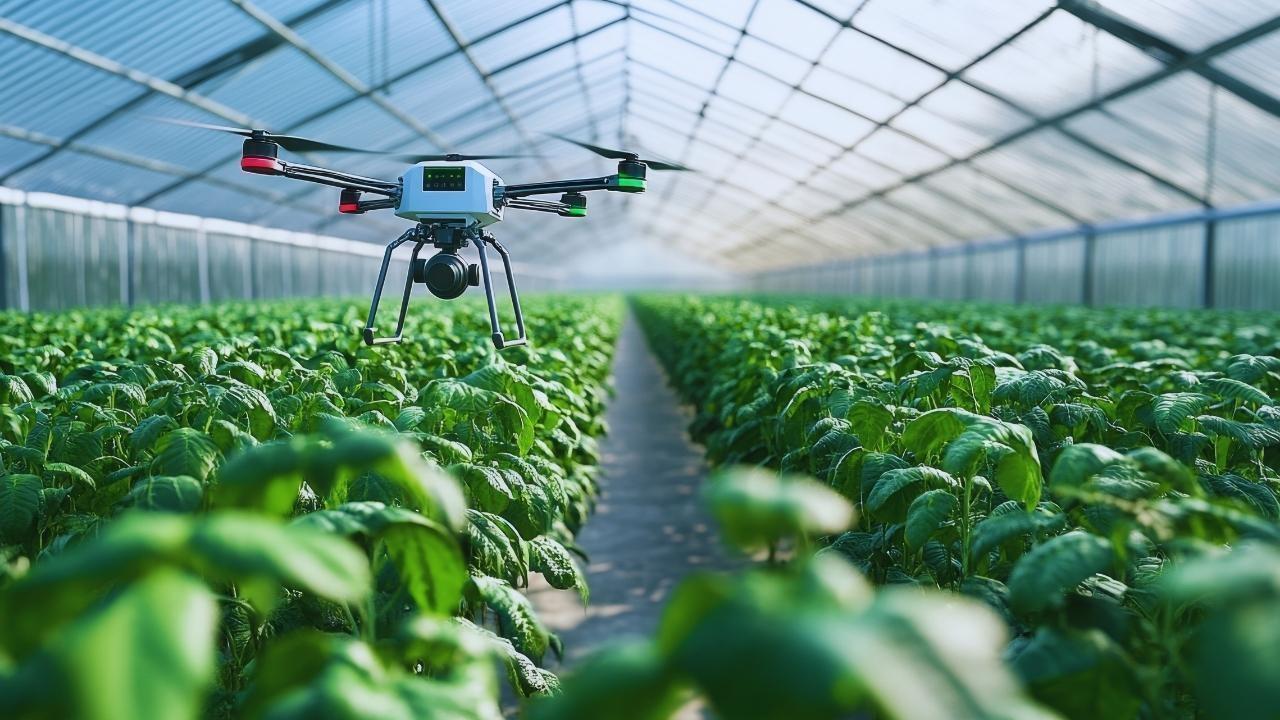
For example, machine learning models can predict optimal planting times, fertilization schedules, and irrigation needs, ensuring crops receive exactly what they require for maximum yield. Farmers can reduce waste and resource use, minimizing environmental impact. Drone-mounted AI systems are now capable of surveying large tracts of land, detecting diseases early, and even applying targeted treatments, further optimizing efficiency.
One of the most significant breakthroughs in agricultural AI is disease detection. Traditionally, identifying crop diseases required manual inspection, which was time-consuming and often too late to prevent losses. AI-driven image recognition systems now allow farmers to scan crops using drones or smartphones, instantly detecting early signs of fungal infections, nutrient deficiencies, or pest infestations.
Countries like India, Brazil, and the Netherlands are already deploying AI-powered monitoring platforms to help small and large-scale farmers alike. By catching diseases early, farmers can take precise action, reducing pesticide use, lowering costs, and preventing widespread crop failure.
Additionally, AI tools can predict disease outbreaks based on weather data, historical patterns, and environmental conditions. These predictive capabilities enable proactive measures, making farms more resilient to threats and ensuring a stable food supply for growing populations.
Automation has been a cornerstone of industrial progress, and AI-driven robotics is now revolutionizing agriculture. Self-driving tractors, robotic harvesters, and autonomous planters are becoming increasingly common, especially in countries with large-scale commercial farming operations such as the United States, Australia, and China.
These robots, guided by AI, can perform repetitive tasks with remarkable precision and speed. For instance, robotic harvesters equipped with computer vision can distinguish ripe fruits from unripe ones, reducing waste and labor costs. Automated irrigation systems adjust water flow based on real-time soil data, ensuring efficient water use and optimal crop growth.
By integrating robotics, farms are becoming more productive, scalable, and less reliant on seasonal labor, addressing workforce shortages in agriculture while improving overall efficiency.
Sustainability is no longer optional in modern farming — it is essential. AI contributes significantly to sustainable agricultural practices by optimizing resource use, reducing chemical inputs, and minimizing environmental impact.
For instance, AI algorithms can determine the exact amount of fertilizer or pesticide needed for a specific section of a field, preventing overuse that can harm soil and water quality. Smart irrigation systems powered by AI ensure water is applied only where necessary, conserving a precious and increasingly scarce resource.
Countries in Europe and Africa are implementing AI-driven programs to promote climate-smart farming. These initiatives not only protect natural resources but also improve crop resilience to extreme weather events, a growing challenge in the age of climate change.
Several countries are leading the charge in AI adoption for agriculture, showcasing the transformative potential of technology:
United States: AI-driven startups are working on autonomous tractors, precision irrigation, and predictive analytics platforms for crop management. Large-scale farms benefit from big data solutions that optimize yield and reduce costs.
India: AI applications focus on smallholder farmers, offering mobile platforms for disease detection, market pricing, and weather forecasting. These tools help millions of farmers make informed decisions with limited resources.
Netherlands: Known for its high-tech greenhouse farming, the country leverages AI to monitor plant growth, optimize lighting, and automate harvesting. The result is higher yields with lower environmental impact.
Brazil: AI assists in large-scale crop monitoring, particularly for soybeans and sugarcane, predicting disease outbreaks and optimizing pesticide use to protect the vast agricultural ecosystem.
China: AI-powered drones and autonomous machinery are deployed extensively in rice, wheat, and corn fields. Data-driven insights guide farmers on planting schedules, fertilization, and pest control strategies.
These examples demonstrate that AI adoption in agriculture is not limited to industrialized nations; even developing countries are harnessing AI for smarter farming solutions.
Despite its transformative potential, AI in agriculture faces several challenges. High initial investment costs, lack of technical expertise, and limited access to reliable data can hinder adoption, particularly in rural areas of developing countries.
Moreover, integrating AI with traditional farming methods requires careful change management. Farmers accustomed to conventional techniques may be hesitant to rely on automated systems or predictive models without demonstrable results.
Data privacy is another concern. Agricultural data, especially when shared with third-party platforms, can be sensitive. Ensuring ethical use and security of farm data is crucial to building trust in AI solutions.
To accelerate AI adoption in agriculture, supportive government policies are essential. Subsidies for AI technologies, training programs for farmers, and investments in digital infrastructure can bridge the gap between potential and practice.
Several countries are already taking proactive steps. The European Union funds research projects on AI-driven sustainable farming. India’s government promotes digital agriculture initiatives targeting small-scale farmers. In the United States, federal programs provide grants for smart farm technology adoption.
Policy frameworks also need to address ethical concerns, data ownership, and cybersecurity, ensuring AI benefits both farmers and the broader society without creating inequities or vulnerabilities.
Food security remains one of the most pressing global challenges. With the world population growing and arable land shrinking, AI offers a way to produce more food efficiently and sustainably. By improving crop yields, reducing losses, and optimizing resource use, AI technologies can help meet rising food demands without further harming the environment.
Additionally, AI can facilitate better distribution of food resources. Predictive analytics can identify regions at risk of food shortages, enabling timely interventions. Such innovations are critical in reducing hunger, managing supply chains, and ensuring equitable food access worldwide.
Artificial intelligence is no longer a futuristic concept in agriculture — it is a present reality transforming farming practices around the globe. From precision agriculture and disease detection to robotics and sustainable resource management, AI is enabling farms to become more efficient, productive, and resilient.
As governments, corporations, and farmers continue to embrace AI, the key to success lies in balancing technology with ethics, ensuring accessibility for smallholders, and promoting sustainability. The marriage of human expertise and artificial intelligence promises a future where agriculture is smarter, greener, and capable of feeding a rapidly growing population responsibly.
The world is witnessing the dawn of a new era in farming — one where data, innovation, and intelligence converge to secure a food system that benefits all.
This article is intended for informational purposes only. It does not provide professional, legal, or investment advice. The examples and insights reflect current global trends in AI and agriculture and may evolve with technological, economic, and regulatory developments.










Anticipated Dates for UAE Eid Al Adha 2026 Unveiled by Astronomical Experts
Experts predict Eid Al Adha 2026 in the UAE to start on May 27, prompting early holiday planning amo

DAE Achieves Remarkable Growth in Q1 2026 With Record Revenue
Dubai Aerospace Enterprise announces impressive financial results for Q1 2026, reflecting a surge in

Price Increase for Sony PS5 in Southeast Asia Effective May 1
Sony announces a price increase for the PS5 across Southeast Asia starting May 1, 2026, impacting ga

Potential ‘Super El Niño’ in 2026: Understanding the Climate Risks
Could a Super El Niño emerge in 2026? Discover its implications and potential global climate impacts

Global Energy Crisis Intensifies: Markets React to Oil Supply Challenges
Markets are on edge as oil disruptions escalate, influencing prices and economic stability. Explore

Must-See Tourist Spots in London You Can't Overlook
Explore London's essential attractions, from royal landmarks to vibrant markets, ensuring an unforge




