Post by : Anees Nasser
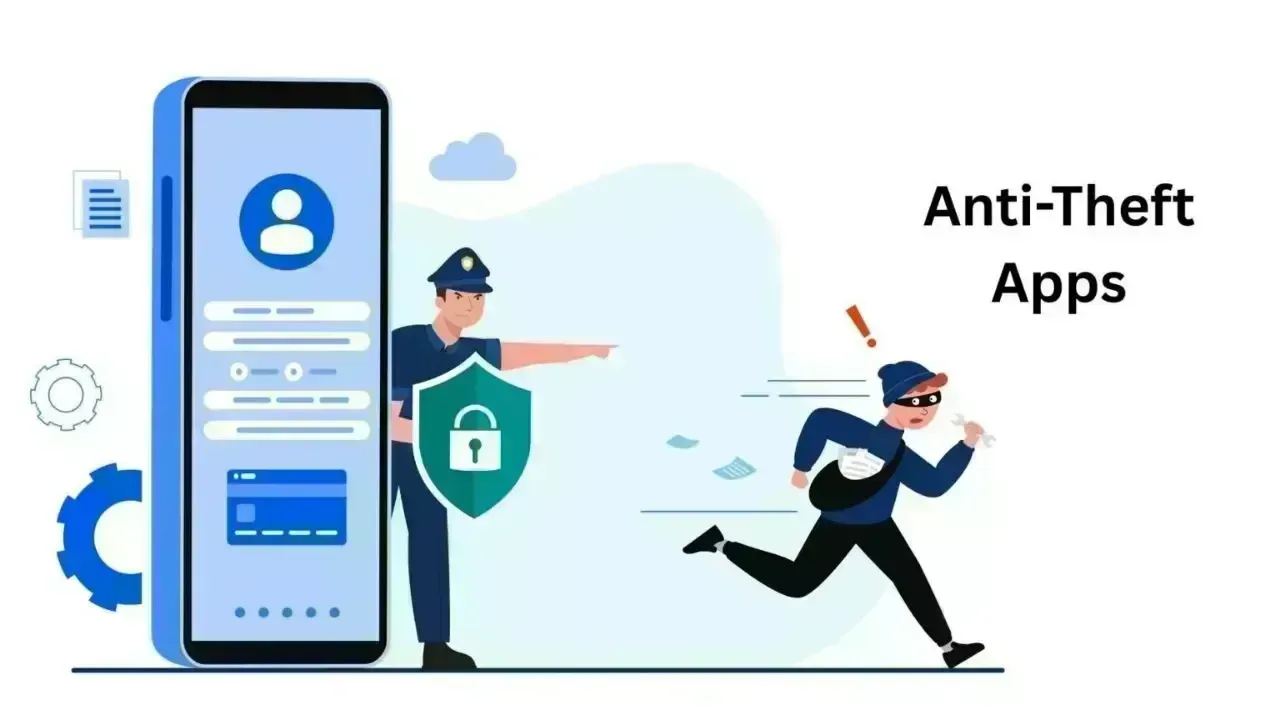
In today's digital age, losing a smartphone transcends mere inconvenience; it represents the loss of our personal finances, memories, and vital information. This reality has driven the rise of anti-theft applications, which claim to provide tracking, locking, erasing, and even taking photos of unauthorized users. Advertised as safety tools, they cater to a society that increasingly relies on technology.
Though these apps offer tangible benefits—locating lost phones, disabling stolen devices, and providing peace of mind for parents and businesses—their implications extend beyond mere convenience. The same technologies that protect can also potentially infringe upon privacy, blurring the line between safety and surveillance.
As these tools evolve, they prompt critical questions: Are these applications genuinely safeguarding our privacy, or are they subtly encroaching upon it?
Understanding the functionality is essential to recognizing the associated risks.
Commonly, these apps utilize GPS technology, mobile networks, and internet connections to track devices. Once activated, they regularly update a control interface with location data that is meticulously processed by the app providers.
Anti-theft applications can:
Lock devices
Erase data
Trigger alarms
Capture images
Track user activity
These functionalities demand extensive permissions, inevitably integrating deeply within a device’s system.
Often, users must register with personal details, forming a profile that may retain location histories and activity logs indefinitely. This transforms your physical identity into a digital footprint.
The promise of safety is persuasive.
The anxiety following a theft is palpable; it compels individuals to seek control over security concerns.
Parents commonly use location tracking to ensure children's safety, establishing a norm that integrates surveillance into family dynamics.
Employers routinely encourage installing these apps on work devices, emphasizing security while often crossing the thin line to employee monitoring.
Using anti-theft apps often requires sacrificing elements of privacy.
These applications often request access to:
Constant Location
Contacts and SMS
Camera and Microphone
File Storage
In moments of urgency, users frequently consent without insight into the extent of their permissions.
User data may be stored in various locations:
Corporate servers
Cloud systems
Third-party networks
Understanding data longevity and security remains unclear to most users.
Not all oversight appears as direct surveillance.
Your location pattern unveils:
Home and Workplace
Social Circles
Routine Activities
Such intelligence often reveals sensitive aspects of our lives.
While tracking a device seems reasonable, monitoring an individual presents ethical complications. Without awareness and consent, protection may shift to control.
Designed for defense, these applications can be weaponized.
In abusive environments, these tools can be exploited for stalking or manipulation.
Excessive remote access may lead to unwanted workplace surveillance beyond hours.
Remote locking can become a controlling mechanism in abusive relationships.
Not all applications bear equal risk.
Trustworthy apps clearly indicate:
Data collection practices
User access
Respected apps will only request necessary permissions, avoiding excessive access.
Apps that utilize localized storage generally allow users more control over their data.
While privacy laws exist, their efficacy may vary significantly.
Agreements do not guarantee informed consent.
Data vulnerabilities affect even the best security systems.
Once data is out of individual control, retrieval becomes nearly impossible.
If a service is free, the user typically becomes the product.
Data collected can have significant monetary value, drawing the interest of various entities.
Companies may not reveal how they profit from user data.
Tools designed for security could potentially expose users to threats.
Users are often left unaware of how their personal data is utilized.
Users may favor reliance on apps over developing personal security habits.
Key concerns include:
Unjustified permission requests
Vague privacy policies
A lack of clarity often indicates excessive data processing.
Awareness serves as your strongest defense.
Grant only essential permissions and restrict background access.
Monthly assessments ensure appropriate access levels.
Utilizing multiple applications heightens risk.
Built-in solutions typically offer enhanced security measures.
Understanding the distinction between safety and privacy is crucial for all age groups.
Absolute safety may be unattainable.
Users must evaluate the trade-offs:
Convenience versus privacy
Protection versus exposure
Efficiency versus safety
Future innovations promise more advanced tracking capabilities.
Advanced systems may leverage AI for detecting irregularities.
Biometric confirmations could replace traditional passwords, but they present unique vulnerabilities.
Automatic monitoring could become commonplace, making vigilance essential.
Before using any anti-theft application, consider:
Who controls my data?
Where does it reside?
Can I revoke access?
Does it enhance safety, or disempower me?
Anti-theft applications are neutral; they can both secure and control, depending on user intent. Devices should not be mere tools of tracking but avenues for user agency.
Understanding their capabilities and limitations is crucial for a balanced digital experience.
This article is for informational purposes only and does not constitute legal or cybersecurity counsel. Users should independently verify app policies and seek professional advice as needed.










Anticipated Dates for UAE Eid Al Adha 2026 Unveiled by Astronomical Experts
Experts predict Eid Al Adha 2026 in the UAE to start on May 27, prompting early holiday planning amo

DAE Achieves Remarkable Growth in Q1 2026 With Record Revenue
Dubai Aerospace Enterprise announces impressive financial results for Q1 2026, reflecting a surge in

Price Increase for Sony PS5 in Southeast Asia Effective May 1
Sony announces a price increase for the PS5 across Southeast Asia starting May 1, 2026, impacting ga

Potential ‘Super El Niño’ in 2026: Understanding the Climate Risks
Could a Super El Niño emerge in 2026? Discover its implications and potential global climate impacts

Global Energy Crisis Intensifies: Markets React to Oil Supply Challenges
Markets are on edge as oil disruptions escalate, influencing prices and economic stability. Explore

Must-See Tourist Spots in London You Can't Overlook
Explore London's essential attractions, from royal landmarks to vibrant markets, ensuring an unforge




