Post by : Naveen Mittal
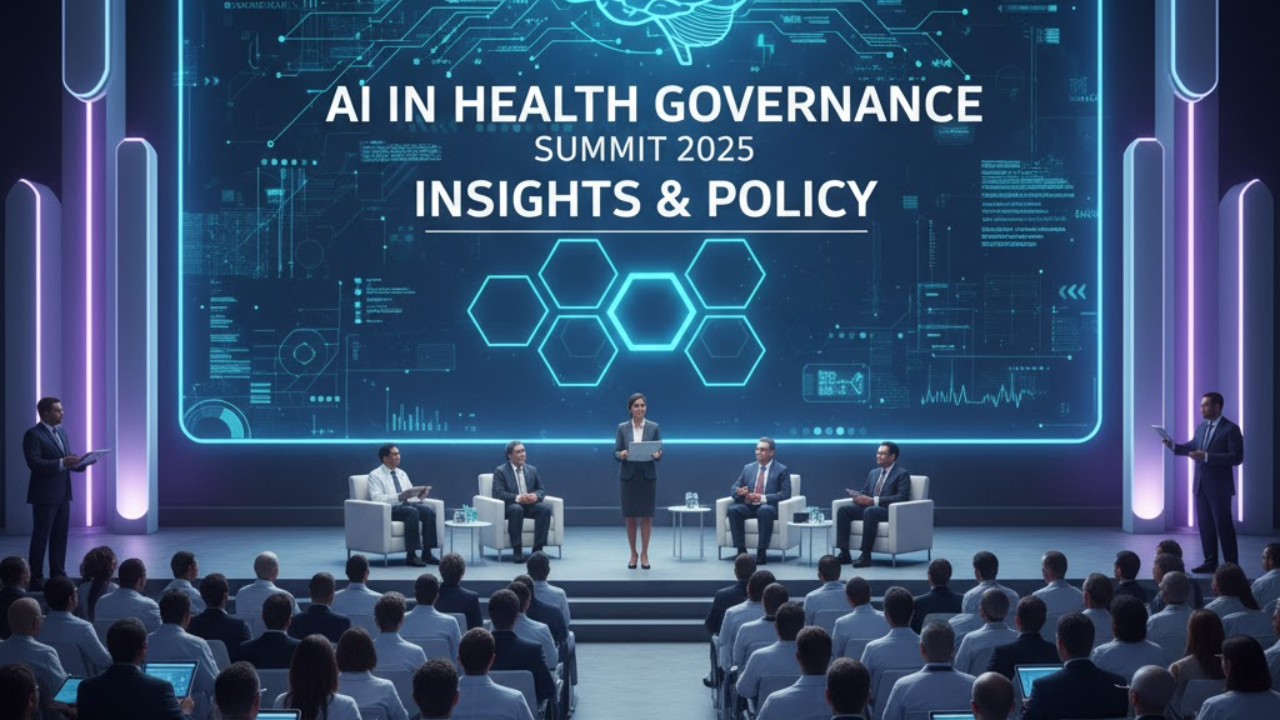
At World Health Summit 2025, the intersection of artificial intelligence and global health took center stage. As health systems digitize, the potential for AI to transform diagnostics, decision support, and public health surveillance is undeniable. However, unchecked deployment risks exacerbating inequalities, reinforcing bias, and undermining trust. Global leaders and experts met in Berlin under the Summit’s theme, “Taking Responsibility for Health in a Fragmenting World,” to deliberate how to govern AI in health responsibly, equitably and transparently. This article dives into the Summit’s AI agenda, key policy debates, emerging frameworks and a proposed roadmap to guide nations in adopting trustworthy AI in health.
Healthcare AI has matured from proof-of-concept to real-world pilots in many domains:
AI in imaging (radiology, pathology) assists with early detection
Predictive models guide resource allocation and patient risk stratification
Natural language processing helps generate summaries or triage
Population-level models detect outbreak signals, forecast demand
Drug discovery and repurposing models accelerate early-stage identification
These tools offer potential to improve efficiency, reach underserved populations, and support clinical decision making — especially in resource-constrained settings.
But implementation is not risk-free. Key concerns include:
Algorithmic bias that disadvantages underrepresented groups
Data privacy and consent in cross-border contexts
Lack of interoperability and vendor lock-in
Opaque “black box” models challenging clinical trust
Liability and accountability in AI-mediated decisions
Uneven access reinforcing inequities
Governance fragmentation across countries and health systems
Without proper guardrails, AI can amplify systemic disparities instead of bridging them.
This dedicated session addressed both opportunities and pitfalls of AI. Speakers emphasized that AI must be deployed through an equity lens, ensuring transparency, external validation, and governance oversight. They stressed the importance of governance parallel to innovation.
AI was not siloed — it was connected to pandemic preparedness, health system resilience, and climate-health strategy. AI tools for surveillance, modeling, and logistics were portrayed as enablers of broader health objectives.
At the Summit, the Global Preparedness Monitoring Board (GPMB) 2025 report titled The New Face of Pandemic Preparedness was released, calling for innovations including digital surveillance and AI-enabled early warning systems. The report complements the discussion of AI by urging measurement, cooperation and care strategies for future pandemics.
AI models intended for clinical or public health use should undergo external validation across demographics and geographies, with published performance metrics. Regulators should require audit trails and explainability.
To prevent abuse and maintain trust, national and regional models of data stewardship should be developed: trusted intermediaries or data trusts that supervise access, consent, anonymization, audit logs, and equitable sharing.
Governance frameworks should mandate open standards and avoid proprietary lock-in. Health systems should demand AI systems that exchange data securely under defined APIs, allowing algorithm switching and audit.
For high-risk decisions, AI must remain advisory rather than autonomous. Clinician override, explainability, and accountability must be ensured. Clear liability frameworks must designate responsibilities for AI-supported decisions.
AI development must ensure representation of marginalized groups. Impact assessments should measure distributional effects, and deployment should include monitoring of disparities.
AI governance must be harmonized across nations to avoid regulatory fragmentation. Shared platforms, guidelines, capacity development (especially in low- and middle-income countries) and learning networks are critical.
Over-strict regulation may stifle beneficial innovation; under-regulation may invite misuse or inequity. The policy design must tread carefully between enabling experimentation and enforcing safety.
Many health systems, especially in low-resource settings, lack the technical, legal or institutional capacity to evaluate, regulate or audit AI effectively.
Health data often travels across borders; AI models may be trained on external datasets. Questions of data sovereignty, national governance and cross-border standards must be resolved.
AI models degrade over time or become less accurate as contexts change. Governance must demand continuous monitoring, retraining, versioning, and rollback options.
Determining who is liable when an AI-assisted decision causes harm is complex: the developer, institution, or clinician? Governance frameworks must clarify accountability.
Establish national AI governance body within health ministries tasked with oversight, policy, auditing and coordination.
Create pilot frameworks for certified AI deployments under supervision and evaluation in real settings before scale.
Invest in technical capacity and regulatory learning via partnerships, training of reviewers, and collaboration across nations.
Draft data stewardship laws and health data governance policies that ensure privacy, access, auditability and public trust.
Embed algorithmic impact assessment requirements prior to deployment.
Mandate external validation and audit of AI tools in health, across cohorts.
Develop interoperability mandates so AI systems adhere to common protocols and data portability.
Set up national AI benefit-sharing or equity monitoring frameworks to track differential impacts.
Create regional AI governance networks for consistent standards, mutual recognition, benchmarking.
Enforce sunset clauses and model performance reviews — AI tools must be revalidated periodically or sunset if they degrade.
Nations that implement robust AI governance frameworks will gain credibility and trust in deploying digital health systems.
Harmonized governance lowers trade friction for AI health tools, enabling cross-border medical collaboration.
Equitable policies reduce the risk that AI widens health disparities or concentrates benefits in privileged areas.
A trustworthy AI ecosystem fosters more investment, innovation and adoption in low- and middle-income countries.
Q. Can health systems skip governance and adopt AI freely?
They could, but risk regulatory backlash, malpractice claims, trust erosion, biased care outcomes or failed deployment.
Q. Do we need new AI laws for health?
Health applications often need domain-specific standards layered onto general AI rules, especially for clinical risk and data privacy.
Q. How to address AI bias?
Require representative training data, external validation, subgroup performance reporting, and algorithmic fairness audits.
Q. What about small health systems without expertise?
They can adopt regional or supranational frameworks and use shared evaluation services, regional audit bodies or technical assistance.
Q. Do AI tools replace clinicians?
Not at this stage. The role is advisory, amplifying expert capacity, not substituting human judgment especially in complex or high-stakes decisions.
This article is for informational purposes only and does not constitute medical, legal, or policy advice. The content synthesizes themes and policy discourse from World Health Summit 2025 and related reports as of October 2025. Decisions should rely on primary documents, expert counsel, and country-specific legal frameworks.










Anticipated Dates for UAE Eid Al Adha 2026 Unveiled by Astronomical Experts
Experts predict Eid Al Adha 2026 in the UAE to start on May 27, prompting early holiday planning amo

DAE Achieves Remarkable Growth in Q1 2026 With Record Revenue
Dubai Aerospace Enterprise announces impressive financial results for Q1 2026, reflecting a surge in

Price Increase for Sony PS5 in Southeast Asia Effective May 1
Sony announces a price increase for the PS5 across Southeast Asia starting May 1, 2026, impacting ga

Potential ‘Super El Niño’ in 2026: Understanding the Climate Risks
Could a Super El Niño emerge in 2026? Discover its implications and potential global climate impacts

Global Energy Crisis Intensifies: Markets React to Oil Supply Challenges
Markets are on edge as oil disruptions escalate, influencing prices and economic stability. Explore

Must-See Tourist Spots in London You Can't Overlook
Explore London's essential attractions, from royal landmarks to vibrant markets, ensuring an unforge




