Post by : Anees Nasser
AI has evolved significantly, shifting from software foundations to a realm where aggressive computational power is essential. The efficiency of hardware now dictates how capable AI systems can be, impacting everything from image processing to natural language interactions. As breakthroughs continue, companies are designing innovative chips that enhance energy efficiency, accelerate data transfer, and facilitate scalable AI applications. In this evolving landscape, silicon-based strategies take center stage.
At the heart of hardware advancements lies the evolution of transistors. The semiconductor sector is moving past the established FinFET frameworks towards the more effective Gate-All-Around (GAA) and nanosheet designs, which allow for better management of current flow, higher densities, and minimized power leakage. Next-gen chips employing 3nm and even 2nm processes encapsulate billions of transistors into remarkably compact areas, allowing for improved performance while reducing power requirements. This progress stems from extensive research, manufacturing precision, and substantial investment, continuously pushing the boundaries of chip design.
Historically, GPUs have driven AI training. However, the increasing complexity of AI models has led to the emergence of new hardware structures. Specialized accelerators—including ASICs, tensor cores, and NPUs—target specific tasks, optimizing machine learning operations with lower power consumption and higher efficiency. These dedicated chips efficiently manage matrix operations, making rapid advancements in fields such as natural language processing and edge AI.
Data speed is essential not just for raw processing; it's vital for effective data movement. Innovative memory solutions like high-bandwidth memory (HBM) and 3D-stacked DRAM significantly reduce latency by placing data closer to CPUs. Modern packaging strategies, which combine smaller dies, enhance yields and lower costs, allowing the integration of computational, memory, and interconnect elements into a single unit, optimizing performance and energy efficiency.
The alignment of hardware with software capabilities is pivotal to maximizing their performance. Co-design practices—where software and hardware are developed concurrently—emphasize reducing data movement and enhancing workload management across numerous cores. Intelligent compilers translate programming language into machine-level commands finely tuned to specific chip designs, enabling systems to reach their peak efficiency.
With AI's increasing energy requirements, the focus turns to producing chips that prioritize reduced power consumption without sacrificing capability. Innovative techniques, including dynamic voltage scaling and adaptive frequency management, are increasingly being utilized, promoting sustainable AI initiatives that consider environmental impact while maintaining high performance.
Recent global events have underscored the importance of diversifying semiconductor manufacturing. Countries and corporations are investing in local fabrication facilities to strengthen chip supply chains against geopolitical uncertainties. This shift towards establishing advanced fabs globally fosters innovation and secures technological independence.
The AI hardware landscape is diverging into two key sectors: large tech players with massive computational capabilities and smaller innovators seeking cost-effective solutions. Cloud services are bridging this gap by providing tiered AI hardware access that empowers smaller entities to innovate without significant financial burdens.
Inference operations necessitate low-latency processing, prompting the development of specialized chips and NPUs to manage tasks real-time on devices like smartphones and autonomous systems. These chips enhance privacy by localizing intelligence, enabling quicker responses across various applications.
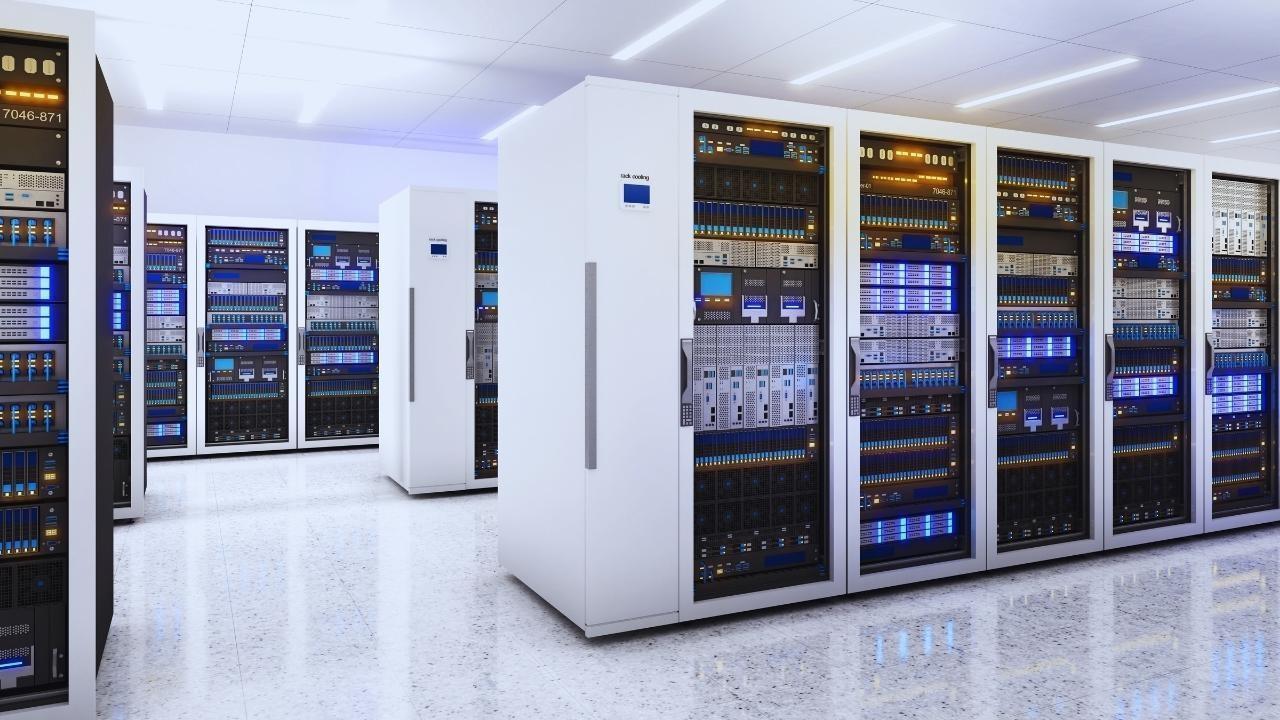
The densification of chips brings new challenges in thermal management. Advanced cooling solutions, including liquid immersion cooling, are vital for maintaining performance and reliability in emerging AI data centers, with many facilities now incorporating renewable energy practices to boost sustainability.
As traditional silicon technologies evolve, research into alternatives like photonic computing and quantum-assisted chips is gaining traction. These technologies promise significant performance gains, moving beyond conventional computing paradigms, suggesting a future where AI hardware transcends existing limitations through innovative designs.
As custom silicon gains prominence, ensuring hardware security against new vulnerabilities is critical. Strategies to protect against potential attacks and ensure chip integrity are increasingly vital as AI hardware plays significant roles in sensitive sectors like healthcare and finance.
For the AI hardware ecosystem to flourish, collaborative efforts and open standards are necessary to ensure interoperability among various chip manufacturers, paving the way for integrated systems that serve broader applications without vendor constraints.
To keep pace with AI advancements, organizations need strategies that incorporate flexibility concerning evolving chip architectures. Evaluating performance metrics and establishing adaptive procurement strategies is essential for maintaining a competitive edge in an increasingly fast-paced technological environment.
The evolution of AI will hinge not only on advanced algorithms but significantly on the chips that empower them. Continuous enhancements in transistor designs and energy-efficient architectures mark a significant leap toward creating agile, sustainable AI systems capable of meeting future demands.
This article serves informational needs, summarizing trends in AI hardware. For in-depth technical analysis, original industry sources should be consulted.









Anticipated Dates for UAE Eid Al Adha 2026 Unveiled by Astronomical Experts
Experts predict Eid Al Adha 2026 in the UAE to start on May 27, prompting early holiday planning amo

DAE Achieves Remarkable Growth in Q1 2026 With Record Revenue
Dubai Aerospace Enterprise announces impressive financial results for Q1 2026, reflecting a surge in

Price Increase for Sony PS5 in Southeast Asia Effective May 1
Sony announces a price increase for the PS5 across Southeast Asia starting May 1, 2026, impacting ga

Potential ‘Super El Niño’ in 2026: Understanding the Climate Risks
Could a Super El Niño emerge in 2026? Discover its implications and potential global climate impacts

Global Energy Crisis Intensifies: Markets React to Oil Supply Challenges
Markets are on edge as oil disruptions escalate, influencing prices and economic stability. Explore

Must-See Tourist Spots in London You Can't Overlook
Explore London's essential attractions, from royal landmarks to vibrant markets, ensuring an unforge




