Post by : Shweta
In a significant stride toward stronger economic relations, India and Canada are fast-tracking their Comprehensive Economic Partnership Agreement (CEPA). Officials from both nations are optimistic about completing this pivotal trade deal before the impending deadline in November, overcoming prior diplomatic strains that delayed discussions.
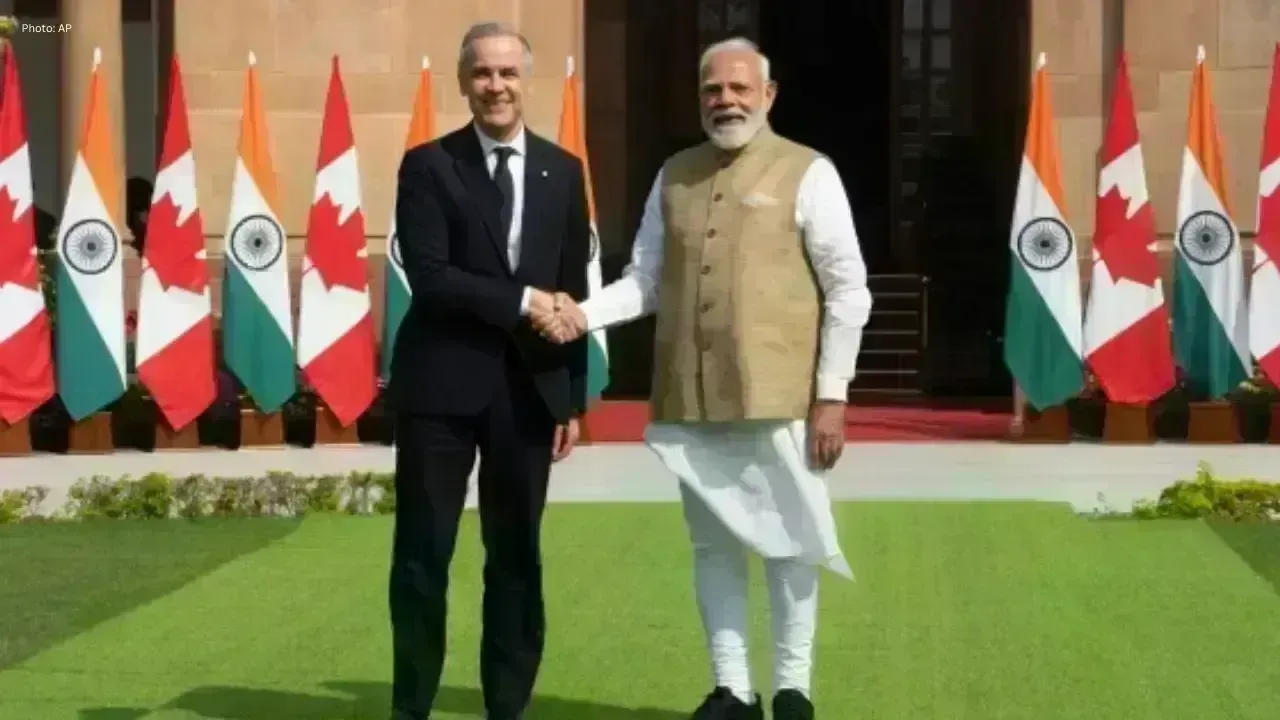
During his recent trip to Ottawa, Indian Commerce and Industry Minister Piyush Goyal emphasized the shared political will to expedite negotiations. Initial timelines aimed for late December 2026, but following discussions with Canadian Prime Minister Mark Carney, the target has shifted to November, urging a quicker resolution.
This prospective CEPA is poised to become a cornerstone of trade relations between India and Canada. The agreement is designed to cut tariffs, enhance market access, boost investments, and foster cooperation across diverse sectors such as technology, agriculture, energy, manufacturing, education, and services. Projections suggest that successful implementation could elevate bilateral trade to nearly $50 billion by 2030.
Trade discussions resumed earlier this year after a prolonged hiatus linked to diplomatic conflicts. The latest rounds of talks included critical dialogues in New Delhi, addressing essential topics such as trade in goods and services, intellectual property rights, sanitary measures, and technical trade barriers.
Both India and Canada have characterized these discussions as “constructive and productive.” With a subsequent round of negotiations anticipated in Ottawa in July 2026, both governments are dedicated to crafting a “balanced, ambitious, and mutually beneficial” arrangement.
Experts posit that the CEPA could yield significant economic advantages amid shifting global supply chains and a desire to lessen reliance on singular markets. Canada is particularly keen on diversifying trade partnerships beyond the U.S., while India is engaged in expanding its global trade framework through key agreements.
Should the agreement proceed, several sectors are poised for enhanced access and opportunities. Indian exporters might find improved channels into Canadian markets for pharmaceuticals, textiles, IT services, and engineering products. Conversely, Canadian industries could thrive in sectors including energy, education, clean technology, agriculture, and critical minerals. This deal is also predicted to enhance investment dynamics and business mobility between the two nations.
The growing partnership between India and Canada is fostered by initiatives such as the revived India-Canada CEO Forum and a newly established Economic and Financial Dialogue aimed at bolstering investment and financial collaboration. Officials note these efforts are designed to ensure enduring economic engagement irrespective of political transitions.
Despite some remaining technical and policy concerns, both governments express optimism about the expedited progress of negotiations. A successful agreement would signify a vital advancement in reestablishing India-Canada collaborations and could emerge as a landmark trade accord for both economies in the near future.









Meta Unveils Subscription Plans for Instagram, Facebook, and WhatsApp
Meta introduces new subscription plans for users of Instagram, Facebook, and WhatsApp, featuring enh

Suvarna Joy on Education Leadership, Resilience, and Building Purpose Through Adversity in the UAE
Suvarna Joy shares her journey of education leadership, motherhood, faith, and resilience within the

Anticipated Dates for UAE Eid Al Adha 2026 Unveiled by Astronomical Experts
Experts predict Eid Al Adha 2026 in the UAE to start on May 27, prompting early holiday planning amo

DAE Achieves Remarkable Growth in Q1 2026 With Record Revenue
Dubai Aerospace Enterprise announces impressive financial results for Q1 2026, reflecting a surge in

Price Increase for Sony PS5 in Southeast Asia Effective May 1
Sony announces a price increase for the PS5 across Southeast Asia starting May 1, 2026, impacting ga

Potential ‘Super El Niño’ in 2026: Understanding the Climate Risks
Could a Super El Niño emerge in 2026? Discover its implications and potential global climate impacts




