Post by : Shweta
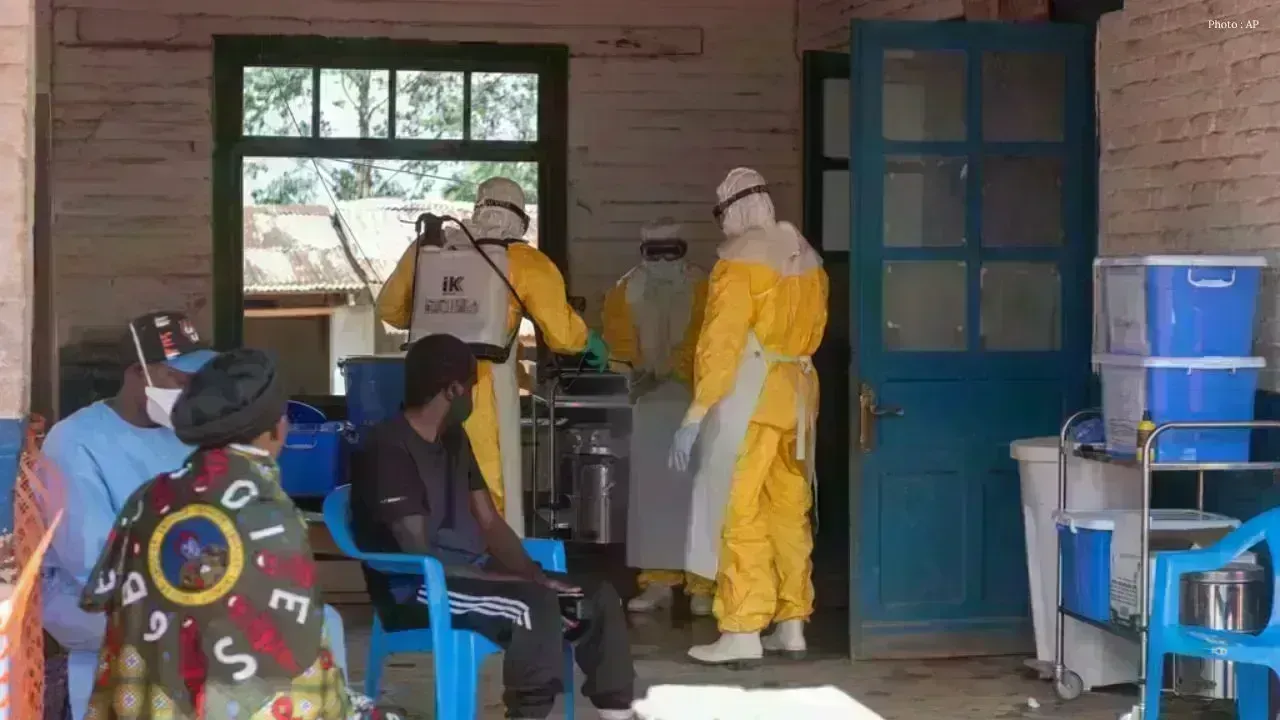
The World Health Organization (WHO) has issued a cautionary statement regarding nearly 500 confirmed cases of Ebola amid the ongoing outbreak in Central Africa. This alarming situation has raised concerns among health officials about the necessity for vigilant monitoring and prompt action to curb the disease's spread.
As reported by the WHO, this outbreak presents significant public health risks, as healthcare professionals and local authorities strive to document infections, provide patient care, and halt further transmission. The organization has underscored the urgent need to enhance disease surveillance and ensure that communities facing the crisis receive adequate support to prevent the virus from spreading.
Ebola is a severe viral disease that spreads through direct contact with the bodily fluids of infected individuals or contaminated materials. Previous outbreaks have demonstrated the critical importance of timely detection, patient isolation, and coordinated public health interventions. Health authorities assert that swift response measures are essential to diminish fatalities and avert broader transmission.
Current statistics reveal that several regions within Central Africa are grappling with this outbreak. Medical teams are collaborating with local governments and international bodies to confirm cases, trace contacts, and enhance healthcare access. Vaccination initiatives and public awareness campaigns are integral components of the strategy to manage the outbreak.
Officials from the WHO have indicated that international collaboration is vital. Public health agencies and NGOs are mobilizing resources to support affected regions and assist national governments. The organization closely monitors ongoing developments and provides necessary technical assistance.
Past incidents of Ebola outbreaks have illuminated the challenges of responding to infectious diseases in areas with inadequate healthcare systems. Experts note that outbreaks can become increasingly difficult to control in environments where access to medical facilities is limited or where conflict and displacement hinder public health efforts.
Engaging the community is pivotal in the response strategy. Health officials urge residents to promptly report any symptoms and adhere to safety guidelines. Education efforts aim to counteract misinformation and enhance awareness regarding preventive measures.
While the present outbreak is primarily affecting Central Africa, global health officials are monitoring developments closely, as infectious diseases can extend beyond borders. Health agencies around the world emphasize that coordinated responses are crucial to minimize the risk of spread.
The WHO has consistently advocated for continued investment in healthcare infrastructures and emergency preparedness. Key measures include boosting laboratory capabilities, refining surveillance networks, and ensuring an adequate supply of vaccines and medical resources are available.
Medical professionals assert that progress in vaccine development and treatment options has significantly enhanced the response capabilities for Ebola compared to earlier outbreaks. However, they emphasize the necessity for ongoing vigilance, particularly in regions where healthcare resources are scarce.
Governments and aid organizations are expected to maintain cooperation to support affected areas and ensure the effectiveness of response efforts. Public health officials also encourage neighboring nations to uphold strong surveillance mechanisms and preparedness protocols.
This recent outbreak highlights the persistent challenges posed by infectious diseases and the critical importance of global collaboration in safeguarding public health. Despite advancements in managing Ebola outbreaks, health authorities stress the need for continuous efforts to prevent further infections and save lives.
In the coming days, as response teams intensify their efforts, the WHO and partner organizations will concentrate on amplifying surveillance, enhancing support for treatment centers, and boosting vaccination campaigns. These actions are vital in mitigating the outbreak and reducing its long-lasting effects on affected populations.
Stay updated with us for the latest major updates and developments regarding this situation.






Achieve Radiant Skin with This Simple Rice Flour Treatment
Transform your skincare routine! Discover how a rice flour mix can restore your skin's glow without

Meta Unveils Subscription Plans for Instagram, Facebook, and WhatsApp
Meta introduces new subscription plans for users of Instagram, Facebook, and WhatsApp, featuring enh

Suvarna Joy on Education Leadership, Resilience, and Building Purpose Through Adversity in the UAE
Suvarna Joy shares her journey of education leadership, motherhood, faith, and resilience within the

Anticipated Dates for UAE Eid Al Adha 2026 Unveiled by Astronomical Experts
Experts predict Eid Al Adha 2026 in the UAE to start on May 27, prompting early holiday planning amo

DAE Achieves Remarkable Growth in Q1 2026 With Record Revenue
Dubai Aerospace Enterprise announces impressive financial results for Q1 2026, reflecting a surge in

Price Increase for Sony PS5 in Southeast Asia Effective May 1
Sony announces a price increase for the PS5 across Southeast Asia starting May 1, 2026, impacting ga




