Post by : Saif Nasser
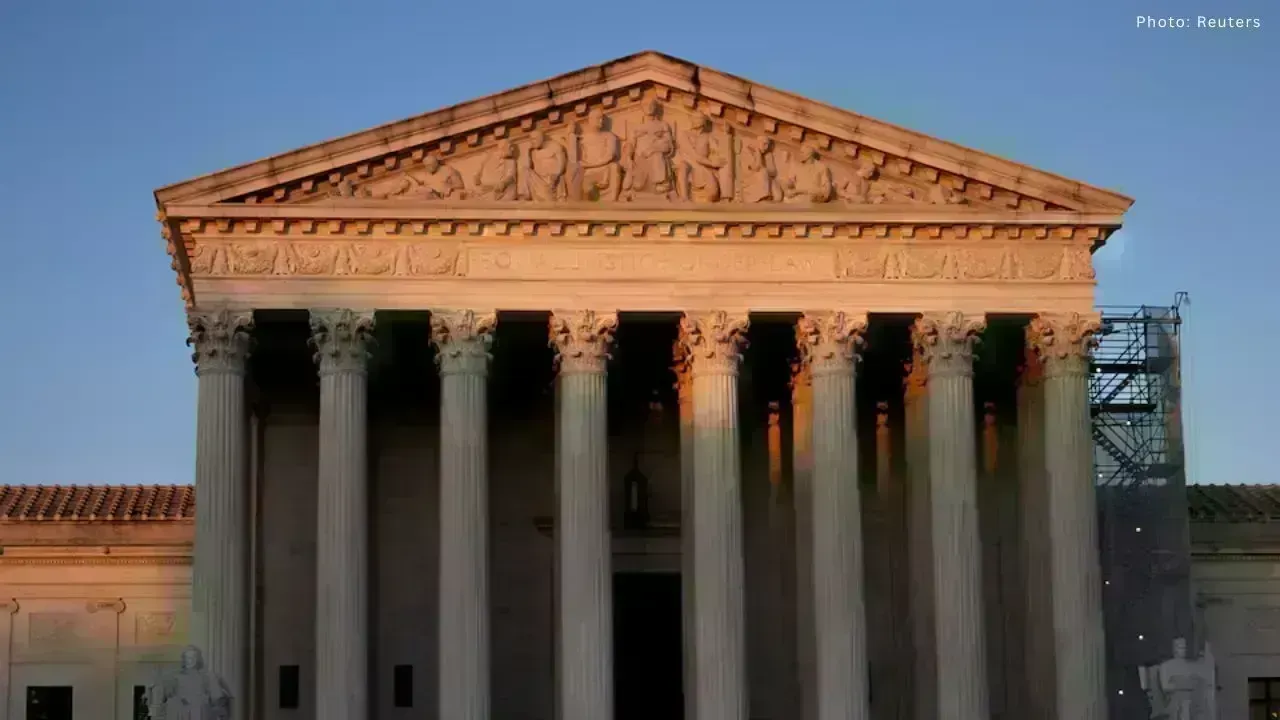
The United States Supreme Court is preparing to issue important rulings that could have a wide impact on the country’s economy and the limits of presidential power. One of the most closely watched decisions involves the future of the global tariffs imposed by President Donald Trump.
The court may announce one or more verdicts when the justices gather for their scheduled session on Friday. While the court does not reveal in advance which cases will be decided, attention is focused on the legal challenge to Trump’s tariffs, which affect nearly all major U.S. trading partners.
The tariffs were introduced after Trump returned to office in January 2025. He used a 1977 emergency law to justify the move, arguing that large trade deficits and drug trafficking posed a national emergency. Under this policy, the United States placed duties on imports from many countries, including China, Canada, and Mexico.
Several lower courts later ruled that the president exceeded his legal authority. These courts said the law was not meant to allow such broad trade actions. The Trump administration appealed those decisions, sending the case to the Supreme Court.
During oral arguments held in November, justices from both conservative and liberal backgrounds raised doubts about whether the tariffs fit within the limits of the emergency law. This signaled that the court may be willing to restrict the president’s power in this area.
Trump has defended the tariffs strongly, saying they helped the U.S. financially and gave Washington more influence in global trade talks. Earlier this month, he warned that a ruling against the tariffs would harm the country.
The legal challenge was brought by businesses affected by the higher import costs and by 12 U.S. states, most of them led by Democratic governors. They argue that the tariffs raised prices for consumers and disrupted supply chains.
The ruling will matter far beyond the United States. A decision against the tariffs could affect global trade flows and unsettle markets. It would also set a clear boundary on how far a president can go when using emergency powers for economic policy.
The court is also expected to rule on other major cases in the coming weeks, including issues related to voting rights and free speech. Together, these decisions may shape U.S. law and politics for years to come.
As the world watches, the Supreme Court’s judgment on the tariff case will stand as a major moment in defining the balance between presidential authority and judicial oversight.








DAE Achieves Remarkable Growth in Q1 2026 With Record Revenue
Dubai Aerospace Enterprise announces impressive financial results for Q1 2026, reflecting a surge in

Price Increase for Sony PS5 in Southeast Asia Effective May 1
Sony announces a price increase for the PS5 across Southeast Asia starting May 1, 2026, impacting ga

Potential ‘Super El Niño’ in 2026: Understanding the Climate Risks
Could a Super El Niño emerge in 2026? Discover its implications and potential global climate impacts

Global Energy Crisis Intensifies: Markets React to Oil Supply Challenges
Markets are on edge as oil disruptions escalate, influencing prices and economic stability. Explore

Must-See Tourist Spots in London You Can't Overlook
Explore London's essential attractions, from royal landmarks to vibrant markets, ensuring an unforge

Ultimate Guide to Snagging Cheap Flights in 2026
Unlock the secrets to booking affordable flights in 2026 with insightful tips and strategies tailore




