Post by : Saif Nasser
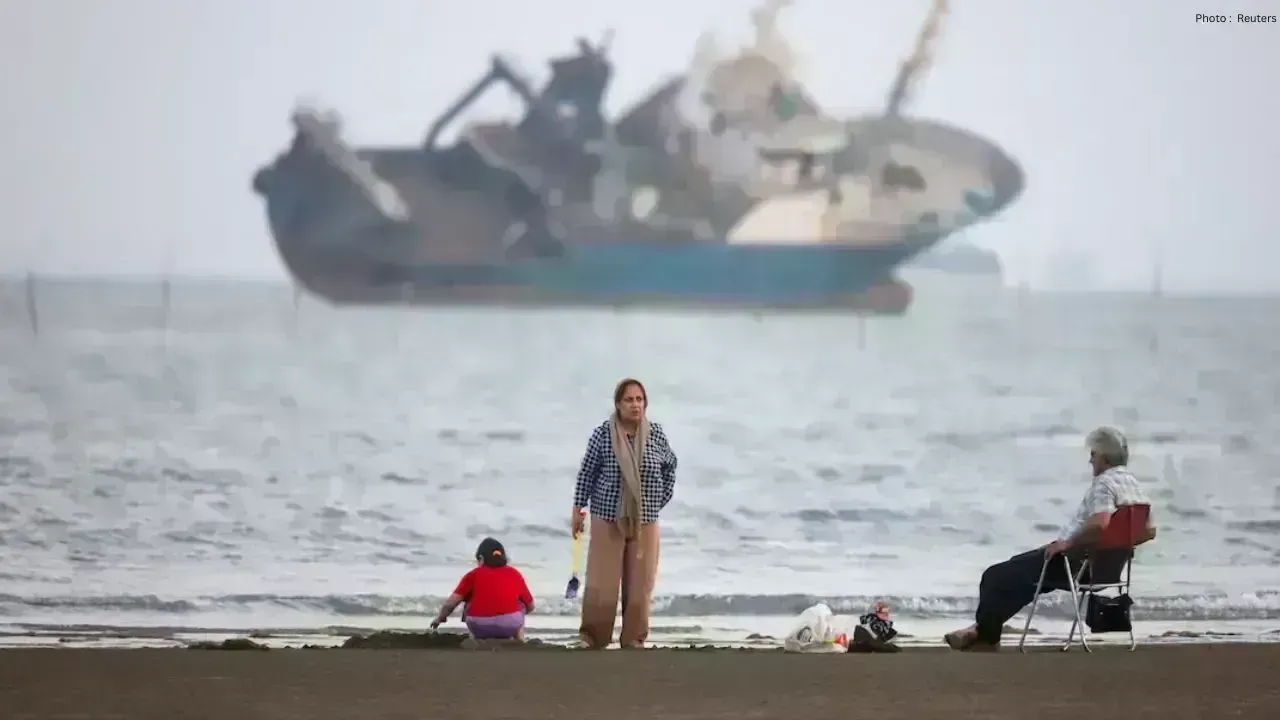
US attacks on Iranian coastal facilities have pushed tensions in the Gulf to a new level, increasing fears of a wider regional confrontation. The military action followed reports of drone activity near key shipping routes and has once again highlighted the fragile relationship between Washington and Tehran. As both sides exchange warnings and military responses, concerns are growing about the future of security in one of the world's most important strategic regions.
The latest developments come at a time when the Middle East is already facing significant political and security challenges. Military activity near major trade routes always attracts global attention because of the region's importance to international commerce and energy supplies. Any conflict involving major powers in this area can affect countries far beyond the Gulf.
American officials stated that the operation was carried out after what they described as a security threat near international shipping lanes. Military installations linked to coastal surveillance and monitoring were reportedly targeted during the operation. The action was presented as a defensive measure aimed at protecting maritime traffic and preventing further security risks.
Iran strongly criticized the strikes and described them as an act of aggression. Officials in Tehran argued that the attacks violated national sovereignty and warned that the country would respond to actions it considers hostile. The strong reaction reflects the deep mistrust that has shaped relations between the two nations for decades.
The confrontation is significant because it occurred near the Strait of Hormuz, one of the busiest maritime passages in the world. A large share of global oil exports travels through this narrow waterway every day. Stability in this area is considered essential for international energy markets, making any military incident a matter of worldwide concern.
The exchange has also increased worries among neighboring countries. Gulf states have long sought to balance security needs with economic development. Rising tensions force governments to focus on defense and emergency preparedness while trying to maintain investor confidence and economic stability.
Financial markets often react quickly to uncertainty in the region. Even when military incidents remain limited, concerns about possible disruptions to shipping routes can influence oil prices and create volatility in global markets. Businesses involved in trade, transportation, and energy closely monitor developments because of the potential economic impact.
Another important issue is the risk of miscalculation. Military operations conducted in sensitive areas can sometimes lead to unintended consequences. A misunderstanding, technical error, or unexpected response could trigger a larger crisis involving additional countries. This possibility remains one of the biggest concerns for international observers.
The latest incident also demonstrates how difficult it has become to reduce tensions through diplomacy alone. Despite repeated calls for dialogue from various governments and international organizations, distrust continues to shape decision-making on both sides. Each military action creates new obstacles to negotiations and makes compromise more difficult.
For people living in the region, continued instability creates uncertainty about the future. Communities depend on peace and economic growth, while businesses require predictable conditions to invest and expand. Prolonged confrontation threatens both objectives and can affect daily life in many ways.
The international community is likely to increase efforts to encourage restraint and prevent further escalation. Diplomatic engagement remains the most practical path toward reducing tensions and avoiding a broader conflict. Regional stability depends not only on military strength but also on communication and political cooperation.
Recent US operation against Iranian coastal sites serves as another reminder of how quickly security conditions can change in the Gulf. While the immediate confrontation may remain limited, the event highlights the ongoing challenges facing the region. The coming days will be closely watched as governments assess their options and seek ways to prevent the situation from becoming even more dangerous.






Achieve Radiant Skin with This Simple Rice Flour Treatment
Transform your skincare routine! Discover how a rice flour mix can restore your skin's glow without

Meta Unveils Subscription Plans for Instagram, Facebook, and WhatsApp
Meta introduces new subscription plans for users of Instagram, Facebook, and WhatsApp, featuring enh

Suvarna Joy on Education Leadership, Resilience, and Building Purpose Through Adversity in the UAE
Suvarna Joy shares her journey of education leadership, motherhood, faith, and resilience within the

Anticipated Dates for UAE Eid Al Adha 2026 Unveiled by Astronomical Experts
Experts predict Eid Al Adha 2026 in the UAE to start on May 27, prompting early holiday planning amo

DAE Achieves Remarkable Growth in Q1 2026 With Record Revenue
Dubai Aerospace Enterprise announces impressive financial results for Q1 2026, reflecting a surge in

Price Increase for Sony PS5 in Southeast Asia Effective May 1
Sony announces a price increase for the PS5 across Southeast Asia starting May 1, 2026, impacting ga




