Post by : Saif Nasser
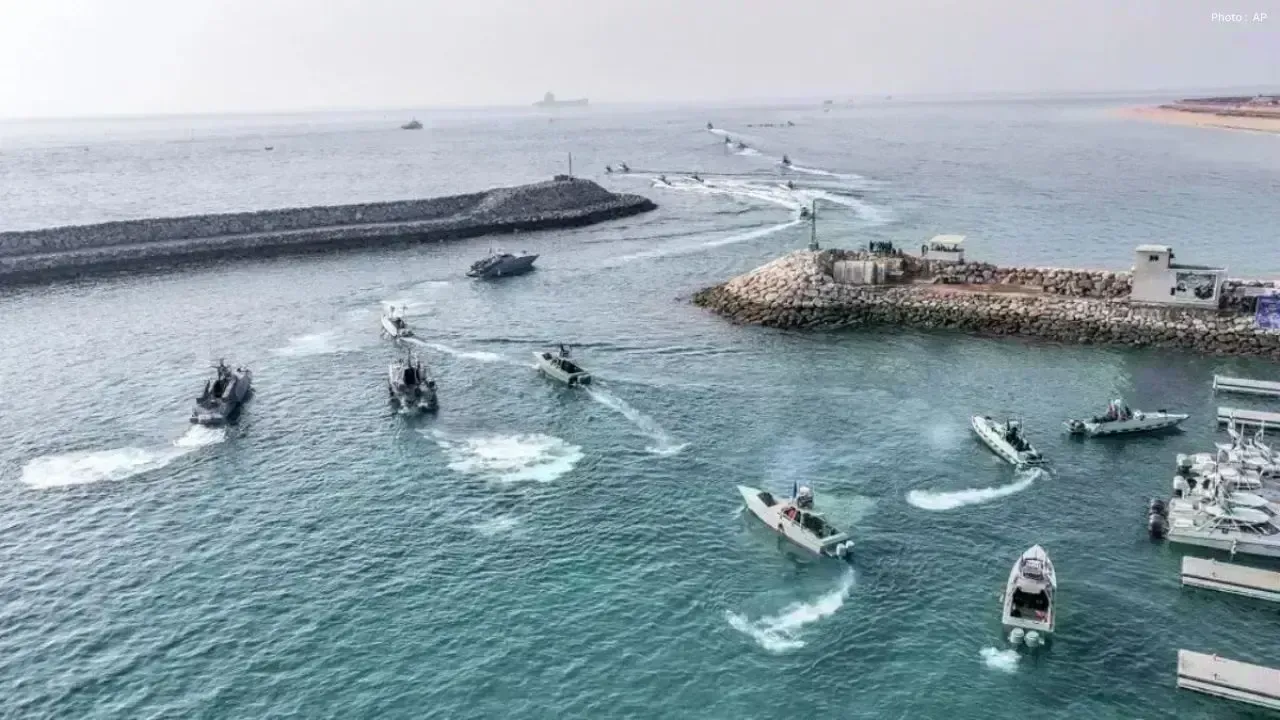
United States has reportedly carried out strikes against Iranian assets near Qeshm Island and the Goruk region, targeting facilities believed to be linked to drone operations. The action comes amid growing concerns over security threats in the Gulf and marks another significant development in the ongoing confrontation between Washington and Tehran. The military operation has attracted global attention because of the strategic importance of the area and the potential consequences for regional stability.
The reported strikes were aimed at locations that American officials believe play a role in supporting drone-related activities. Unmanned aerial systems have become an increasingly important element of modern warfare, and concerns about their use have shaped military planning across the Middle East. The latest operation reflects the growing focus on preventing drone attacks that could threaten military installations, commercial shipping routes, or allied interests in the region.
Qeshm Island occupies a highly strategic position near the Strait of Hormuz, one of the world's most important maritime corridors. A significant portion of global oil shipments passes through this narrow waterway every day. Any military activity in or around this area immediately attracts international attention because disruptions can affect global energy markets and international trade.
The reported action is not only important because of the immediate military objectives but also because of what it signals about the broader relationship between the United States and Iran. Relations between the two countries have remained strained for many years, with disagreements covering security, regional influence, military activities, and nuclear issues. Each new confrontation adds another layer of uncertainty to an already complex relationship.
Military planners often view drone networks as a growing security challenge. Compared to traditional aircraft, unmanned systems can be less expensive, more difficult to detect, and capable of reaching distant targets. Because of these characteristics, many countries have invested heavily in drone technology. Efforts to disrupt such capabilities are increasingly becoming part of modern military strategy.
The location of the reported operation adds further significance. The waters surrounding Qeshm Island are among the most sensitive areas in the world from a security perspective. The region serves as a vital link between energy-producing nations and international markets. Any increase in military activity raises concerns among governments, shipping companies, and investors who depend on stable maritime trade routes.
The economic implications are also considerable. Global energy markets often react quickly to developments in the Gulf. Even limited military actions can create uncertainty regarding oil supplies and transportation routes. Investors closely monitor events in the region because changes in security conditions can influence fuel prices, shipping costs, and broader economic confidence.
For countries that rely heavily on imported energy, stability in the Gulf remains a critical concern. Any disruption to shipping through the Strait of Hormuz could have consequences far beyond the Middle East. This explains why developments involving military operations in the area frequently become international issues rather than purely regional matters.
The reported strikes also highlight the evolving nature of warfare. Traditional military confrontations increasingly involve advanced technologies such as drones, missile defense systems, cyber capabilities, and surveillance networks. Governments around the world are adapting their security strategies to respond to these changing threats. The latest operation demonstrates how technology now plays a central role in modern conflicts.
At the diplomatic level, the incident is likely to generate renewed calls for restraint. Many international observers believe that continued military exchanges increase the risk of miscalculation. Even when operations are limited in scope, they can trigger responses that lead to broader confrontations. Maintaining communication channels during periods of tension is often considered essential for preventing escalation.
Regional governments are watching the situation closely. Many Middle Eastern countries have strong economic and security interests tied to stability in the Gulf. A prolonged confrontation could affect investment, trade, tourism, and development plans throughout the region. As a result, neighboring states often encourage diplomatic solutions whenever tensions rise.
The humanitarian dimension should not be overlooked. While military operations are usually discussed in terms of strategy and security, prolonged conflicts often create uncertainty for ordinary citizens. Families, businesses, and communities can be affected by economic disruptions, security concerns, and reduced opportunities for growth and development.
The reported targeting of Iranian assets near Qeshm Island represents another important chapter in the ongoing security challenges facing the Middle East. Beyond its immediate military objectives, the operation highlights broader concerns about maritime security, drone warfare, regional stability, and global energy supplies. The event serves as a reminder that developments in the Gulf can have consequences that extend far beyond the region itself.
As governments assess the implications of this latest development, the focus will remain on whether diplomatic efforts can prevent further escalation. Military actions may address immediate security concerns, but long-term stability is more likely to depend on dialogue, careful decision-making, and efforts to reduce the risk of wider conflict. The coming days will be closely watched by policymakers, investors, and citizens around the world as they evaluate what this latest chapter means for the future of the region.






Achieve Radiant Skin with This Simple Rice Flour Treatment
Transform your skincare routine! Discover how a rice flour mix can restore your skin's glow without

Meta Unveils Subscription Plans for Instagram, Facebook, and WhatsApp
Meta introduces new subscription plans for users of Instagram, Facebook, and WhatsApp, featuring enh

Suvarna Joy on Education Leadership, Resilience, and Building Purpose Through Adversity in the UAE
Suvarna Joy shares her journey of education leadership, motherhood, faith, and resilience within the

Anticipated Dates for UAE Eid Al Adha 2026 Unveiled by Astronomical Experts
Experts predict Eid Al Adha 2026 in the UAE to start on May 27, prompting early holiday planning amo

DAE Achieves Remarkable Growth in Q1 2026 With Record Revenue
Dubai Aerospace Enterprise announces impressive financial results for Q1 2026, reflecting a surge in

Price Increase for Sony PS5 in Southeast Asia Effective May 1
Sony announces a price increase for the PS5 across Southeast Asia starting May 1, 2026, impacting ga




