Post by : Saif Nasser
A quiet but important shift is taking place in global politics. Many of America’s closest allies are rethinking how they deal with China, the world’s second-largest economy. This change is being driven in part by renewed tensions with the United States under President Donald Trump, whose tough trade policies and sharp political demands have unsettled long-standing partners.
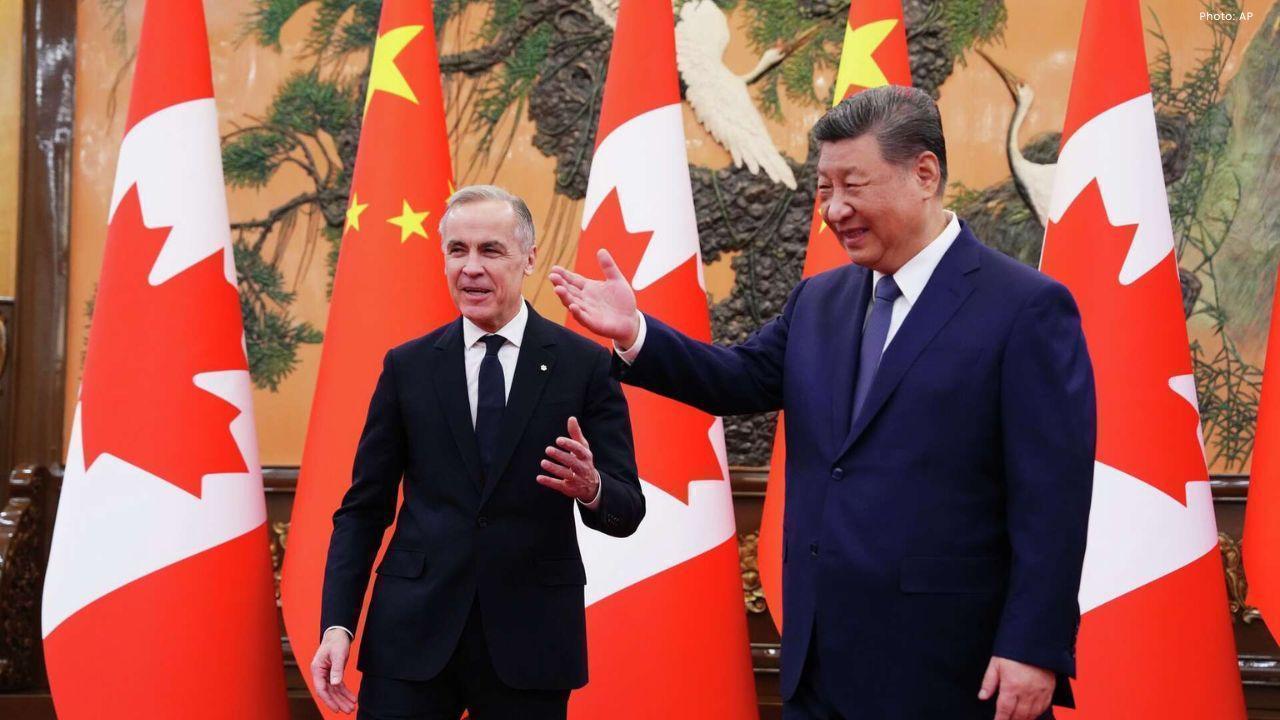
In recent weeks, Chinese President Xi Jinping has welcomed a steady stream of Western leaders to Beijing. Among them are the prime ministers of Canada, the United Kingdom, and Finland. Germany’s new chancellor is expected to visit soon as well. These meetings signal a clear effort by Western countries to rebuild or improve ties with China after years of strained relations.
For Canada, the shift has been especially noticeable. Prime Minister Mark Carney recently visited Beijing and reached a trade deal that reduced tariffs on Chinese electric vehicles and lowered Chinese import taxes on Canadian farm products such as canola oil. Carney described the relationship with China as “more predictable,” a comment widely seen as criticism of the uncertainty caused by US tariff threats.
This move came after years of close coordination between Canada and the United States on China policy. In 2024, Canada had imposed steep tariffs on Chinese electric vehicles in line with US actions. Now, facing economic pressure and trade risks from Washington, Ottawa appears to be charting a more independent path.
In Europe, leaders are also adjusting their approach. British Prime Minister Keir Starmer traveled to Beijing this week, becoming the first UK leader to do so in eight years. Relations had been tense over security concerns, technology issues, and China’s actions in Hong Kong. During the visit, Starmer and Xi agreed to work toward a strategic partnership. The trip resulted in business deals, reduced Chinese tariffs on British goods like Scotch whisky, and easier travel rules for British citizens.
Other European leaders have followed similar paths. Finland signed agreements with China on energy, construction, and environmental cooperation. France, Ireland, and South Korea have also sent leaders to Beijing in recent weeks. These visits reflect a broader European effort to keep economic doors open while managing political and security concerns.
The reason behind this shift lies in growing frustration with Washington. President Trump has warned allies against closer ties with China, calling such moves dangerous. He has also threatened new tariffs, including against Canada, and made controversial demands, such as suggesting US control over Greenland, which angered European partners.
Many leaders now feel caught between two powerful nations. China and the United States both use economic and political pressure to protect their interests. As a result, countries are trying to balance relationships rather than fully side with one power.
European officials say this is not a full turn toward China, but a move toward self-reliance. They want to protect their economies, secure access to markets and resources, and avoid being pushed around by any single global power.
Still, critics warn that these changing alliances could weaken Western unity. If allies pursue separate deals with China, it may become harder for the US and Europe to act together on trade rules, security standards, or human rights concerns.
As the global balance of power shifts, one thing is clear: America’s allies are no longer waiting quietly for direction. They are actively reshaping their foreign policies to survive in a world where pressure comes from all sides.








7.5 Magnitude Earthquake Strikes Japan, Tsunami Alerts Issued
Japan experiences a hefty 7.5 quake, prompting tsunami alerts and safety measures. Stay updated on a

Reopening of the Strait of Hormuz: New Regulations to Impact Global Trade
Iran reopens the strategic Strait of Hormuz with new regulations affecting oil transport and global

Top 10 Must-See Attractions in NYC for First-Time Explorers
Discover essential experiences for first-time visitors to NYC, including attractions, culture, and i

Starbucks Engages Boyu Capital for Major Chinese Expansion
Starbucks teams up with Boyu Capital, selling a majority stake to boost growth and adapt to the Chin

Three Individuals Charged in Massive Meth Trafficking Case in Malaysia
In Malaysia, a married couple and another suspect are charged with trafficking 510kg of meth, facing