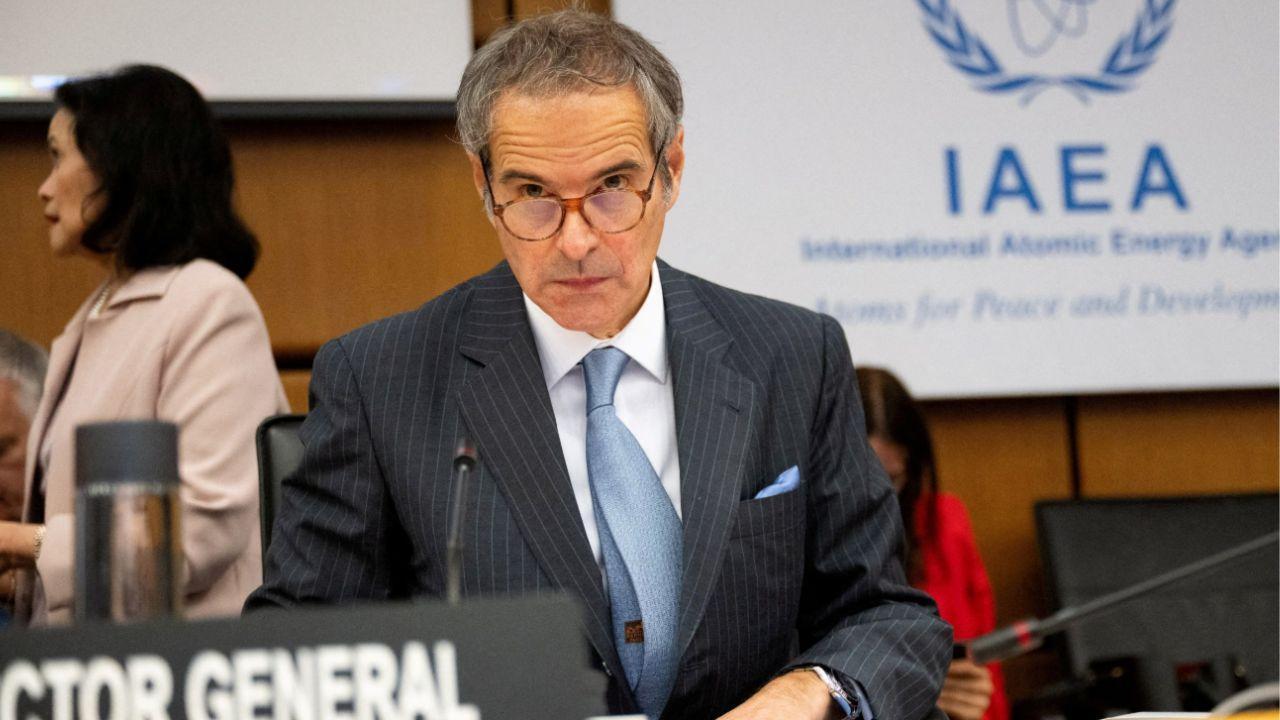
Post by : Priya
Photo:Reuters
In a major setback to global nuclear monitoring efforts, the International Atomic Energy Agency (IAEA) has withdrawn several of its top nuclear inspectors from Iran. This move follows a prolonged dispute over access to key nuclear sites in the country, raising serious concerns about the future of transparency in Iran’s nuclear program.
The decision marks a significant deterioration in the relationship between the UN nuclear watchdog and the Iranian government, and it comes at a time of growing tension across the Middle East. Experts fear the pullout could further weaken efforts to verify Iran’s nuclear activities and potentially bring the region closer to a broader confrontation.
The Background: Iran’s Disputed Nuclear Activity
Iran's nuclear program has been under international scrutiny for over two decades. While Iran insists its nuclear development is for peaceful purposes—such as energy production and medical research—many Western countries, particularly the United States and its allies, have long feared that Tehran is secretly working toward building a nuclear weapon.
In 2015, a breakthrough was achieved with the signing of the Joint Comprehensive Plan of Action (JCPOA), a historic nuclear deal between Iran and six world powers (the US, UK, France, Germany, Russia, and China). Under this agreement, Iran agreed to limit its nuclear activities and open its facilities to IAEA inspectors in return for relief from international sanctions.
However, in 2018, the US, under President Donald Trump, unilaterally withdrew from the JCPOA and reimposed harsh sanctions on Iran. In response, Iran gradually reduced its compliance with the deal, increasing its stockpile of enriched uranium and limiting access to its nuclear facilities for international inspectors.
The Recent Escalation: IAEA and Iran at Odds
Over the past year, tensions between the IAEA and Iran have grown more intense. The IAEA has repeatedly requested access to suspected undeclared nuclear sites and asked for answers regarding traces of nuclear material found at certain locations. Iran, however, has either delayed or denied access, citing political pressure and what it sees as Western bias within the IAEA.
In September 2023, the IAEA’s Director-General Rafael Grossi publicly warned that Iran’s lack of cooperation was “unacceptable” and that the agency was being prevented from performing its core duties. At that time, Grossi emphasized the need for full transparency and called on Iran to restore inspector access and reinstall monitoring equipment that had been removed from several nuclear facilities.
Despite repeated diplomatic efforts, Iran refused to grant the requested access. Iranian officials insisted that they had already fulfilled their obligations and accused the IAEA of acting on behalf of Western interests. This continued standoff has now resulted in a dramatic response from the agency: the withdrawal of key inspection personnel from Iran.
What Does the IAEA Withdrawal Mean?
The IAEA's decision to pull out some of its most experienced inspectors is not merely symbolic—it has serious consequences. These inspectors are part of a specialized group trained to detect even the most minor violations of nuclear non-proliferation rules. Their absence reduces the effectiveness of oversight at a time when Iran is enriching uranium at levels close to weapons-grade.
According to reports, the withdrawal affects not only inspectors but also technical staff who manage sensitive surveillance equipment. This raises fears that any future Iranian nuclear activity may go undetected for extended periods. The IAEA still maintains some presence in the country, but the level of scrutiny has dropped sharply.
Analysts warn that without these experts on the ground, the world may lose visibility into Iran’s rapidly advancing nuclear capabilities. “It’s like trying to monitor a fire with your eyes closed,” one European diplomat told reporters. “We are now flying blind.”
Iran’s Response
Iranian officials have tried to downplay the situation, claiming that the IAEA’s inspectors were rotated out as part of routine operations. However, sources within the agency have confirmed that the decision was a direct result of Iran’s refusal to allow proper access.
In public statements, Iranian authorities accused the IAEA of politicizing the nuclear issue and failing to recognize Iran’s cooperation. "We have always complied with our international commitments, but we will not tolerate interference or unfair treatment," said Mohammad Eslami, head of Iran’s Atomic Energy Organization.
Tehran has also accused Israel and the United States of putting pressure on the IAEA to escalate the situation. Iranian leaders argue that the West is using the nuclear issue as a political tool, particularly in light of upcoming elections and ongoing tensions in Gaza and the Red Sea.
Global Reactions
The international reaction to the IAEA’s move has been swift. The United States has condemned Iran’s behavior, calling it a “dangerous escalation.” A spokesperson from the U.S. State Department said that Iran’s refusal to cooperate with the IAEA confirms that it has “something to hide.”
European leaders, particularly those still committed to the JCPOA, have expressed deep concern. Germany, France, and the United Kingdom issued a joint statement urging Iran to return to full cooperation and stressing that diplomacy remains the only path to avoid a nuclear crisis.
Israel, which has long seen Iran as a major threat, welcomed the IAEA’s tough stance and warned that Tehran’s nuclear progress could soon reach a “point of no return.” Israeli officials have hinted at the possibility of taking unilateral action if diplomatic efforts continue to fail.
Russia and China, while more reserved in their criticism of Iran, have also encouraged greater transparency and called for renewed dialogue. Both countries have historically supported Iran's right to peaceful nuclear energy but are wary of further regional instability.





DAE Achieves Remarkable Growth in Q1 2026 With Record Revenue
Dubai Aerospace Enterprise announces impressive financial results for Q1 2026, reflecting a surge in

Price Increase for Sony PS5 in Southeast Asia Effective May 1
Sony announces a price increase for the PS5 across Southeast Asia starting May 1, 2026, impacting ga

Potential ‘Super El Niño’ in 2026: Understanding the Climate Risks
Could a Super El Niño emerge in 2026? Discover its implications and potential global climate impacts

Global Energy Crisis Intensifies: Markets React to Oil Supply Challenges
Markets are on edge as oil disruptions escalate, influencing prices and economic stability. Explore

Must-See Tourist Spots in London You Can't Overlook
Explore London's essential attractions, from royal landmarks to vibrant markets, ensuring an unforge

Ultimate Guide to Snagging Cheap Flights in 2026
Unlock the secrets to booking affordable flights in 2026 with insightful tips and strategies tailore




