Post by : Priya
Photo:Reuters
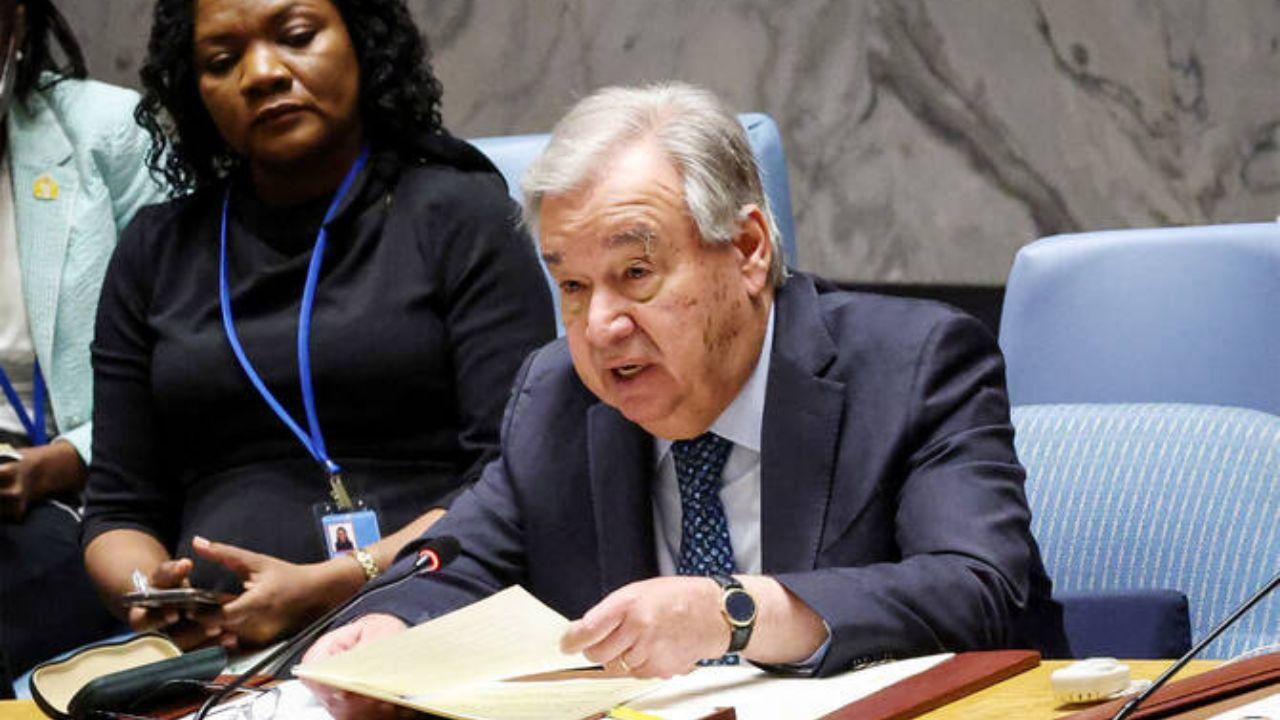
At a time when global tensions are rising and violent conflicts are growing more frequent, United Nations Secretary-General António Guterres has made a strong and urgent appeal for peace. Addressing world leaders at a special UN Security Council meeting in New York, Guterres emphasized the need to solve international disputes through dialogue and cooperation—not war. His emotional speech focused in particular on the worsening humanitarian disaster in Gaza, which he described as a “horror show.”
The UN Secretary-General’s remarks served as both a warning and a plea: without global unity and respect for international law, the world risks falling deeper into violence, division, and human suffering. Guterres stressed that peaceful solutions are not only possible but necessary in order to secure a better future for all.
Gaza: A Symbol of Unending Suffering
Guterres did not hold back in describing the war in Gaza. His use of the phrase “the horror show in Gaza” reflected both the scale of human tragedy and the global failure to prevent it.
Since fighting erupted in late 2023 between Israel and Hamas, the people of Gaza have faced near-total devastation. Thousands have been killed, including many women and children. Hospitals have been bombed, homes have turned to rubble, and basic services like water and electricity have broken down. The UN and humanitarian groups continue to call for aid access, but violence on the ground makes it nearly impossible to help those most in need.
“Innocent civilians are paying the highest price for the failure to end this war,” said Guterres. “This is a crisis of humanity, and we must all take responsibility.”
Guterres’s speech included a demand for an immediate ceasefire and a return to serious peace talks. He urged the international community not to ignore the suffering and not to allow political divisions to stand in the way of saving lives.
Upholding the UN Charter in Troubled Times
The Secretary-General also used the moment to remind countries of their responsibility to uphold the principles of the UN Charter. Adopted in 1945 after World War II, the Charter was designed to prevent future wars by promoting peaceful dialogue, international cooperation, and the protection of human rights.
“Today, those values are being tested,” Guterres said. “We are seeing a world where force is used instead of diplomacy, where division is replacing dialogue, and where the most vulnerable suffer first and most.”
He warned that ignoring these principles would have a global cost—not just in Gaza, but in every region experiencing conflict, from Eastern Europe to Africa to Southeast Asia.
Global Conflicts On The Rise
While Gaza took center stage during the UN meeting, Guterres made it clear that the world is facing multiple crises all at once. Ongoing conflicts in Ukraine, Sudan, Myanmar, and elsewhere have displaced millions, destroyed economies, and deepened poverty. Climate change, food shortages, and political unrest are making matters worse.
According to UN data, more than 117 million people around the world are now forcibly displaced due to war and violence. This is the highest number ever recorded.
“The scale of human suffering is staggering,” said Guterres. “And yet, divisions between nations are making it harder to solve these problems.”
He emphasized that these issues cannot be solved by one country alone. Cooperation, diplomacy, and strong multilateral institutions are key.
Failure of Diplomacy: A Wake-Up Call for Leaders
Guterres also criticized the lack of political will in some parts of the world to engage in meaningful peace efforts. He said that some governments are choosing to invest in weapons and warfare rather than in peace-building and humanitarian support.
The failure of diplomacy, he added, is not just a failure of governments but a betrayal of the hopes of ordinary people who wish for safety, stability, and a better life.
“People want peace. They want food, education, and jobs—not bombs and bullets,” Guterres said. “World leaders must listen.”
A Call to Action: Peace Is Still Possible
Despite the grim picture, Guterres’s message was not one of hopelessness. He insisted that peace is still possible—but only if countries return to the table, respect one another’s rights, and act before situations spiral beyond control.
He highlighted examples of successful peace processes in the past and encouraged nations to learn from them. In his view, even long-standing conflicts can be resolved when political courage meets public support.
“Peace is not passive. It requires effort, honesty, and compromise,” he said. “It is the hardest path but the only one that can lead to real security.”
Humanity Must Come First
One of the most powerful moments of the speech came when Guterres spoke directly about the moral responsibility of governments and international institutions.
“War always destroys. Peace always builds. We must choose to build,” he said.
He called for a global recommitment to humanitarian values: protecting civilians, defending human rights, and putting human life above politics.
This includes increased funding for UN agencies, stronger international laws to prevent war crimes, and more effective peacekeeping missions.
The Road Ahead: A Global Peace Agenda
As the UN continues its work to respond to emergencies, Guterres announced plans to host a Global Peace Forum later this year. The event will bring together diplomats, peacebuilders, community leaders, and youth representatives to discuss new strategies for ending violence and promoting sustainable peace.
He said that the time has come for a fresh global peace agenda—one that is people-centered and rooted in the realities of the modern world.
“We need new tools, new voices, and new thinking to meet today’s challenges,” he said. “The world cannot afford another decade of destruction.”



DAE Achieves Remarkable Growth in Q1 2026 With Record Revenue
Dubai Aerospace Enterprise announces impressive financial results for Q1 2026, reflecting a surge in

Price Increase for Sony PS5 in Southeast Asia Effective May 1
Sony announces a price increase for the PS5 across Southeast Asia starting May 1, 2026, impacting ga

Potential ‘Super El Niño’ in 2026: Understanding the Climate Risks
Could a Super El Niño emerge in 2026? Discover its implications and potential global climate impacts

Global Energy Crisis Intensifies: Markets React to Oil Supply Challenges
Markets are on edge as oil disruptions escalate, influencing prices and economic stability. Explore

Must-See Tourist Spots in London You Can't Overlook
Explore London's essential attractions, from royal landmarks to vibrant markets, ensuring an unforge

Ultimate Guide to Snagging Cheap Flights in 2026
Unlock the secrets to booking affordable flights in 2026 with insightful tips and strategies tailore




