Post by : Shweta
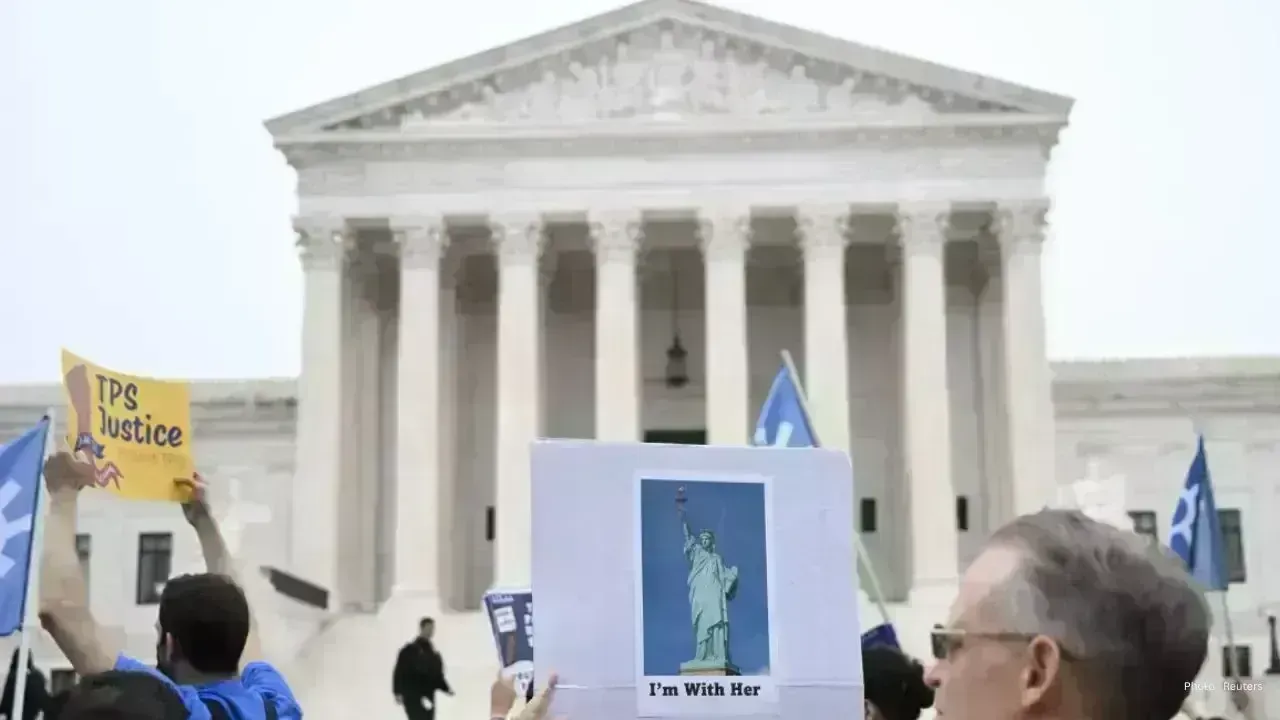
The United States Supreme Court has issued a landmark decision regarding voting rights, igniting political controversy nationwide as the 2026 midterm elections approach. In a split 6-3 ruling, the court determined that Louisiana’s congressional voting map is unconstitutional due to excessive reliance on race in creating districts aimed at enhancing Black representation.
Legal experts and civil rights advocates view this ruling as a significant blow to the Voting Rights Act, a foundational law originally enacted in 1965 to shield African-American voters from discrimination at the polls. Detractors argue that this decision will simplify the process for states to redraw electoral maps in ways that diminish Black political influence, particularly in historically sensitive Southern states.
The case revolved around Louisiana’s congressional map, which included a designated “majority-Black district” established following pressure from civil rights groups. Such districts are essential for ensuring that minority communities can elect representatives aligned with their interests. Nevertheless, the court's majority determined that Louisiana's emphasis on race in boundary drawing contravenes the Equal Protection Clause of the Constitution.
Justice Samuel Alito, in his majority opinion, suggested that although race-based protections were vital in the past to combat discrimination, the contemporary American landscape has evolved. He argued that racial considerations in voting laws are no longer as warranted as they once were.
Justice Clarence Thomas vehemently supported this ruling, labeling race-based voting policies a “disastrous misadventure” in American legal history, asserting that such regulations clash with the principles of constitutional equality.
In stark opposition, the court's liberal justices expressed profound disagreement. Justice Elena Kagan articulated in her dissent that the ruling undermines protections that have historically secured fair representation for African-American voters after extensive periods of discrimination. She cautioned that Black electoral power in many states is now at considerable risk.
Following the ruling, voting rights organizations and political analysts swiftly voiced their concerns. Civil rights advocates noted that the decision may embolden states to redraw congressional maps in ways unfavorable to Black voting strength. Experts worry about the potential effect on election outcomes in tightly contested states during the upcoming midterms.
Matthew Lebo, a political science professor at Western University, characterized this ruling as one of the most significant setbacks for voting rights protections in recent history. He asserted that the Supreme Court's conservative majority seems to disregard ongoing racial discrimination issues in voting, despite prevalent concerns about voter suppression and gerrymandering.
The timing of this ruling is particularly crucial, as various states finalize district maps ahead of the November elections. In Florida, Republican officials swiftly approved revised congressional maps, which critics argue are heavily gerrymandered. Civil rights groups contend that these changes will undermine Black voting power and bolster Republican advantages in several regions.
The implications of the ruling extend to its potential impacts on President Donald Trump and the Republican Party. Analysts suggest that alterations to congressional district boundaries in the South may yield additional seats for Republicans in the House during the midterm elections. Some Democratic leaders warn that this decision could permanently shift the balance of power in Congress.
The Voting Rights Act has been a cornerstone of civil rights legislation in the United States, established during the civil rights movement to combat discriminatory practices like literacy tests and racial intimidation that restricted Black Americans' voting rights, especially in the Jim Crow South.
However, in recent years, the conservative majority on the Supreme Court has repeatedly weakened various aspects of this law. A series of prior rulings has diminished federal oversight that required states with histories of racial discrimination to obtain clearance before altering electoral regulations or district maps. Critics contend that the latest decision continues this troubling trend.
Proponents of the ruling argue that electoral systems should treat all voters equally, regardless of race, and assert that district boundaries should not be primarily influenced by racial identity. Conservative legal factions maintain that race-based mapping can fragment communities and confer undue political advantages.
In contrast, civil rights advocates fear that the ruling might reverse years of progress made towards enhancing minority political representation throughout the country. Numerous organizations have indicated their intent to initiate legal challenges against district maps in states like Florida, Georgia, Alabama, and Texas, where voting rights issues remain a hotbed of activity.
As preparations intensify for the 2026 midterm elections, the Supreme Court’s ruling is poised to amplify national discussions regarding race, voting rights, political representation, and the trajectory of American democracy.









DAE Achieves Remarkable Growth in Q1 2026 With Record Revenue
Dubai Aerospace Enterprise announces impressive financial results for Q1 2026, reflecting a surge in

Price Increase for Sony PS5 in Southeast Asia Effective May 1
Sony announces a price increase for the PS5 across Southeast Asia starting May 1, 2026, impacting ga

Potential ‘Super El Niño’ in 2026: Understanding the Climate Risks
Could a Super El Niño emerge in 2026? Discover its implications and potential global climate impacts

Global Energy Crisis Intensifies: Markets React to Oil Supply Challenges
Markets are on edge as oil disruptions escalate, influencing prices and economic stability. Explore

Must-See Tourist Spots in London You Can't Overlook
Explore London's essential attractions, from royal landmarks to vibrant markets, ensuring an unforge

Ultimate Guide to Snagging Cheap Flights in 2026
Unlock the secrets to booking affordable flights in 2026 with insightful tips and strategies tailore




