Post by : Shweta
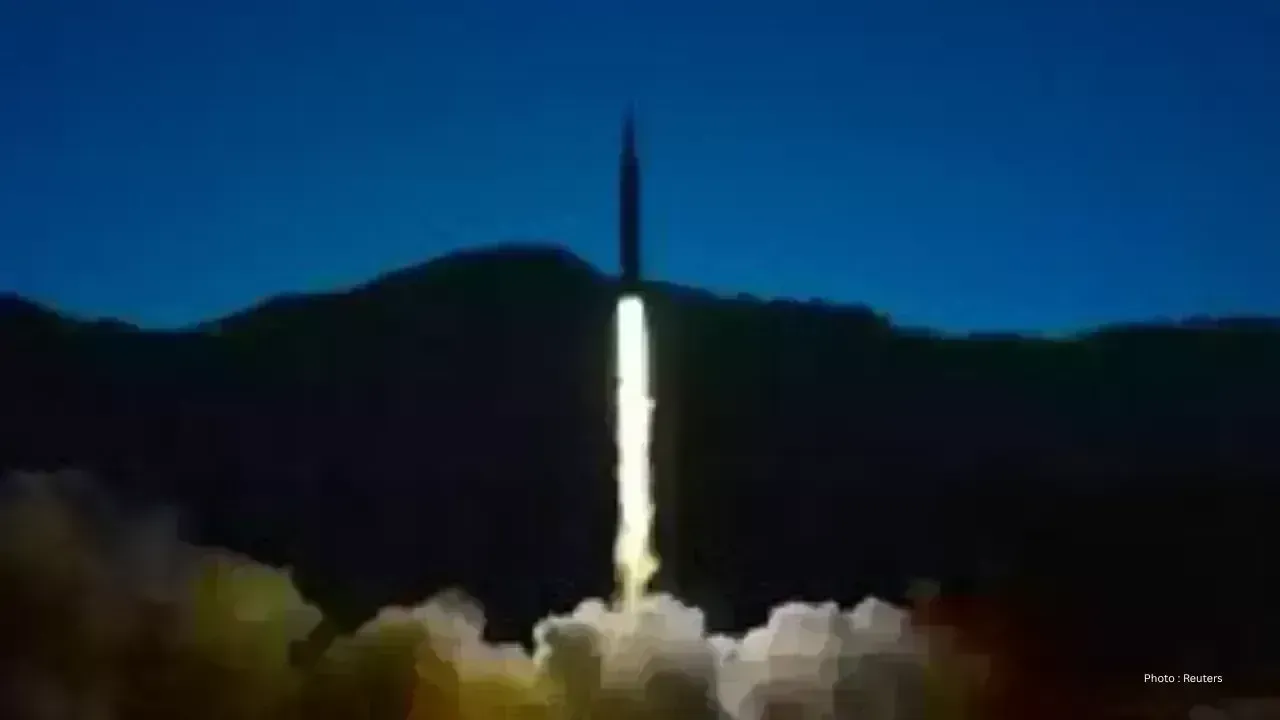
The Ministry of Defence of Ukraine has undertaken a comprehensive examination of missile debris thought to be from North Korean systems, revealing distinct design attributes that differentiate them from Russian missile technology. This detailed analysis centers on fragments collected after a strike in Kharkiv that occurred in early 2024.
Officials noted the analyzed debris bears notable similarities to the KN-23 and KN-24, both short-range ballistic missiles developed by North Korea. Engineers discovered various unique structural features, especially regarding missile geometry. For instance, the KN-23 features a tail diameter of 110 cm tapering to 90 cm at the front—a specification rarely seen in missiles from other nations. The KN-24, on the other hand, demonstrates a diameter of approximately 100 cm.
Further evaluations indicated numerous technical parallels between the debris and publicly accessible images from North Korean manufacturing sites, including distinct bolt configurations around the engine nozzle and specialized compartments to accommodate satellite navigation systems.
Although some visual similarities exist between these missiles and Russian systems, particularly the 9M723 Iskander, Ukrainian officials determined that the KN-23 and KN-24 do not represent direct imitations or licensed adaptations. It appears that North Korea may have incorporated early design elements related to the Iskander system during their development process.
The analysis further highlighted disparities in engineering quality and materials used. North Korean missiles seem to utilize less effective propellants and larger engine designs to achieve comparable range capabilities. The manufacturing methods also appeared antiquated, with soldering quality resembling older industrial benchmarks.
Investigators identified the use of commercially sourced electronic components within the control units, indicating that some parts might have been obtained through indirect means, despite stringent international sanctions. Additionally, the missiles feature a graphite-based nose cone designed to endure extreme temperatures during flight—an economical yet less sophisticated solution compared to contemporary thermal protection systems.
Officials assert that forensic investigations like these are crucial in understanding the continually evolving missile technologies and evaluating potential threats in the broader context of the ongoing conflict between Ukraine and Russia.










Price Increase for Sony PS5 in Southeast Asia Effective May 1
Sony announces a price increase for the PS5 across Southeast Asia starting May 1, 2026, impacting ga

Potential ‘Super El Niño’ in 2026: Understanding the Climate Risks
Could a Super El Niño emerge in 2026? Discover its implications and potential global climate impacts

Global Energy Crisis Intensifies: Markets React to Oil Supply Challenges
Markets are on edge as oil disruptions escalate, influencing prices and economic stability. Explore

Must-See Tourist Spots in London You Can't Overlook
Explore London's essential attractions, from royal landmarks to vibrant markets, ensuring an unforge

Ultimate Guide to Snagging Cheap Flights in 2026
Unlock the secrets to booking affordable flights in 2026 with insightful tips and strategies tailore

The Impact of Consistent Small Investments on Wealth Building
Discover how investing small amounts regularly can positively transform your financial future over t