Post by : Mara Rahim
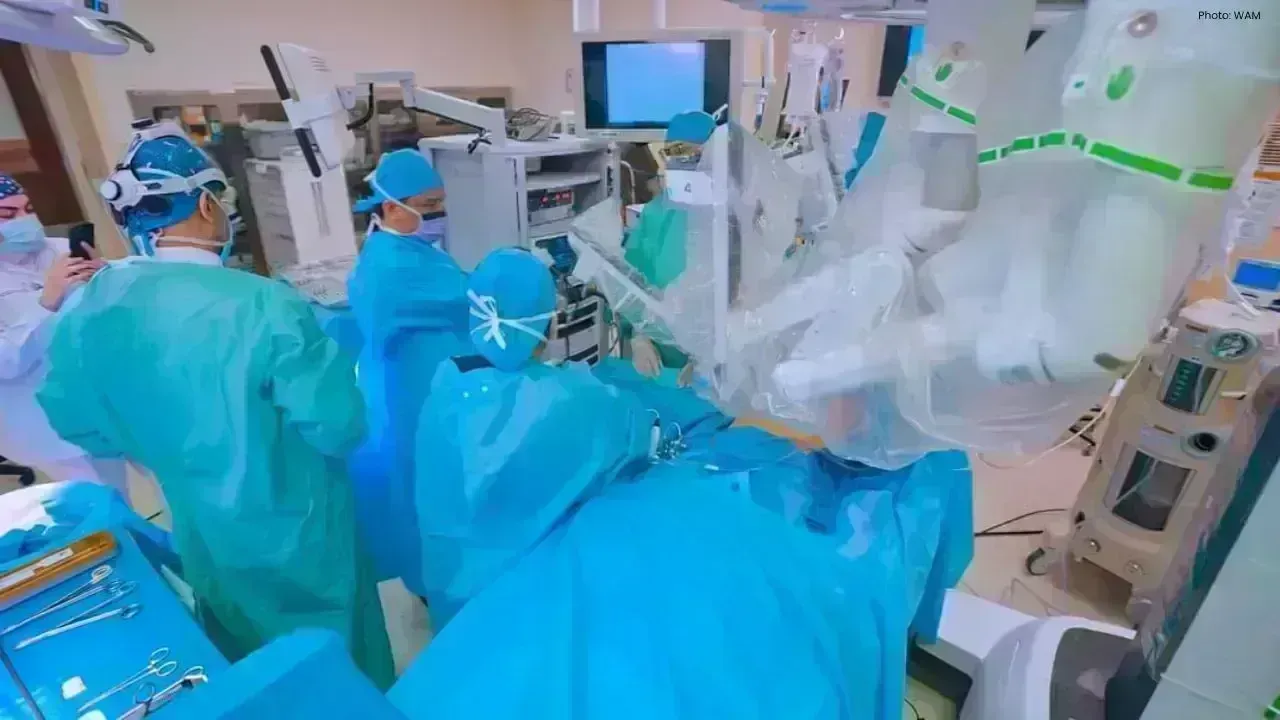
The UAE health sector made noteworthy strides in 2025, reinforcing the nation’s healthcare framework and enhancing its global medical stature. These advances encompassed diagnostics, treatments, research, public health improvements, and pivotal healthcare legislation in line with the UAE’s enduring mission to safeguard community health and elevate life standards.
This evolution was propelled by robust national strategies emphasizing modern infrastructure, proficient healthcare professionals, global collaborations, and visionary policies. The UAE Cabinet enacted the National Policy for Combating Health Risks and reorganized the UAE Health Council along with the National Public Health Committee to fortify coordination and readiness.
A significant legislative milestone was marked with the issuance of a Federal Decree-Law that amended regulations governing organ and tissue donation and transplantation. The revised law adheres to global health standards and permits innovative treatment methods, including animal-derived or engineered organs under rigorous medical supervision, thereby ensuring patient safety and curbing unsafe practices.
Numerous infrastructure and investment initiatives also characterized the year. Health insurance coverage for Fujairah Government employees was authorized, while Abu Dhabi launched a regional vaccine distribution center. Dubai Healthcare City unveiled a AED 1.3 billion expansion project incorporating a new medical complex. In Sharjah, three new pharmaceutical manufacturing facilities were announced, collectively drawing over AED 308 million in investments, enhancing local drug production.
The UAE fortified its edge in advanced diagnostics through a collaborative venture involving NYU Abu Dhabi, Yas Clinic—Khalifa City, and the Abu Dhabi Stem Cells Centre. This project introduced AI-supported MRI analysis into clinical diagnostics. Furthermore, plans emerged to establish the region’s inaugural heavy-ion cancer therapy center, delivering one of the most precise radiation treatments available.
Public health witnessed significant advancements as well. The Ministry of Health and Prevention completed over 95 percent of the National Health Survey alongside the majority of the National Nutrition Survey. Updated scientific guidelines for the National Tuberculosis Control Programme were also released to bolster disease prevention efforts.
UAE healthcare institutions enjoyed international recognition. Emirates Health Services received global accreditation for its Diabetes Clinical Care Programme, cementing its status as the world’s largest accredited diabetes care network. The organization also emerged as the biggest CARF-accredited rehabilitation provider in the region and garnered four international awards.
On a global scale, the UAE achieved first place in health awareness and community engagement. The Hayat programme recorded over 2,034 organ transplants and trained upwards of 10,000 specialists, while efforts to prevent chronic diseases were expanded through cutting-edge research initiatives.








Achieve Radiant Skin with This Simple Rice Flour Treatment
Transform your skincare routine! Discover how a rice flour mix can restore your skin's glow without

Meta Unveils Subscription Plans for Instagram, Facebook, and WhatsApp
Meta introduces new subscription plans for users of Instagram, Facebook, and WhatsApp, featuring enh

Suvarna Joy on Education Leadership, Resilience, and Building Purpose Through Adversity in the UAE
Suvarna Joy shares her journey of education leadership, motherhood, faith, and resilience within the

Anticipated Dates for UAE Eid Al Adha 2026 Unveiled by Astronomical Experts
Experts predict Eid Al Adha 2026 in the UAE to start on May 27, prompting early holiday planning amo

DAE Achieves Remarkable Growth in Q1 2026 With Record Revenue
Dubai Aerospace Enterprise announces impressive financial results for Q1 2026, reflecting a surge in

Price Increase for Sony PS5 in Southeast Asia Effective May 1
Sony announces a price increase for the PS5 across Southeast Asia starting May 1, 2026, impacting ga




