Post by : Saif Nasser
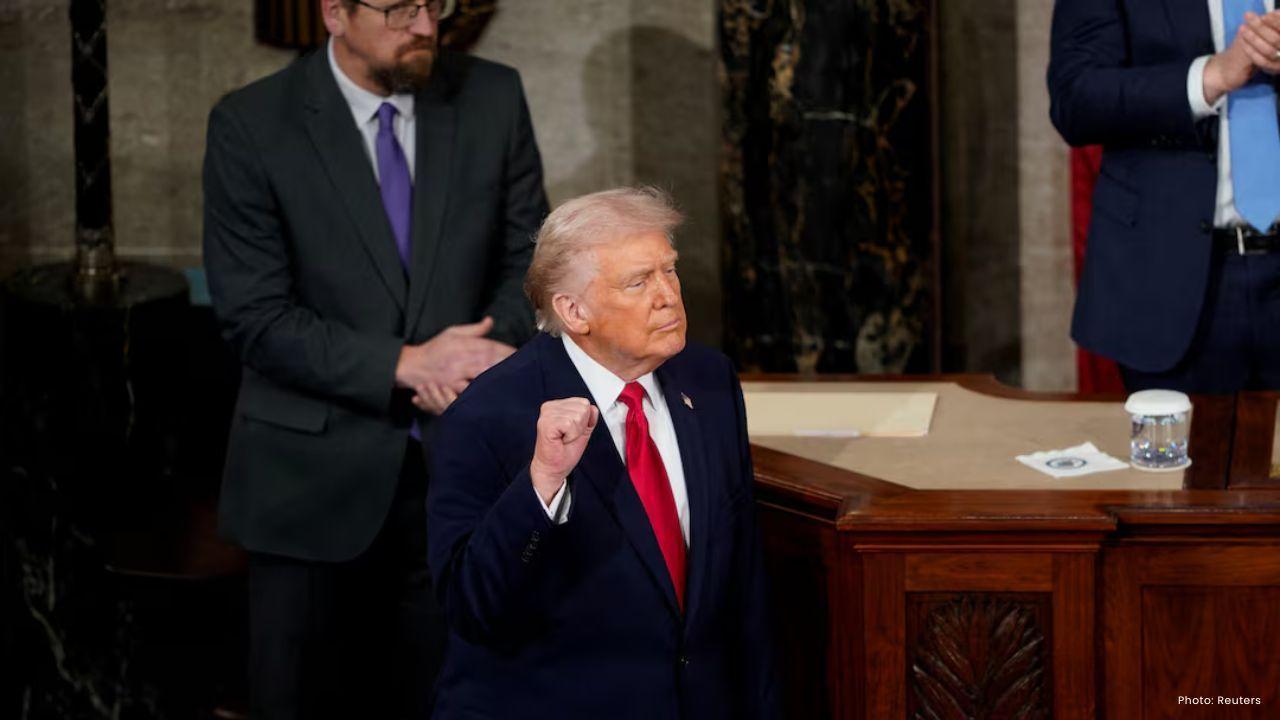
U.S. President Donald Trump has said he told big technology companies to build their own power plants to make sure they have enough electricity. The president’s message reflects his focus on energy security and supporting American business, but it has also sparked debate about how energy should be produced and who should pay for it.
At a public event, President Trump said that major tech companies with large campuses and data centers need reliable power. He suggested that these companies should develop their own energy sources rather than depending mainly on existing power grids. His statement did not lay out a detailed plan, but it made clear that he wants companies to take more responsibility for their energy needs.
President Trump’s comments come as part of a wider discussion about the future of energy in the United States. The nation’s power system includes both public and private providers. Electricity is generated from many sources — including fossil fuels like coal and natural gas, as well as renewable sources like wind and solar. Energy policy has long been a topic of political debate, especially as technology advances and climate concerns grow.
Promoting energy independence is a key theme of the president’s message. By encouraging companies to build their own power plants, he hopes to reduce dependence on outside energy supplies and avoid interruptions caused by grid problems or extreme weather. Supporters of this idea say that having local power generation could improve reliability and help businesses run smoothly.
However, critics have raised concerns. Building power plants is expensive and complex. It may not be cost-effective for many companies, especially smaller ones that do not have large energy needs. There are also questions about environmental impact. Traditional power plants that use fossil fuels can release pollution that harms air quality and contributes to climate change. Even some renewable power sources require careful planning and investment.
Another issue is fairness. Some experts say that asking private companies to produce their own power could shift responsibility away from public investment in national infrastructure. They argue that the government and energy companies should work together to improve the overall grid so that all users benefit, not just a few large firms.
Big technology companies are already active in energy projects. Many of them have invested in renewable energy like solar and wind farms. Some have long-term contracts to buy clean power from outside suppliers. These efforts are part of corporate plans to reduce emissions and meet sustainability goals. Building new power plants would be an extension of those efforts, but it would also require more planning, land, permits, and long-term financial commitment.
The president did not specify what kind of power plants he wants companies to build. This leaves open questions about whether these plants would run on fossil fuels, renewable energy, or a combination of both. The choice would have important effects on costs, environmental concerns and public opinion.
The idea of corporate-owned power generation is not entirely new. In some industries, companies already generate their own electricity when the national grid cannot meet demand or when prices are high. But a broad push for major technology firms to build their own plants is a stronger step.
Supporters say this approach can drive innovation in energy production. If large tech firms invest in new technologies, it could spur advancements that benefit other sectors too. For example, improvements in battery storage, microgrids, or clean energy could come from private investment.
At the same time, energy experts say that a balanced approach is important. Public and private sectors must work together to ensure that energy systems are reliable, affordable and environmentally responsible. Building a strong national grid with capacity for future demand remains a priority for many policymakers.
In simple terms, the president’s call for big technology companies to build their own power plants highlights ongoing debate about energy security and responsibility. While it may encourage greater private investment and reliability for large firms, it also raises questions about costs, environmental impact, and the role of government in supporting national energy infrastructure.








Elevate Your Mornings: 7 Protein-Packed Breakfast Ideas
Discover 7 quick and nutritious high-protein breakfasts to keep you energized and focused throughout

Unlocking Wellness in the UAE: 7 Transformative Habits
Explore 7 effective wellness practices inspired by the UAE lifestyle for a healthier, happier life.

Starbucks Engages Boyu Capital for Major Chinese Expansion
Starbucks teams up with Boyu Capital, selling a majority stake to boost growth and adapt to the Chin

Three Individuals Charged in Massive Meth Trafficking Case in Malaysia
In Malaysia, a married couple and another suspect are charged with trafficking 510kg of meth, facing
Singapore Police Revisit Geylang Murder Scene with Suspect
In Geylang, police return a murder suspect to the scene of a crime involving the fatal stabbing of a