Post by : Monika
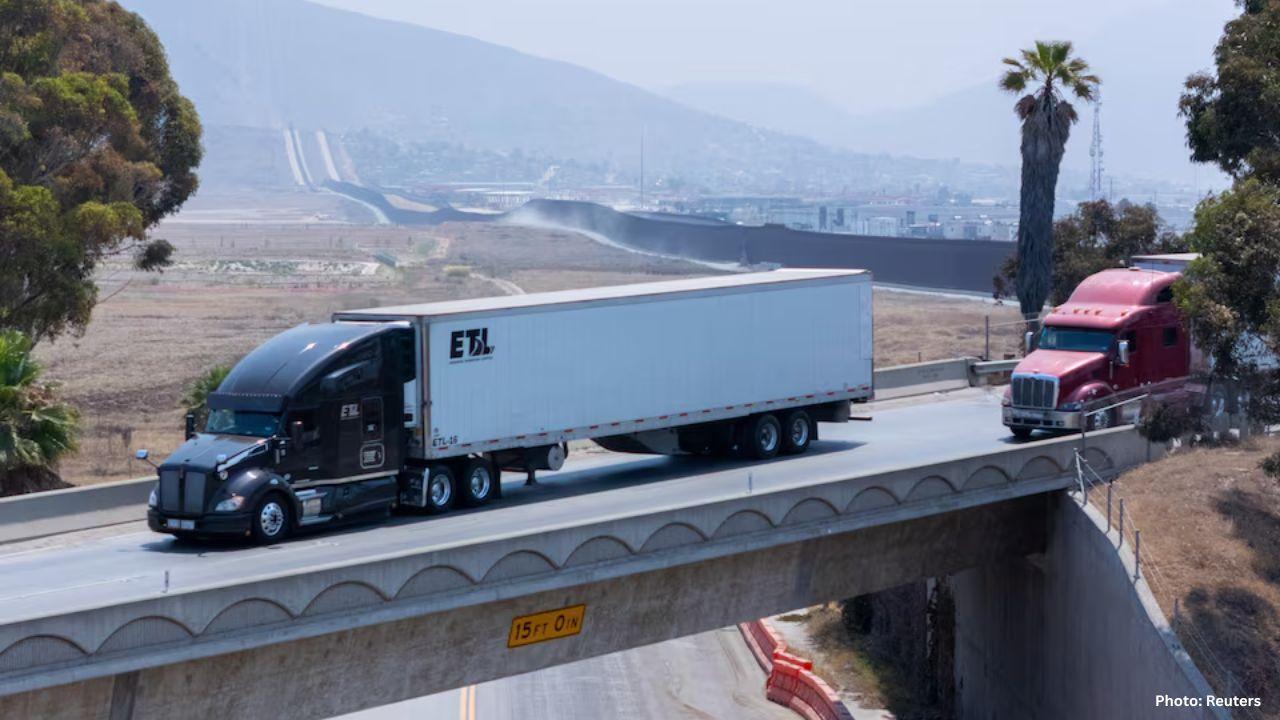
On October 6, 2025, President Donald Trump announced that starting November 1, 2025, all imported medium- and heavy-duty trucks entering the United States will be subject to a 25% tariff. This decision is part of his broader strategy to protect American manufacturers from foreign competition and bolster domestic production.
What Are Medium- and Heavy-Duty Trucks?
Medium- and heavy-duty trucks include vehicles such as delivery trucks, garbage trucks, public utility trucks, transit buses, school buses, and tractor-trailer trucks. These vehicles are essential for various industries, including transportation, logistics, and public services.
Why Is This Tariff Being Imposed?
President Trump stated that the new tariff aims to protect U.S. truck manufacturers from "unfair outside competition." He emphasized that the move would benefit American companies like Peterbilt, Kenworth, and Freightliner, which are owned by Paccar and Daimler Truck, respectively. The administration has previously cited national security concerns as a justification for similar trade measures.
Which Countries Are Affected?
The United States imports a significant number of medium- and heavy-duty trucks from several countries. Mexico is the largest exporter of these vehicles to the U.S., with shipments tripling since 2019 to about 340,000 units.
Other major exporters include Canada, Japan, Germany, and Finland. These countries are considered allies of the U.S., and the new tariffs have raised concerns about the impact on trade relations.
Impact on the U.S. Trucking Industry
Reactions from Industry Stakeholders
Concerns Over Trade Relations
The imposition of the 25% tariff has raised concerns about the impact on trade relations with allied countries:
Mexico: As the largest exporter of medium- and heavy-duty trucks to the U.S., Mexico has expressed strong opposition to the new tariff. The country argues that many of the trucks exported to the U.S. contain a significant amount of U.S.-made parts, and the tariff could undermine the benefits of the United States-Mexico-Canada Agreement (USMCA).
European Union: Countries like Germany and Finland, which also export trucks to the U.S., have raised concerns about the potential for retaliatory measures and the impact on their industries.
Potential for Retaliation
The imposition of a 25% tariff on imported medium- and heavy-duty trucks represents a significant shift in U.S. trade policy. While the move aims to protect domestic manufacturers and promote local production, it also raises concerns about increased costs, potential supply chain disruptions, and the impact on trade relations with allied countries. As the policy takes effect on November 1, 2025, its full implications will unfold in the coming months.










DAE Achieves Remarkable Growth in Q1 2026 With Record Revenue
Dubai Aerospace Enterprise announces impressive financial results for Q1 2026, reflecting a surge in

Price Increase for Sony PS5 in Southeast Asia Effective May 1
Sony announces a price increase for the PS5 across Southeast Asia starting May 1, 2026, impacting ga

Potential ‘Super El Niño’ in 2026: Understanding the Climate Risks
Could a Super El Niño emerge in 2026? Discover its implications and potential global climate impacts

Global Energy Crisis Intensifies: Markets React to Oil Supply Challenges
Markets are on edge as oil disruptions escalate, influencing prices and economic stability. Explore

Must-See Tourist Spots in London You Can't Overlook
Explore London's essential attractions, from royal landmarks to vibrant markets, ensuring an unforge

Ultimate Guide to Snagging Cheap Flights in 2026
Unlock the secrets to booking affordable flights in 2026 with insightful tips and strategies tailore




