Post by : Shweta
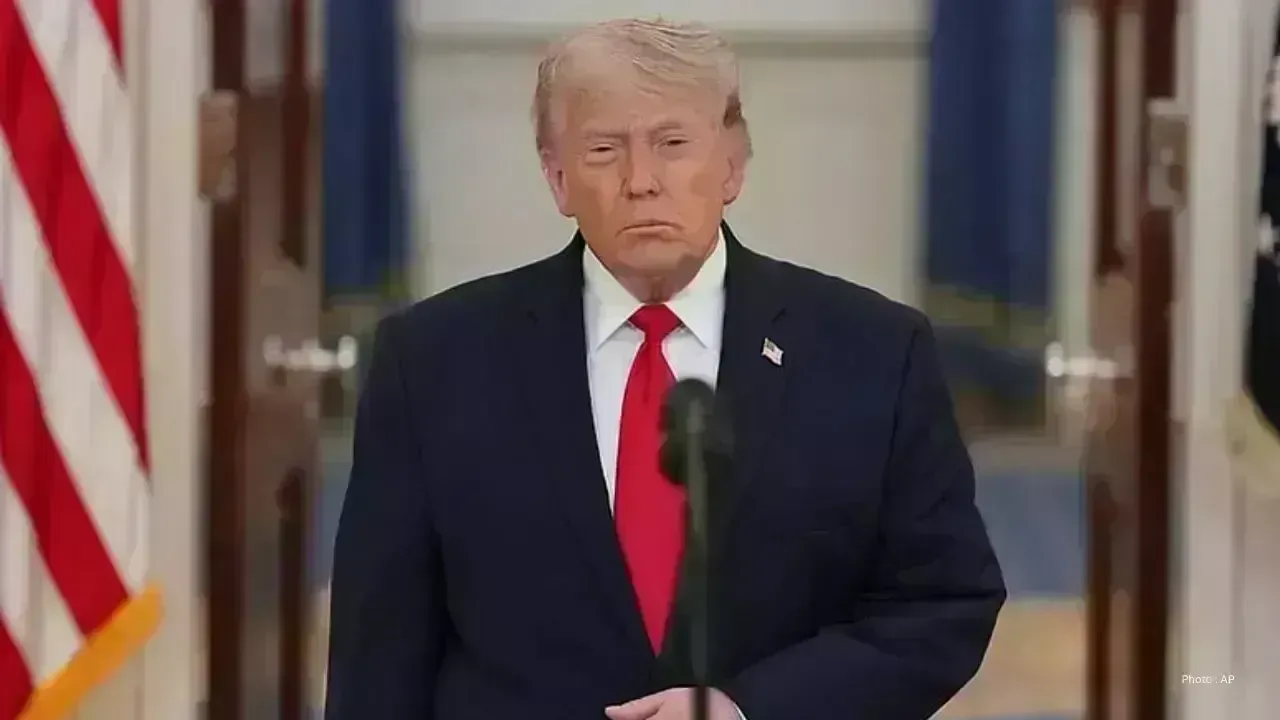
President Donald Trump convened a strategic meeting with national security advisors to analyze Iran’s recent proposal regarding the reopening of the Strait of Hormuz, a vital passage that accounts for nearly 20% of the world’s oil transportation. This analysis comes at a critical time of escalating tensions and ongoing pressure from blockades, presenting a significant concern for both global energy stability and security.
The White House indicated that the discussions were aimed at assessing Tehran’s offer and its capacity to alleviate the ongoing standoff. White House spokesperson Karoline Leavitt informed that while deliberations were in motion, officials are not prepared to disclose definitive outcomes, insisting that the president would provide details directly.
Notably, Marco Rubio recently acknowledged that Iran seems “serious” about concluding a deal, albeit seeking additional time. He further elaborated that while talks progress, internal discrepancies within Iran complicate matters significantly. These divisions, he noted, frequently restrict the flexibility of Iranian negotiators in conversations with the United States.
Iran's latest proposal arises as the US persistently applies naval pressure in the region. Officials have voiced cautious optimism but caution that Tehran’s terms do not fully align with Washington’s critical requirements. According to sources, the administration perceives progress yet recognizes that substantial gaps endure before a final agreement can be reached.
Rubio also underscored the intricate political landscape in Iran, where different factions exert influence over decision-making. He remarked that while certain leaders are cognizant of the imperative to manage the nation’s economy and foreign relations, others adhere to more uncompromising ideological perspectives. This internal schism, he asserts, complicates negotiations, necessitating that Iranian representatives navigate competing interests.
The atmosphere surrounding the Strait of Hormuz remains fraught, as the region continues to serve as a strategic choke point for global oil shipments. Any disruption here directly impacts energy costs and international trade, intensifying the urgency for a diplomatic solution.
As the dialogue advances, the US administration is meticulously weighing its tactics, attempting to strike a balance between diplomatic engagement and sustained pressure. The results of these discussions may significantly influence the trajectory of relations between Washington and Tehran and the overall stability of the region.





Price Increase for Sony PS5 in Southeast Asia Effective May 1
Sony announces a price increase for the PS5 across Southeast Asia starting May 1, 2026, impacting ga

Potential ‘Super El Niño’ in 2026: Understanding the Climate Risks
Could a Super El Niño emerge in 2026? Discover its implications and potential global climate impacts

Global Energy Crisis Intensifies: Markets React to Oil Supply Challenges
Markets are on edge as oil disruptions escalate, influencing prices and economic stability. Explore

Must-See Tourist Spots in London You Can't Overlook
Explore London's essential attractions, from royal landmarks to vibrant markets, ensuring an unforge

Ultimate Guide to Snagging Cheap Flights in 2026
Unlock the secrets to booking affordable flights in 2026 with insightful tips and strategies tailore

The Impact of Consistent Small Investments on Wealth Building
Discover how investing small amounts regularly can positively transform your financial future over t




