Post by : Saif Nasser
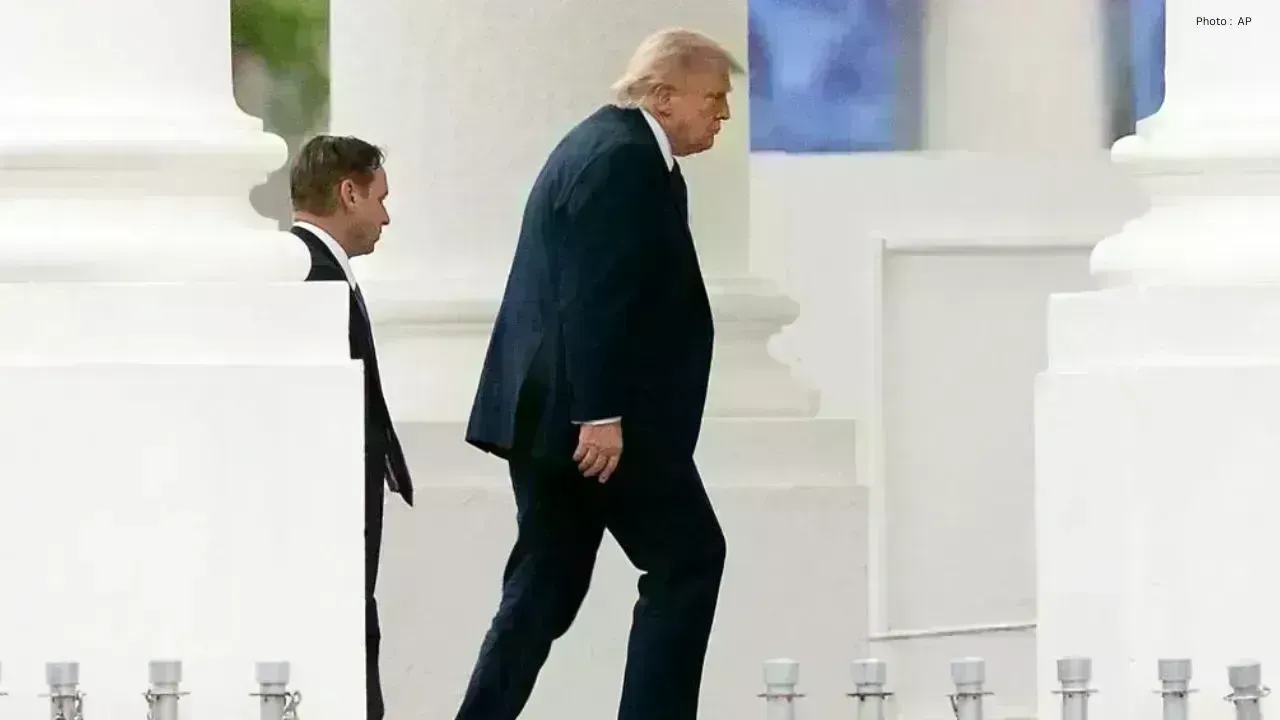
United States President Donald Trump has reportedly indicated that Washington is moving closer toward possible military strikes on Iran, although no final decision has been officially made. The statement has increased global attention as tensions in the Middle East continue to grow over security concerns, regional conflicts, and diplomatic disagreements.
The remarks come during a sensitive period for relations between the United States and Iran. Political pressure, military activity, and nuclear-related disputes have kept both countries at the center of international concern for several years. Any possibility of direct military action could have major consequences not only for the region but also for global security and economic stability.
According to reports, discussions inside the American leadership circle are continuing, but no formal order for military operations has been announced. Officials are believed to be reviewing different options while monitoring developments involving Iran and regional security conditions.
Trump’s comments immediately attracted reactions from international observers, diplomats, and security experts. Many fear that military escalation between Washington and Tehran could lead to wider instability across the Middle East, affecting oil markets, trade routes, and regional alliances.
Relations between the United States and Iran have remained tense for decades. Disagreements over nuclear development, economic sanctions, military presence, and regional influence repeatedly created conflict between the two countries. Tensions increased sharply after the United States withdrew from the 2015 nuclear agreement during Trump’s presidency.
The nuclear deal, officially known as the Joint Comprehensive Plan of Action, was originally created to limit Iran’s nuclear activities in exchange for sanctions relief. After Washington left the agreement, Tehran gradually reduced several commitments linked to the deal, leading to growing international concern.
Since then, both countries have faced several periods of confrontation involving sanctions, naval incidents, drone attacks, and regional proxy conflicts. Diplomatic efforts have continued at different stages, but major disagreements remain unresolved.
Security experts say any military operation against Iran could create serious consequences for the wider Middle East region. Countries neighboring Iran may face security risks, while global energy prices could rise sharply because of disruptions in oil transport routes. The Strait of Hormuz, one of the world’s most important shipping passages for oil exports, often becomes a major concern during regional tensions.
Political analysts believe strong public statements are sometimes used as part of strategic pressure during negotiations and international disputes. Military threats may aim to influence diplomatic talks, discourage aggressive actions, or strengthen political positioning before negotiations.
At the same time, observers warn that even strong political messaging can increase uncertainty and fear if communication between countries becomes weaker. Misunderstandings during tense situations sometimes create dangerous outcomes despite the absence of formal military plans.
Iranian officials have repeatedly stated that they are prepared to defend national sovereignty against external threats. Tehran also continues criticizing American sanctions and military presence in the region. Iranian leaders argue that economic restrictions placed heavy pressure on ordinary citizens and damaged the national economy.
The possibility of military conflict also worries many people across the Middle East who already face instability from ongoing regional crises. Conflicts in different countries over the last two decades created humanitarian disasters, economic destruction, and displacement affecting millions of civilians.
Global markets are also watching developments closely. Oil prices often react quickly whenever tensions rise between major powers in the Gulf region. Investors fear that conflict involving Iran could affect energy supplies and increase economic uncertainty worldwide.
Diplomatic efforts by international mediators continue as several countries encourage both sides to avoid direct confrontation. European governments, regional powers, and international organizations have repeatedly called for restraint, dialogue, and peaceful negotiation.
Military experts note that modern conflicts can rapidly expand beyond initial targets because of alliances, regional armed groups, and strategic interests. This is why many analysts believe diplomacy remains the safest option for reducing tensions.
Inside the United States, discussions surrounding Iran policy remain politically important. Some leaders support a stronger military approach, while others argue that negotiation and diplomacy provide better long-term solutions. Public opinion remains divided on how Washington should manage relations with Tehran.
For Iran, continued pressure from sanctions and political isolation also remains a major challenge. Economic difficulties, inflation, and trade restrictions continue affecting businesses and ordinary citizens across the country.
The latest comments from Donald Trump therefore arrive at a time when global attention toward Middle East security remains extremely high. While no final military decision has been confirmed, the possibility of future action has already increased concern among international observers.
As diplomatic discussions continue and regional tensions remain unresolved, many governments around the world are closely monitoring developments between Washington and Tehran. The coming weeks may prove important in determining whether the situation moves toward negotiation or deeper confrontation.







Anticipated Dates for UAE Eid Al Adha 2026 Unveiled by Astronomical Experts
Experts predict Eid Al Adha 2026 in the UAE to start on May 27, prompting early holiday planning amo

DAE Achieves Remarkable Growth in Q1 2026 With Record Revenue
Dubai Aerospace Enterprise announces impressive financial results for Q1 2026, reflecting a surge in

Price Increase for Sony PS5 in Southeast Asia Effective May 1
Sony announces a price increase for the PS5 across Southeast Asia starting May 1, 2026, impacting ga

Potential ‘Super El Niño’ in 2026: Understanding the Climate Risks
Could a Super El Niño emerge in 2026? Discover its implications and potential global climate impacts

Global Energy Crisis Intensifies: Markets React to Oil Supply Challenges
Markets are on edge as oil disruptions escalate, influencing prices and economic stability. Explore

Must-See Tourist Spots in London You Can't Overlook
Explore London's essential attractions, from royal landmarks to vibrant markets, ensuring an unforge




