Post by : Saif Nasser
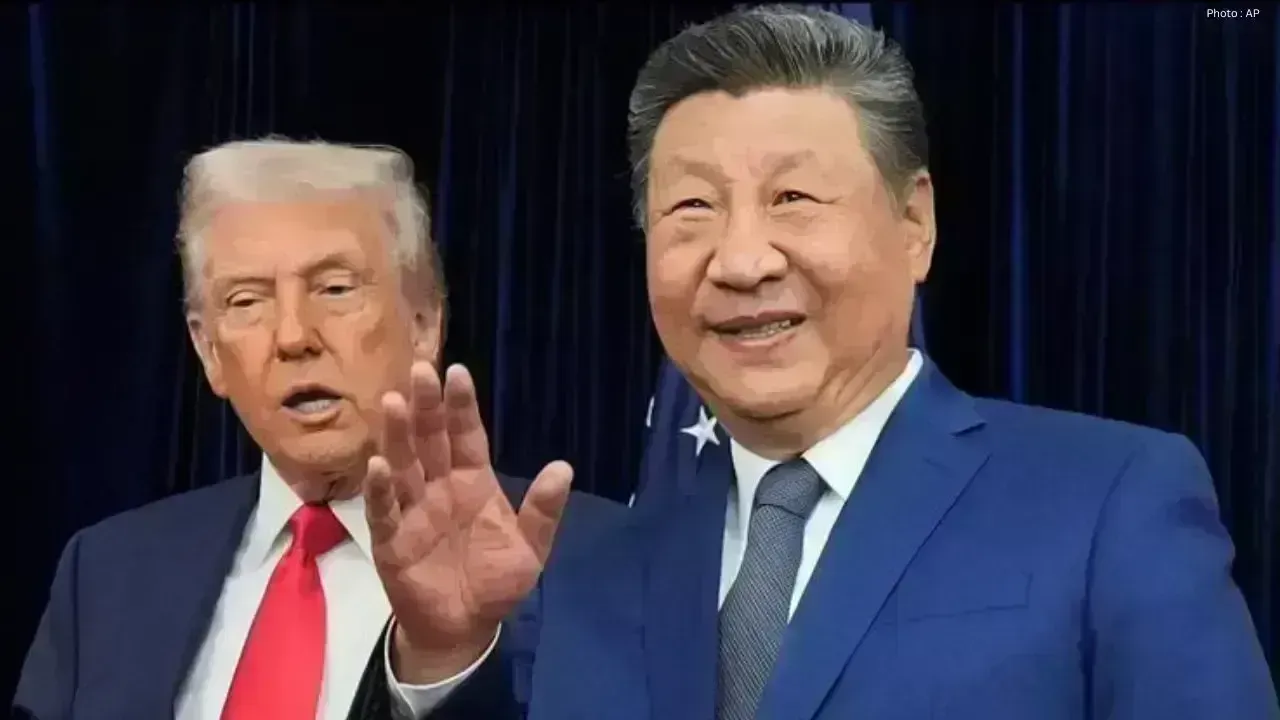
A major meeting between U.S. President Donald Trump and Chinese President Xi Jinping is drawing worldwide attention as both countries prepare for high-level talks in Beijing. The summit comes at a time when tensions between the United States and China remain high over trade, Taiwan, technology, and the growing conflict linked to Iran in the Middle East.
Even though both sides say they want stable relations, many difficult issues remain unresolved. Experts believe the summit is less about solving every problem and more about preventing tensions from becoming even worse. The meeting is expected to focus heavily on economic cooperation, security concerns, and global political stability.
Trade remains one of the biggest topics between the two countries. Over the past few years, the United States and China have gone through repeated tariff battles and trade disputes. Although both countries agreed to a temporary trade truce last year, major disagreements still exist. Washington continues pushing China to buy more American goods such as soybeans, beef, and aircraft, while Beijing wants relief from restrictions on technology exports and semiconductor access.
The economic relationship between the world’s two largest economies has changed significantly. American companies are reducing dependence on Chinese manufacturing, while China is investing heavily in its own technology industries to reduce reliance on Western products. This has created growing competition in areas like artificial intelligence, electric vehicles, rare earth minerals, and advanced computer chips.
Taiwan is expected to become another major point of discussion during the summit. China considers Taiwan part of its territory and strongly opposes U.S. military support for the island. The United States, meanwhile, continues to sell weapons to Taiwan and supports its ability to defend itself. Beijing has repeatedly warned Washington to respect the “One China” principle and stop actions it believes encourage Taiwanese independence.
Military pressure around Taiwan has increased in recent years. Chinese warplanes and naval ships regularly operate near the island, raising fears of possible conflict in the future. At the same time, the United States and its allies continue military cooperation in the Indo-Pacific region, which China sees as a challenge to its influence.
Another important issue now shaping the summit is the ongoing Iran crisis. The United States wants China to use its influence with Iran to help reduce tensions in the Middle East. China remains one of Iran’s major economic partners and buys large amounts of Iranian oil. Washington believes Beijing could play an important role in encouraging stability in the region.
The Iran conflict has also affected China directly because the country depends heavily on oil shipments passing through the Strait of Hormuz. Any disruption in the Gulf region could threaten China’s energy security and economic growth. Because of this, Beijing has strong reasons to support efforts aimed at preventing wider war.
The summit is also attracting major American business leaders. Reports say executives from companies including Apple, Tesla, and Boeing may join the U.S. delegation during the visit. Their presence highlights the huge financial importance of U.S.-China relations despite political tensions.
For businesses around the world, the outcome of the summit matters greatly. A stable relationship between the United States and China can support global markets, trade flows, and investment. But continued conflict between the two powers could create uncertainty for industries, supply chains, and financial markets worldwide.
Analysts say expectations for major breakthroughs remain low. The differences between the two countries are deep and involve long-term strategic competition. Still, both governments understand that open conflict would damage the global economy and increase international instability.
The summit also reflects changing global power dynamics. China has grown stronger economically and technologically over the past decade, while the United States remains determined to maintain its global leadership position. Both countries are now competing not only in trade, but also in military influence, diplomacy, technology, and global partnerships.
For ordinary people around the world, the meeting may seem distant, but its impact could be significant. Decisions made by Washington and Beijing can influence fuel prices, technology access, jobs, investment, and international peace. The relationship between these two nations affects nearly every major global issue today.










Anticipated Dates for UAE Eid Al Adha 2026 Unveiled by Astronomical Experts
Experts predict Eid Al Adha 2026 in the UAE to start on May 27, prompting early holiday planning amo

DAE Achieves Remarkable Growth in Q1 2026 With Record Revenue
Dubai Aerospace Enterprise announces impressive financial results for Q1 2026, reflecting a surge in

Price Increase for Sony PS5 in Southeast Asia Effective May 1
Sony announces a price increase for the PS5 across Southeast Asia starting May 1, 2026, impacting ga

Potential ‘Super El Niño’ in 2026: Understanding the Climate Risks
Could a Super El Niño emerge in 2026? Discover its implications and potential global climate impacts

Global Energy Crisis Intensifies: Markets React to Oil Supply Challenges
Markets are on edge as oil disruptions escalate, influencing prices and economic stability. Explore

Must-See Tourist Spots in London You Can't Overlook
Explore London's essential attractions, from royal landmarks to vibrant markets, ensuring an unforge




