Post by : Saif Nasser
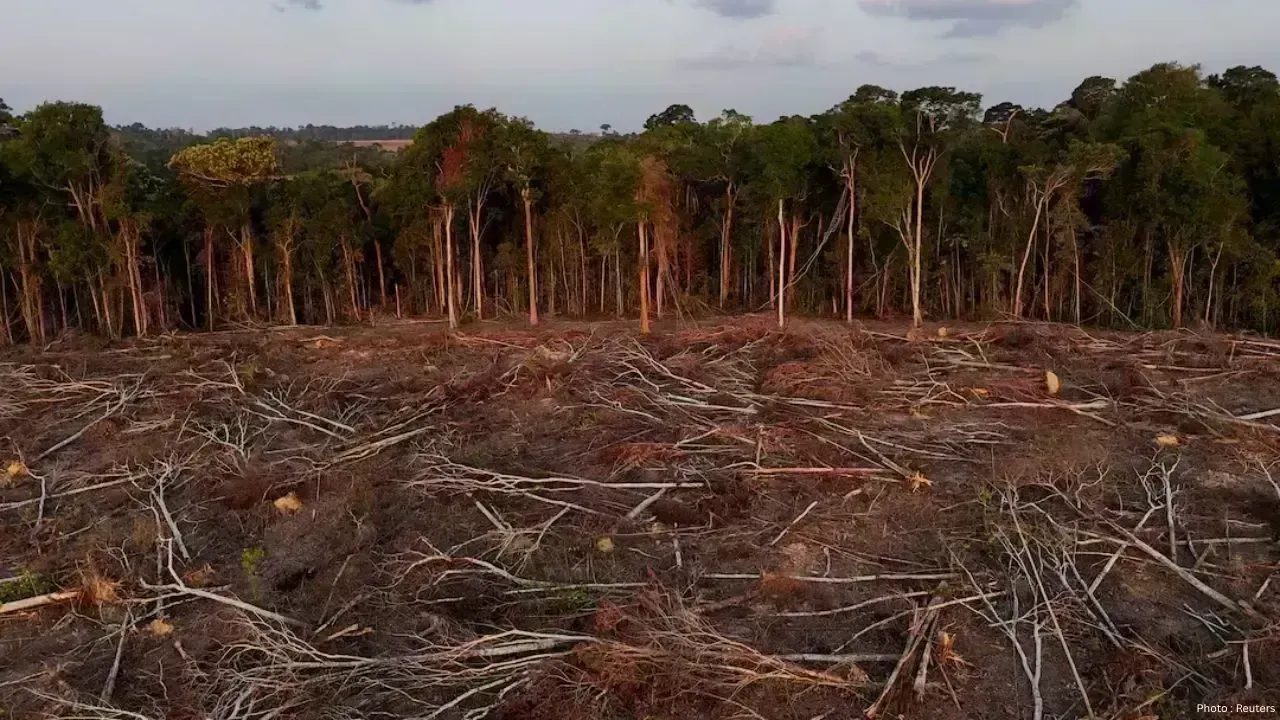
A new global report shows that the loss of tropical forests eased in 2025 compared to the previous year’s record high. This is seen as a positive development, but experts warn that the world is still far from solving the larger problem of deforestation.
In 2025, around 4.3 million hectares of tropical primary forest were lost worldwide. This is about 36% lower than the record level seen in 2024. The drop is being seen as encouraging because it shows that policy actions in some countries can make a real difference in protecting forests.
One of the main reasons for this improvement is stronger environmental action in countries like Brazil. The government there has increased enforcement against illegal clearing of forests and strengthened protection programs. These efforts have helped slow down forest loss significantly in key rainforest regions.
However, despite this progress, the situation remains serious. Experts point out that the current rate of deforestation is still much higher than what is needed to meet global climate goals set for 2030. In simple terms, forests are still being destroyed faster than they can recover or be protected.
Agriculture remains the biggest cause of forest loss. Large areas of tropical forests are still being cleared for farming, livestock, and commodity crops. In many regions, local communities also depend on forest land for survival, which adds further pressure on natural ecosystems.
Climate change is also making the situation worse. Hotter temperatures and changing rainfall patterns increase the risk of forest fires, which can destroy large areas of forest in a short time. These fires are becoming more frequent and harder to control in some regions.
Another concern is that progress is not equal across the world. While some countries have reduced forest loss, others are still seeing high levels of deforestation due to weak enforcement, economic pressure, or expanding agriculture. This uneven progress makes global improvement difficult.
Forests are important because they store carbon, support wildlife, and help regulate the Earth’s climate. When forests are destroyed, not only is biodiversity lost, but more carbon dioxide is released into the atmosphere, which worsens global warming.
Experts say that while the recent decline in forest loss is a positive sign, it should not lead to complacency. The world is still not on track to meet its long-term goal of stopping and reversing deforestation by 2030.
The key message from the latest data is clear. Progress is possible, but it must be faster and more consistent. Stronger policies, better enforcement, and global cooperation will be needed to protect the world’s remaining tropical forests.









DAE Achieves Remarkable Growth in Q1 2026 With Record Revenue
Dubai Aerospace Enterprise announces impressive financial results for Q1 2026, reflecting a surge in

Price Increase for Sony PS5 in Southeast Asia Effective May 1
Sony announces a price increase for the PS5 across Southeast Asia starting May 1, 2026, impacting ga

Potential ‘Super El Niño’ in 2026: Understanding the Climate Risks
Could a Super El Niño emerge in 2026? Discover its implications and potential global climate impacts

Global Energy Crisis Intensifies: Markets React to Oil Supply Challenges
Markets are on edge as oil disruptions escalate, influencing prices and economic stability. Explore

Must-See Tourist Spots in London You Can't Overlook
Explore London's essential attractions, from royal landmarks to vibrant markets, ensuring an unforge

Ultimate Guide to Snagging Cheap Flights in 2026
Unlock the secrets to booking affordable flights in 2026 with insightful tips and strategies tailore




