Post by : Bianca Suleiman
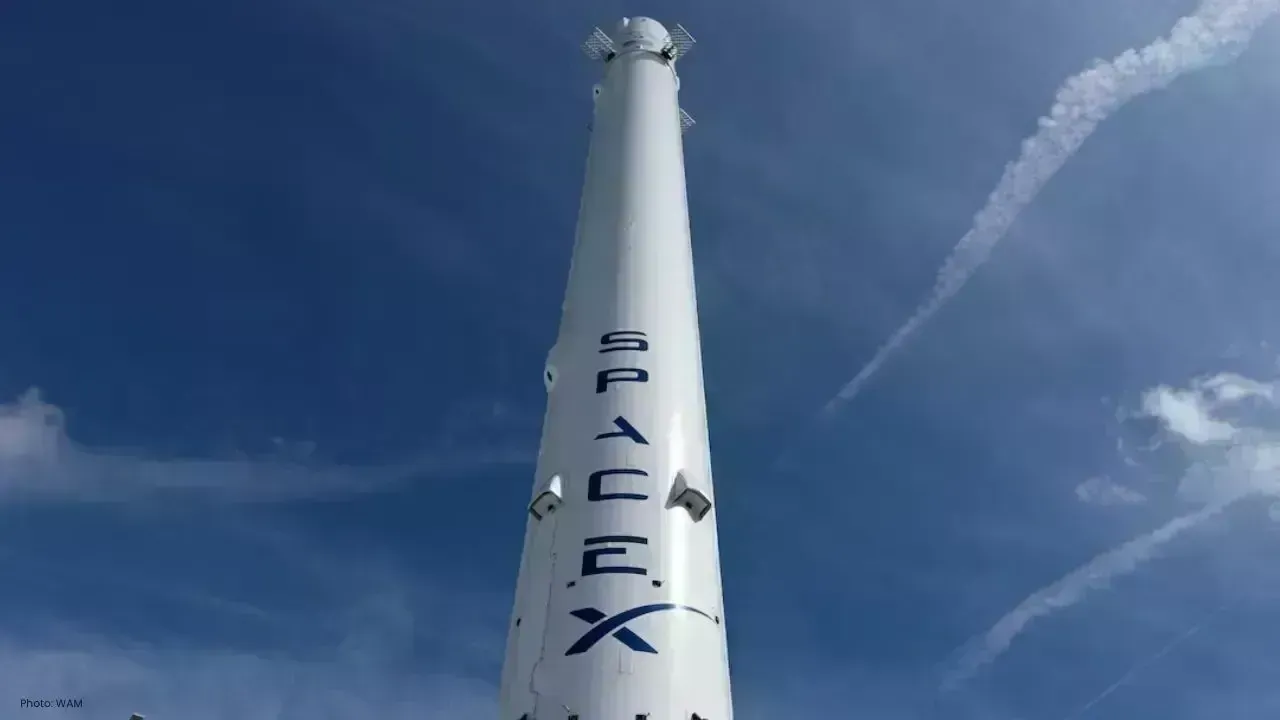
In the wake of the PayPal IPO in 2002, Elon Musk was already on a path to his next venture. While others celebrated, Musk remained committed to constructing what would evolve into one of the preeminent private space enterprises: SpaceX.
Fast forward over twenty years, and SpaceX has established itself as a dominant force in the private space sector. The company has successfully deployed thousands of Starlink satellites and pioneered reusable rocket technology, revolutionizing the economics surrounding space exploration.
Currently, SpaceX is gearing up for an initial public offering that could value the company at approximately $1.75 trillion. Should this occur, Elon Musk could earn the title of the world’s first trillionaire, marking a seminal moment in entrepreneurial history.
Reports stemming from SpaceX’s private pre-IPO documentation suggest the company is gearing up to redefine itself not solely as a space entity, but as a frontrunner in artificial intelligence and cosmic industries. Future initiatives include establishing data centers in orbit and extending reach to lunar and Martian territories.
Moreover, the organization envisions the utilization of solar energy in space to power prospective AI architectures, aspiring towards a long-term goal of multi-planetary human existence.
However, the same documentation sheds light on various challenges. SpaceX recorded losses in the previous year and is currently trailing behind key competitors in artificial intelligence investment such as Microsoft, Google, and OpenAI. Several bold aspirations, including colonization of Mars and space infrastructure, hinge on untested technologies.
Central to SpaceX’s aspirations is the Starship, the next-generation reusable rocket. Delays or setbacks in its development could have repercussions for the company’s strategic goals and growth trajectory.
Another significant concern revolves around SpaceX’s strong dependence on Elon Musk. His multiple leadership positions grant him substantial control over the company. The filing highlights that a potential leadership transition could be complex and might steer the business in an unforeseen direction.
Despite these concerns, investor confidence remains robust. Many believe Musk is skilled at transforming visionary concepts into profitable enterprises, as demonstrated by his successes with Tesla and SpaceX.
Nevertheless, experts debate the company’s ambitious projected market opportunity of $28.5 trillion, deeming it quite optimistic.
As the IPO looms on the horizon, eyes from around the globe will be fixated on SpaceX. This listing has the potential to not only reshape the aerospace sector but also influence the broader technology landscape and global economics.









DAE Achieves Remarkable Growth in Q1 2026 With Record Revenue
Dubai Aerospace Enterprise announces impressive financial results for Q1 2026, reflecting a surge in

Price Increase for Sony PS5 in Southeast Asia Effective May 1
Sony announces a price increase for the PS5 across Southeast Asia starting May 1, 2026, impacting ga

Potential ‘Super El Niño’ in 2026: Understanding the Climate Risks
Could a Super El Niño emerge in 2026? Discover its implications and potential global climate impacts

Global Energy Crisis Intensifies: Markets React to Oil Supply Challenges
Markets are on edge as oil disruptions escalate, influencing prices and economic stability. Explore

Must-See Tourist Spots in London You Can't Overlook
Explore London's essential attractions, from royal landmarks to vibrant markets, ensuring an unforge

Ultimate Guide to Snagging Cheap Flights in 2026
Unlock the secrets to booking affordable flights in 2026 with insightful tips and strategies tailore




