Post by : Mina Rahman
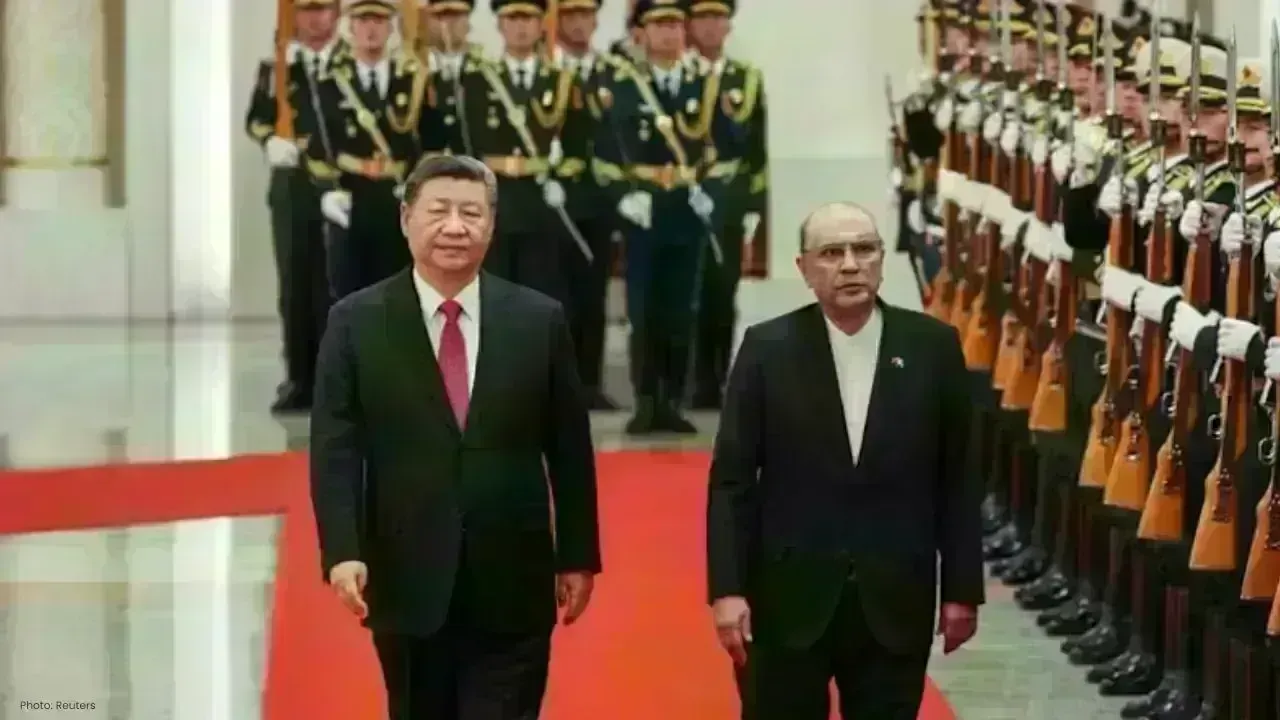
On Monday, China and Pakistan reaffirmed their enduring strategic alliance, committing to further develop bilateral collaborations amid shifting global dynamics that influence regional partnerships.
Both nations characterized their connection as an “ironclad friendship,” symbolizing decades of diplomatic trust and mutual support. Pakistan continues to stand as one of China's most dependable allies, consistently supporting Beijing on various sensitive international matters including Taiwan, Xinjiang, Tibet, Hong Kong, and the South China Sea.
In turn, China has made substantial economic investments in Pakistan, primarily through the China-Pakistan Economic Corridor (CPEC), a vital project within China's Belt and Road Initiative. This multi-billion dollar corridor has been instrumental in bolstering infrastructure, energy, and connectivity ventures across Pakistan, serving as a key element in the nation’s developmental strategy.
Nevertheless, security issues have presented challenges in recent years. Multiple militant assaults targeting Chinese personnel involved in CPEC and other initiatives have led to tensions, prompting Beijing to seek stronger guarantees for the safety of its citizens and investments within Pakistan.
In a joint declaration, both nations agreed to transform CPEC, broadening cooperation into new domains such as industry, agriculture, and mining while also enhancing collaboration in financial and banking sectors. China recognized Pakistan's recent initiatives aimed at better safeguarding Chinese personnel and ongoing projects.
Both countries voiced mutual concerns over militant factions operating from Afghanistan, which shares borders with both nations. They urged for decisive and efficient actions to dismantle and eradicate all terrorist organizations entrenched in the region, emphasizing the need for regional stability.
This renewed commitment arises amid indications of improving relations between Pakistan and the United States. Following President Donald Trump's return to the White House, cooperation between Washington and Islamabad has strengthened, particularly in counter-terrorism endeavors. Pakistan spotlighted its role in aiding the apprehension of a suspect tied to the 2021 attack on US forces at Kabul airport, an effort publicly acknowledged by Trump.
The US administration has also allocated nearly $400 million for a program that monitors Pakistan's utilization of F-16 fighter jets in counter-terrorism operations, despite a broader halt on foreign assistance. Pakistan has suggested that Trump be considered for the Nobel Peace Prize for his role in easing tensions with India.
Even as Pakistan navigates its growing relations with Washington, both Beijing and Islamabad stressed that their strategic partnership remains robust. Senior officials from both sides reiterated their commitment to deepen alliances and advance common interests, suggesting that their “all-weather” relationship will remain resilient and adaptable in a changing geopolitical context.






Price Increase for Sony PS5 in Southeast Asia Effective May 1
Sony announces a price increase for the PS5 across Southeast Asia starting May 1, 2026, impacting ga

Potential ‘Super El Niño’ in 2026: Understanding the Climate Risks
Could a Super El Niño emerge in 2026? Discover its implications and potential global climate impacts

Global Energy Crisis Intensifies: Markets React to Oil Supply Challenges
Markets are on edge as oil disruptions escalate, influencing prices and economic stability. Explore

Must-See Tourist Spots in London You Can't Overlook
Explore London's essential attractions, from royal landmarks to vibrant markets, ensuring an unforge

Ultimate Guide to Snagging Cheap Flights in 2026
Unlock the secrets to booking affordable flights in 2026 with insightful tips and strategies tailore

The Impact of Consistent Small Investments on Wealth Building
Discover how investing small amounts regularly can positively transform your financial future over t




