Post by : Shakul
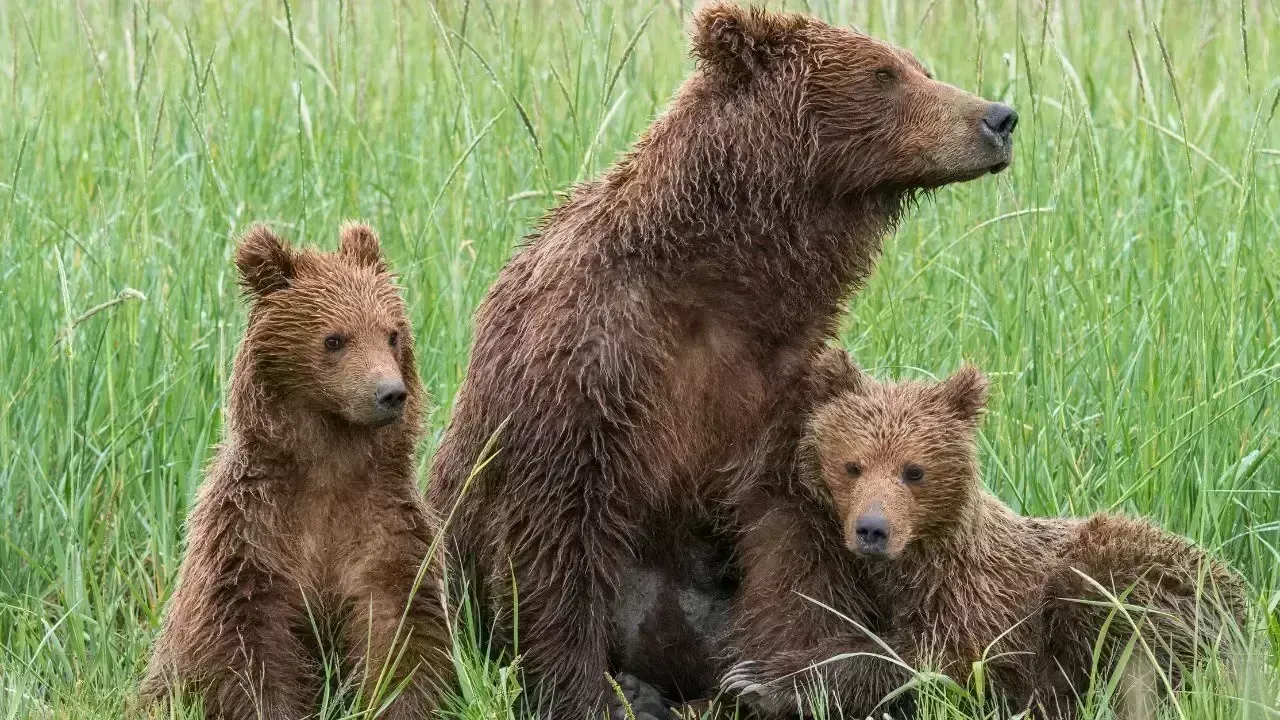
In a noteworthy wildlife event, a female Himalayan brown bear and her two cubs have been recorded in Himachal Pradesh’s Kinnaur district, specifically within the Rakcham-Chitkul Wildlife Sanctuary, near the India-China border. This sighting is heralded as a significant success for biodiversity monitoring efforts in the Himalayan ecosystem.
Captured by a dedicated field team from the forest department, the footage was obtained with the assistance of Block Forest Officer Santosh Kumar Thakur and forest guards Chhayanand, Akshay, and Pawan Kumar. Additionally, forest volunteer Alpana Negi contributed to this critical observation. Support for the project was provided by the distinguished ornithologist Gary Bhatti and wildlife researchers Dr Bishwarup Satpati and Dr Rahul Deb Mandal.
The Himalayan brown bear, one of India’s most endangered and legally protected species, is safeguarded under Schedule I of the Wildlife Protection Act of 1972. This magnificent creature is primarily found across the high-altitude terrains of Himachal Pradesh, Jammu and Kashmir, and Uttarakhand, notably in several designated wildlife zones.
Experts indicate that sightings of this nature are particularly rare due to the naturally reclusive nature of the Himalayan brown bear. Unlike their counterparts, the Asian black bears—which can often be spotted at lower altitudes near human habitation—brown bears tend to inhabit elevations above 2,500 metres, preferring remote mountainous areas. They are generally solitary, only clustering during periods of birth and nurturing, rendering the view of a mother bear with her two cubs an exceptional occurrence.
The Rakcham-Chitkul Wildlife Sanctuary, nestled in the remote Himalayan expanse of Kinnaur, boasts a delicate ecosystem rich in biodiversity. Wildlife specialists posit that the sighting of the bear family suggests that the sanctuary is sustaining a positive ecological balance, despite the adverse effects of climate change and environmental pressures exerted on mountainous regions.
Researchers have noted that Himalayan brown bears typically weigh between 100 and 150 kilograms and stand nearly six feet tall when upright. Their diet is predominantly composed of herbs, roots, plants, and berries, with meat making up a minimal part of their nutritional intake. Experts portray this species as less aggressive and more docile compared to other large bear varieties.
The sighting has sparked excitement among wildlife enthusiasts and conservation organizations throughout India. Environmental advocates emphasize that such rare observations play a crucial role in bolstering awareness of the need to protect endangered Himalayan wildlife and the importance of preserving natural habitats in sensitive border areas.









Anticipated Dates for UAE Eid Al Adha 2026 Unveiled by Astronomical Experts
Experts predict Eid Al Adha 2026 in the UAE to start on May 27, prompting early holiday planning amo

DAE Achieves Remarkable Growth in Q1 2026 With Record Revenue
Dubai Aerospace Enterprise announces impressive financial results for Q1 2026, reflecting a surge in

Price Increase for Sony PS5 in Southeast Asia Effective May 1
Sony announces a price increase for the PS5 across Southeast Asia starting May 1, 2026, impacting ga

Potential ‘Super El Niño’ in 2026: Understanding the Climate Risks
Could a Super El Niño emerge in 2026? Discover its implications and potential global climate impacts

Global Energy Crisis Intensifies: Markets React to Oil Supply Challenges
Markets are on edge as oil disruptions escalate, influencing prices and economic stability. Explore

Must-See Tourist Spots in London You Can't Overlook
Explore London's essential attractions, from royal landmarks to vibrant markets, ensuring an unforge




