Post by : Anees Nasser
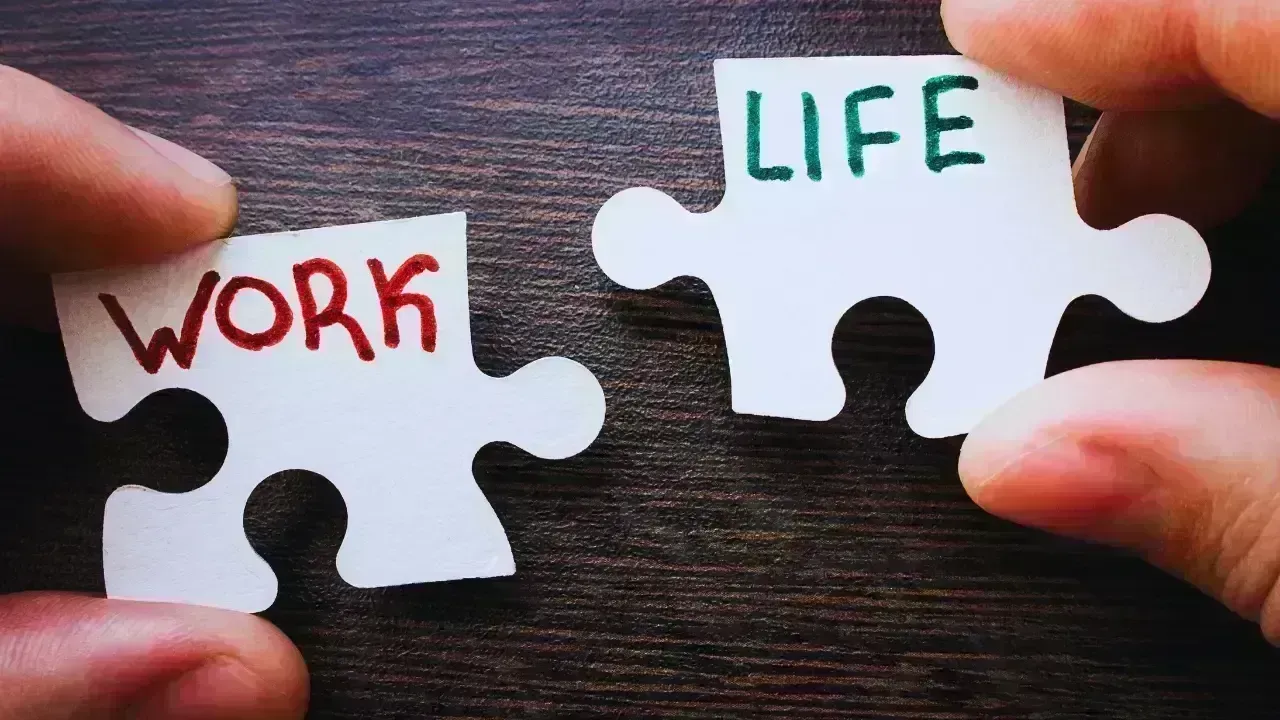
For many years, work-life balance was seen as a strict division between work obligations and personal life. The objective was clear: complete work tasks, return home, and disconnect. In 2026, this perception no longer holds true.
The rise of technology has blurred these distinctions. Work can now occur at any hour, from virtually any location. Concurrently, individuals are reevaluating long-standing views on productivity and fulfillment, leading to a new interpretation of balance—one that emphasizes mastery over personal time.
The contemporary approach to work-life balance prioritizes how work integrates into life rather than simply tracking hours worked.
In traditional environments, productivity hinged on the amount of time spent at a desk. By 2026, factors like effectiveness and result-driven productivity take precedence over mere hours clocked in.
Workers are increasingly personalizing their work hours to align with their energy levels, moving away from the conventional nine-to-five structure.
This newfound flexibility supports a healthier balance between professional duties and personal aspirations.
With teams collaborating across various regions and time zones, the expectation for real-time engagement has diminished. Asynchronous communication now allows individuals to manage personal responsibilities without feeling pressured.
This newfound autonomy over time is reshaping what it means to achieve balance.
As of 2026, hybrid work arrangements are deeply integrated into workplace culture. Offices now serve primarily as spaces for collaboration rather than daily attendance. Homes, co-working venues, and various travel settings are becoming legitimate workspaces.
This evolution provides employees with the ability to regain time previously lost to commuting and rigid schedules, significantly altering how they approach work-life balance.
While remote opportunities afford flexibility, they also demand strong self-discipline. Achieving this modern balance requires individuals to set boundaries, handle workloads judiciously, and be vigilant against burnout in the absence of office separation.
Today, achieving balance is a self-directed endeavor.
In 2026, the concept of work-life balance is intertwined with mental well-being. Rising issues like chronic stress and burnout are prompting both organizations and individuals to reassess their priorities.
Taking time off is regarded not as a luxury but as a necessity for emotional recovery and sustained productivity.
Resting is being redefined as productivity. Breaks, mental health days, and adaptable leave policies are becoming standard in work environments.
This transformation acknowledges that creativity and resilience derive from rest rather than constant activity.
Given the constant availability of work communications, the skill to disconnect has surfaced as an essential competence. Achieving balance in 2026 requires the ability to log off without the fear of missed opportunities or perceived disloyalty.
People are increasingly establishing clear communication norms, such as designated response times and non-working hours, to safeguard their personal space.
Long work hours are losing their status as a badge of honor. Focus, efficiency, and clarity are now prioritized over constant accessibility.
This cultural shift reduces the stigma associated with saying no and encourages prioritization of personal boundaries and tasks.
Professionals increasingly select roles that resonate with their lifestyle and values rather than purely for financial gain or status.
Work-life balance now encompasses:
Flexibility with schedules
Engaging and purposeful work
Opportunities for personal development
Time dedicated to health and family
This transformation is redefining how success is interpreted in careers.
By 2026, many individuals juggle several roles, freelance endeavors, or hobbies alongside their primary job. Balance now encompasses a blend of pursuits rather than a single career defining one’s identity.
This strategy provides both financial stability and personal satisfaction.
Companies are moving away from monitoring attendance to rewarding achieved outcomes. Trust-based frameworks are designed to focus on results rather than visibility.
This evolution fosters a healthier work-life balance by minimizing micromanagement and encouraging autonomous work.
In competitive job markets, work-life balance has become critical for attracting talent. Organizations that prioritize personal time and mental wellness gain a competitive edge in retaining skilled professionals.
Balance has transitioned from a bonus to a fundamental expectation.
Automation and AI-enhanced workflows have streamlined manual tasks, freeing time for more strategic endeavors.
When applied wisely, technology can support balance by increasing efficiency and minimizing workload.
Conversely, technology can compromise boundaries if not managed properly. Continuous notifications and virtual meetings can encroach upon personal time.
In 2026, achieving balance hinges on intentional technology application rather than limitless access.
There is no longer a one-size-fits-all model for balance. Some may prefer flexible hours, while others favor stable schedules. Different life stages and roles influence how balance is defined.
This new paradigm embraces diversity, steering away from enforced uniform solutions.
Not every profession can accommodate remote or flexible work arrangements. Frontline and service positions face persistent structural limitations.
Addressing this disparity is crucial for achieving comprehensive work-life balance.
In the realm of self-managed boundaries, some individuals find it challenging to disconnect. The drive for performance can lead to overworking, masquerading as flexibility.
A true balance necessitates awareness as much as opportunity.
Work-life balance is transitioning into an integrated approach—where work flows seamlessly with personal life instead of competing against it.
Success will increasingly relate to career structures that prioritize long-lasting well-being over short-term gains.
By 2026, achieving work-life balance revolves around control, choice, and sustainability rather than merely dividing time between professional and personal activities. The power to dictate the nature and timing of work engagements is becoming vital.
As societal expectations shift, those who prioritize clear boundaries, mental health, and meaningful work will likely lead the charge in shaping future career landscapes. Balance is now the cornerstone enabling personal fulfillment alongside ambition.
Disclaimer:
This article serves informational purposes, reflecting the ongoing evolution of workplace trends and societal viewpoints.










Anticipated Dates for UAE Eid Al Adha 2026 Unveiled by Astronomical Experts
Experts predict Eid Al Adha 2026 in the UAE to start on May 27, prompting early holiday planning amo

DAE Achieves Remarkable Growth in Q1 2026 With Record Revenue
Dubai Aerospace Enterprise announces impressive financial results for Q1 2026, reflecting a surge in

Price Increase for Sony PS5 in Southeast Asia Effective May 1
Sony announces a price increase for the PS5 across Southeast Asia starting May 1, 2026, impacting ga

Potential ‘Super El Niño’ in 2026: Understanding the Climate Risks
Could a Super El Niño emerge in 2026? Discover its implications and potential global climate impacts

Global Energy Crisis Intensifies: Markets React to Oil Supply Challenges
Markets are on edge as oil disruptions escalate, influencing prices and economic stability. Explore

Must-See Tourist Spots in London You Can't Overlook
Explore London's essential attractions, from royal landmarks to vibrant markets, ensuring an unforge




