Post by : Saif Nasser
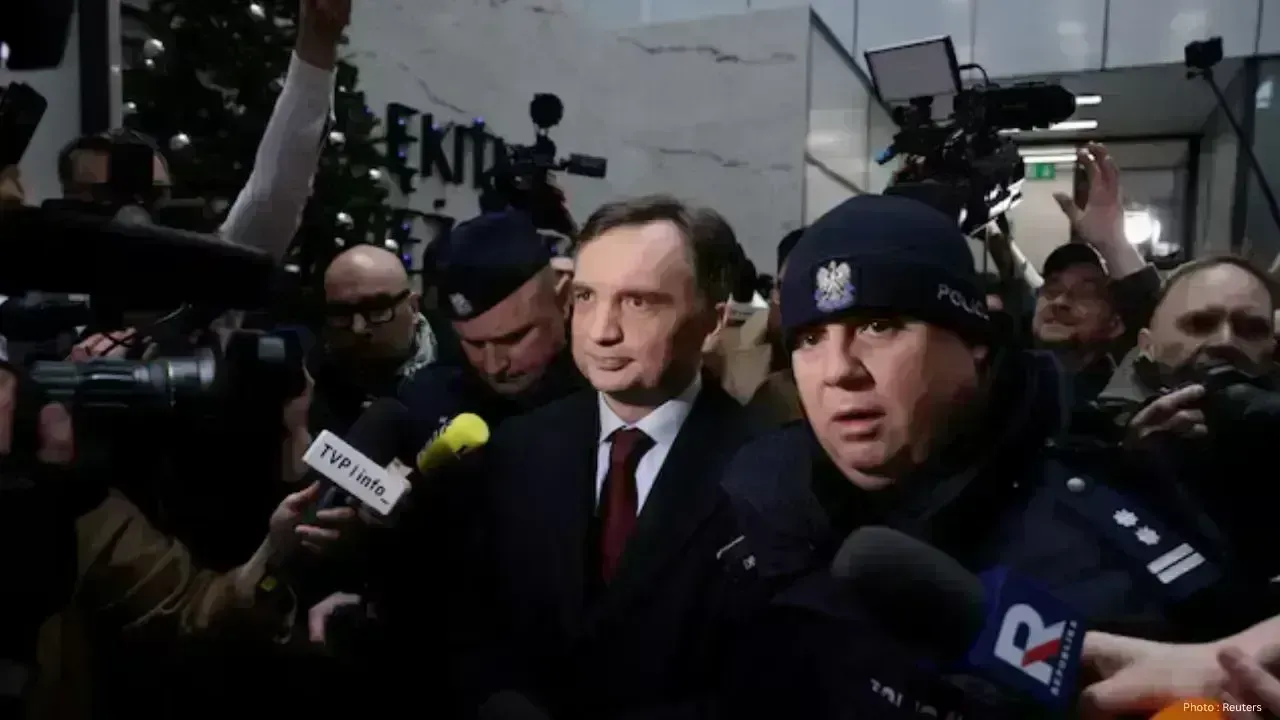
Poland has demanded urgent explanations from Hungary after a fugitive former Polish deputy justice minister reportedly left Hungarian territory and traveled to the United States despite facing criminal charges in Poland. The incident has created fresh tensions between the two European Union members and raised questions about political protection, extradition, and international cooperation.
The former minister, Marcin Romanowski, is wanted in Poland over allegations linked to misuse of public funds during the previous government led by the conservative Law and Justice Party. Polish prosecutors accuse him of involvement in financial irregularities connected to a justice ministry fund intended to support crime victims. Romanowski denies all accusations and claims the case is politically motivated.
According to reports, Romanowski had been staying in Hungary after Polish authorities issued legal action against him. Hungary previously granted him political asylum, a decision that strongly angered Poland’s current pro-European government led by Prime Minister Donald Tusk. Warsaw argued that protecting a wanted politician from another EU country undermined trust and legal cooperation inside the European Union.
The situation became even more controversial after reports emerged that Romanowski had now traveled from Hungary to the United States. Polish Foreign Minister Radoslaw Sikorski publicly demanded answers from Budapest and questioned how a fugitive politician could leave Hungary despite international legal concerns surrounding his case.
The Polish government says the matter is not only about one individual but also about respect for the rule of law. Officials argue that European countries should cooperate on criminal investigations rather than offer protection to political allies. The case has therefore become part of a larger political dispute between Poland’s current government and Hungary’s nationalist leadership under Prime Minister Viktor Orban.
Relations between Warsaw and Budapest have changed sharply in recent years. Under Poland’s previous conservative government, the two countries often worked closely together on issues involving migration, EU powers, and nationalist politics. However, after Donald Tusk returned to power in late 2023, Poland moved closer to the European Union’s mainstream leadership and became more critical of Hungary.
Hungary has repeatedly faced accusations from EU institutions of weakening democratic standards, judicial independence, and media freedom. Viktor Orban’s government rejects those claims and argues that Brussels unfairly targets Hungary because of political differences.
The Romanowski case has now added another layer of tension between the two governments. Critics in Poland believe Hungary’s decision to grant asylum to the former minister was politically motivated and designed to protect an ideological ally. Supporters of Romanowski argue that Poland’s current government is using legal investigations to target opponents from the previous administration.
The allegations against Romanowski are linked to investigations into the Justice Fund, a program originally created to support victims of crime and improve public safety projects. Prosecutors claim money from the fund may have been used improperly for political purposes under the previous government. Several former officials connected to the case are already under investigation.
The case reflects the deep political divisions inside Poland following years of conflict between conservative and liberal political groups. Since taking office, Donald Tusk’s government has promised to restore judicial independence, improve ties with the European Union, and investigate alleged abuses under the former administration.
At the same time, opposition parties accuse Tusk’s government of carrying out political revenge against former officials linked to the Law and Justice Party. These political battles continue to divide Polish society and dominate national politics.
Experts say the latest controversy could also create diplomatic pressure between European Union members regarding asylum rules and judicial cooperation. The EU depends heavily on trust between member states when handling extradition requests and cross-border investigations. Disputes like this can weaken confidence inside the bloc.
For now, Poland continues demanding clear answers about how Romanowski was able to travel from Hungary to the United States while facing legal proceedings at home. Hungarian authorities have not fully explained the situation publicly.
The controversy is likely to remain politically sensitive in both countries as investigations continue. What began as a corruption case involving a former minister has now grown into a wider debate about politics, justice, and trust between European governments.










Anticipated Dates for UAE Eid Al Adha 2026 Unveiled by Astronomical Experts
Experts predict Eid Al Adha 2026 in the UAE to start on May 27, prompting early holiday planning amo

DAE Achieves Remarkable Growth in Q1 2026 With Record Revenue
Dubai Aerospace Enterprise announces impressive financial results for Q1 2026, reflecting a surge in

Price Increase for Sony PS5 in Southeast Asia Effective May 1
Sony announces a price increase for the PS5 across Southeast Asia starting May 1, 2026, impacting ga

Potential ‘Super El Niño’ in 2026: Understanding the Climate Risks
Could a Super El Niño emerge in 2026? Discover its implications and potential global climate impacts

Global Energy Crisis Intensifies: Markets React to Oil Supply Challenges
Markets are on edge as oil disruptions escalate, influencing prices and economic stability. Explore

Must-See Tourist Spots in London You Can't Overlook
Explore London's essential attractions, from royal landmarks to vibrant markets, ensuring an unforge




