Post by : Shakul
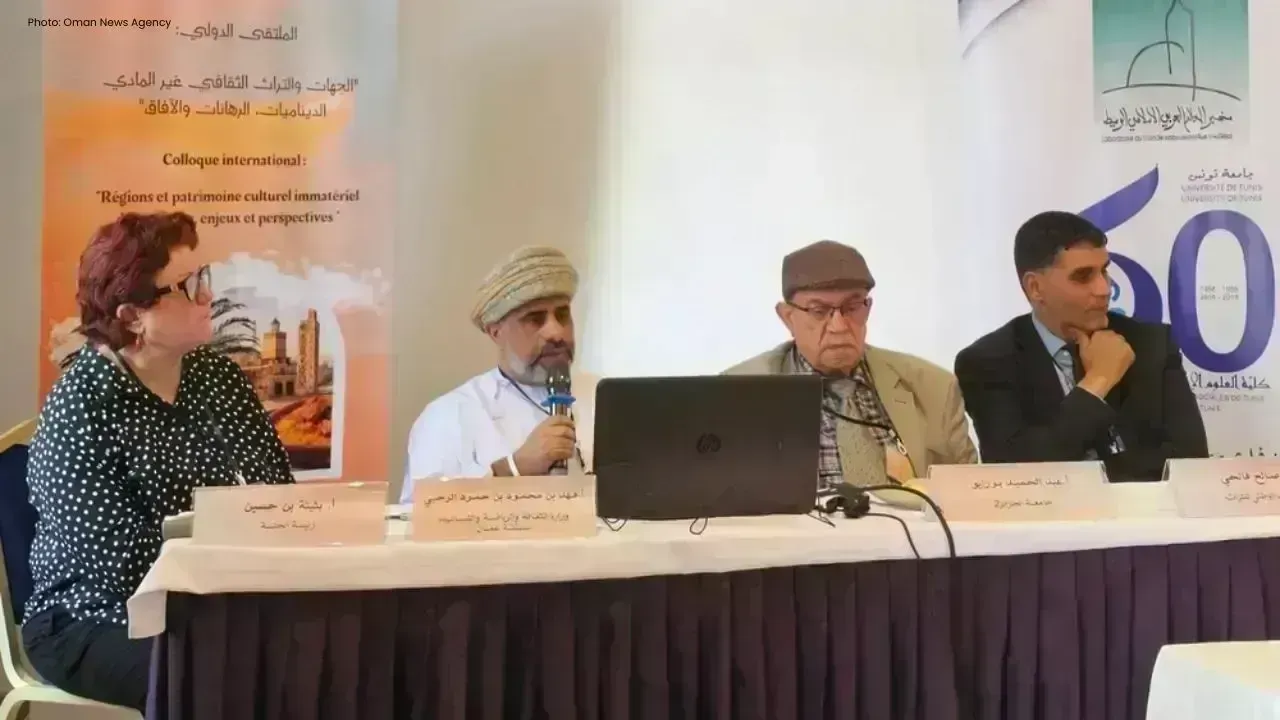
At the International Conference on Regions and Intangible Cultural Heritage in Tunis, the Literary Forum of Oman showcased the Sultanate's initiatives for preserving intangible cultural heritage. This gathering of researchers, cultural specialists, and institutions from various nations focused on safeguarding oral traditions, preserving cultural memory, and fostering national identity.
Fahd bin Mahmoud Al-Rahbi, who leads the Oral History Department at the Literary Forum, delivered a comprehensive presentation on Oman's endeavors to document oral histories and traditional cultural practices. He detailed how a systematic approach has been adopted to record oral narratives, thereby transforming cultural memory into vital knowledge for future populations.
Al-Rahbi pointed out that Oman’s preservation efforts are significantly aligned with global agreements, particularly the UNESCO Convention for the Safeguarding of Intangible Cultural Heritage established in 2003. He highlighted that by 2026, Oman aims to have registered 18 heritage elements on UNESCO’s Representative List of Intangible Cultural Heritage of Humanity, reinforcing the nation’s dedication to upholding its cultural identity and traditions.
Additionally, the presentation spotlighted the UNESCO-Sultan Haitham Prize for the Safeguarding of Intangible Cultural Heritage, which aids international initiatives focused on preserving cultural diversity and human heritage. Officials emphasized that the program fosters global collaboration in protecting traditions, customs, and oral histories that are vulnerable to extinction.
The conference also evaluated the Oral History Department's role in gathering narratives and experiences from older citizens throughout Oman. Researchers referred to these elders as "human libraries," retaining vital knowledge about Omani social customs, traditions, and historical events. Numerous studies and publications documenting traditional lifestyles and local practices from various Omani governorates were shared during this session.
Considerable emphasis was placed on safeguarding traditional Omani systems and at-risk cultural practices, such as the ancient aflaj irrigation technique, traditional threshing methods, and linguistic studies concerning the Bathari language. Experts reiterated the importance of linguistic and cultural diversity as integral to Oman’s national heritage strategy, crucial for maintaining the nation’s rich historical identity.
The presentation also laid out future objectives to enhance cultural sustainability in Oman. Plans include the establishment of a specialized national center for collecting and analyzing folk heritage, embedding intangible heritage studies into university programs, and translating Omani heritage publications into languages like French, German, Spanish, and Chinese. Furthermore, officials announced intentions to host additional oral history seminars and train a new cohort of field researchers, ensuring the continuity of Oman’s cultural legacy into the future.









Anticipated Dates for UAE Eid Al Adha 2026 Unveiled by Astronomical Experts
Experts predict Eid Al Adha 2026 in the UAE to start on May 27, prompting early holiday planning amo

DAE Achieves Remarkable Growth in Q1 2026 With Record Revenue
Dubai Aerospace Enterprise announces impressive financial results for Q1 2026, reflecting a surge in

Price Increase for Sony PS5 in Southeast Asia Effective May 1
Sony announces a price increase for the PS5 across Southeast Asia starting May 1, 2026, impacting ga

Potential ‘Super El Niño’ in 2026: Understanding the Climate Risks
Could a Super El Niño emerge in 2026? Discover its implications and potential global climate impacts

Global Energy Crisis Intensifies: Markets React to Oil Supply Challenges
Markets are on edge as oil disruptions escalate, influencing prices and economic stability. Explore

Must-See Tourist Spots in London You Can't Overlook
Explore London's essential attractions, from royal landmarks to vibrant markets, ensuring an unforge




