Post by : Shweta
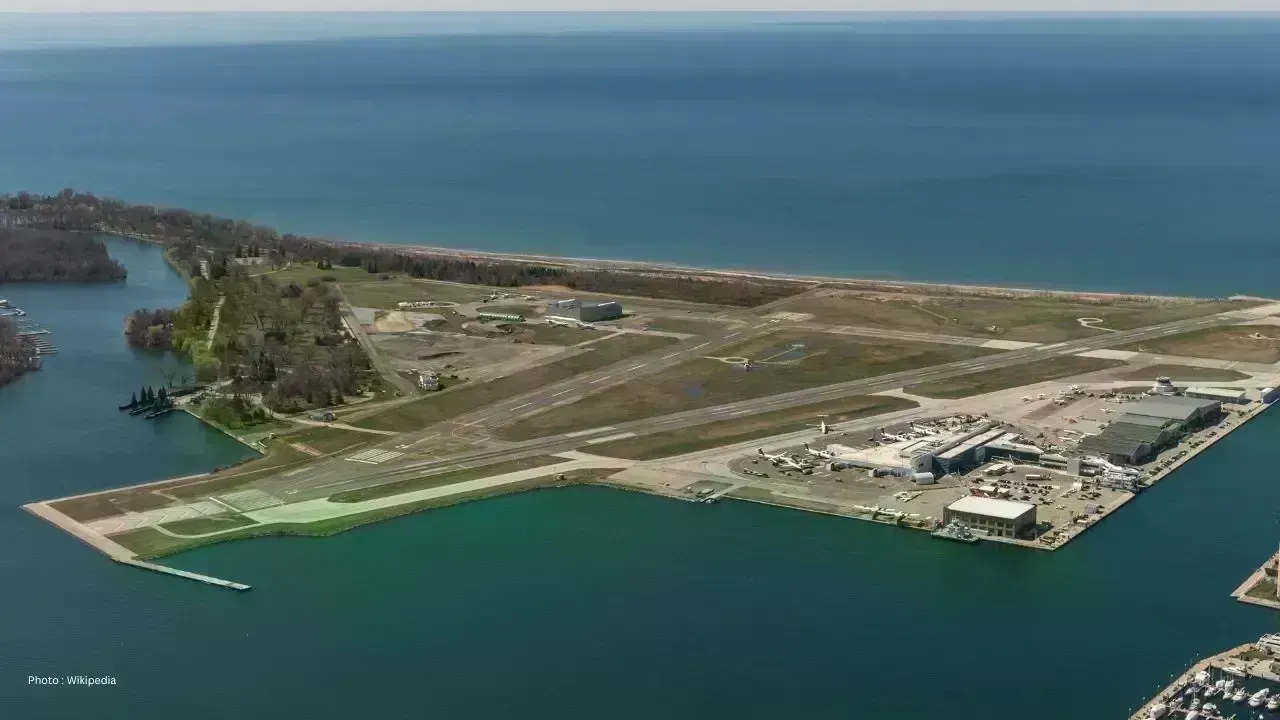
Ontario's government has put forth a proposed law that might enable it to take extensive control over portions of the Toronto Islands, raising alarms among community leaders and residents. Nonetheless, provincial representatives clarify that their aim is not the outright seizure of all island land, but rather the specific areas needed for the expansion of Billy Bishop Toronto City Airport.
Premier Doug Ford’s broader initiative encompasses enhancing the airport's functionality, which includes extending runways suitable for jet operations and increasing passenger throughput to potentially 10 million each year. Presently, only smaller turboprop planes are permitted due to existing limitations.
Transportation Minister Prabmeet Sarkaria explained that if the legislation passes, it would grant the province the authority to commandeer land currently controlled by the City of Toronto. This legislative move would also terminate the city’s longstanding agreement with federal bodies regarding airport management, which currently restricts jet traffic.
A major concern stems from the broad property identification numbers (PINs) cited in the legislation, which encompass a significant portion of city-owned land on the Toronto Islands. This has fueled fears about potential impacts on beaches, parks, and public spaces. Some parts of Little Norway Park on the mainland are also included in the proposal, though officials have assured that the park will remain unaffected.
Provincial officials have stated that the extensive scope is only a provisional measure based on current property boundaries, assuring that they plan to collaborate with city officials to delineate the precise land required for the airport expansion. They emphasize that the government is not looking to seize all land on the islands, only what is essential for the airport's growth.
The proposal has drawn significant criticism from opposition leaders and local representatives, with Marit Stiles warning of unparalleled control over public lands, while others have described the initiative as undemocratic and lacking transparency. Additional concerns regarding environmental repercussions, noise disturbances, and effects on surrounding communities have also been raised.
Toronto Mayor Olivia Chow has vocalized her opposition to the project, calling for greater transparency and public involvement in discussions. She has expressed concern over the absence of detailed information and hinted at potential legal avenues to contest the proposal.
Moreover, the federal government will be integral, as any substantial alterations to airport operations necessitate adherence to existing agreements. Ottawa officials have indicated a thorough review of any plans will take place, particularly regarding safety, environmental stewardship, and community wellbeing.
Ultimately, while the Ontario government claims the legislation is concentrated on airport expansion, the extensive powers delineated in the bill have ignited a broader discussion around land governance, control, and the future state of Toronto's waterfront.



Price Increase for Sony PS5 in Southeast Asia Effective May 1
Sony announces a price increase for the PS5 across Southeast Asia starting May 1, 2026, impacting ga

Potential ‘Super El Niño’ in 2026: Understanding the Climate Risks
Could a Super El Niño emerge in 2026? Discover its implications and potential global climate impacts

Global Energy Crisis Intensifies: Markets React to Oil Supply Challenges
Markets are on edge as oil disruptions escalate, influencing prices and economic stability. Explore

Must-See Tourist Spots in London You Can't Overlook
Explore London's essential attractions, from royal landmarks to vibrant markets, ensuring an unforge

Ultimate Guide to Snagging Cheap Flights in 2026
Unlock the secrets to booking affordable flights in 2026 with insightful tips and strategies tailore

The Impact of Consistent Small Investments on Wealth Building
Discover how investing small amounts regularly can positively transform your financial future over t




