Post by : Priya
Photo:AFP
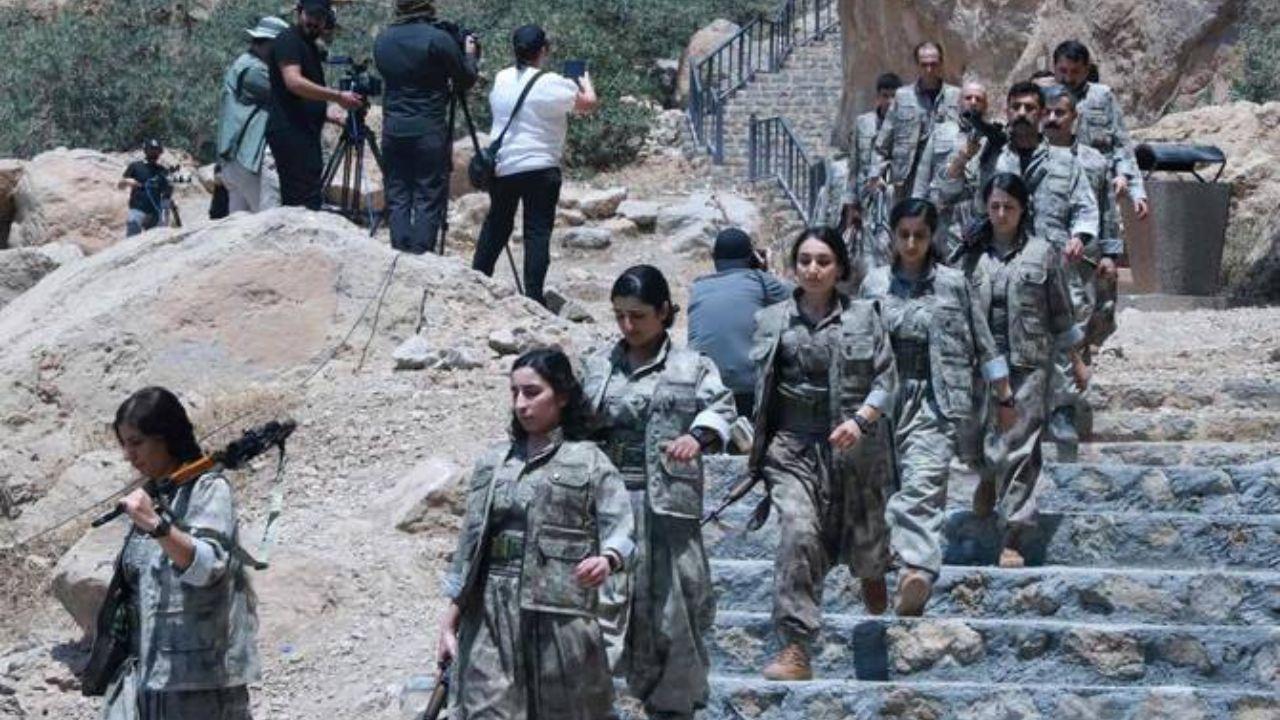
Turkish President Recep Tayyip Erdoğan declared that Türkiye has entered a new era following the formal disarmament of the Kurdistan Workers’ Party (PKK). After decades of conflict, bloodshed, and division, the Turkish state and its citizens now look toward the future with hope and a renewed sense of national unity.
President Erdoğan’s statement marks a pivotal moment in Türkiye’s modern history. For over 40 years, the PKK's armed struggle challenged the country's social fabric, political landscape, and internal security. Now, with the group laying down its weapons, Türkiye faces an opportunity to heal, grow, and move forward.
1. The PKK Conflict: Four Decades of Bloodshed
The Origins of the PKK
The Kurdistan Workers’ Party (PKK) was founded in 1978 by Abdullah Öcalan. The group was initially created to fight for Kurdish independence and greater rights for the Kurdish population within Türkiye. By 1984, the PKK had launched a full-scale armed insurgency against the Turkish state.
Over the next four decades, the conflict between the Turkish government and the PKK claimed over 40,000 lives. Civilians, soldiers, and insurgents were among the victims. The violence caused widespread displacement, economic damage, and long-lasting social divisions, especially in Türkiye’s southeastern regions where most Kurds live.
Terrorist Designation
The PKK has been listed as a terrorist organization by Türkiye, the United States, the European Union, and several other countries. The group has carried out bombings, ambushes, kidnappings, and assassinations targeting both civilians and state officials.
While the PKK claims to represent Kurdish rights, many Kurdish citizens have distanced themselves from the group’s violent methods, advocating instead for democratic and peaceful solutions.
2. Previous Peace Attempts: Hope and Failure
Over the years, there have been multiple efforts to resolve the conflict. Ceasefires were declared and peace talks were initiated, but most ultimately collapsed due to deep mistrust, political tensions, and renewed violence.
1990s Attempts
In the 1990s, secret negotiations were held, and Öcalan even called for a ceasefire. However, these efforts failed to produce long-term results.
2013-2015 Peace Process
One of the most notable peace processes took place between 2013 and 2015. This period saw the Turkish government and the PKK enter a structured dialogue. The violence decreased significantly, and there was hope that an agreement could be reached. Unfortunately, by mid-2015, hostilities resumed following clashes and political fallout.
The Role of Politics
Internal politics have played a significant role in the failure of peace talks. Both sides accused each other of bad faith. Changes in the political climate, such as elections or regional instability, often disrupted negotiations.
3. Disarmament in 2025: A Turning Point
The Announcement
On July 11, 2025, President Erdoğan announced that the PKK had formally agreed to disarm. Speaking at a national address in Ankara, he said:
"Today, a new page has been turned in our nation's history. The weapons that once divided us have been laid down. Let us now unite under one flag, one homeland, and one future.”
According to government officials, the disarmament process began earlier this year through indirect channels and was completed under close supervision from Turkish intelligence and security agencies.
How It Happened
Sources within Türkiye’s National Intelligence Organization (MIT) revealed that backchannel diplomacy played a key role. The government kept the process confidential to avoid public disruptions and potential sabotage. Former Kurdish politicians and civil society leaders are also believed to have quietly participated in the talks.
Unlike previous peace processes, this time the emphasis was on total disarmament before any political discussion. The government insisted that laying down arms was non-negotiable.
4. Government Reaction: Erdogan’s Vision for a United Türkiye
Erdoğan's Speech and Political Messaging
President Erdoğan has positioned this disarmament as a national victory. He framed it not only as a success for his administration but as a milestone for Turkish democracy, security, and national identity.
"The shadow of terrorism that loomed over our nation for forty years has finally lifted," he declared.
He also promised increased investment in Türkiye’s southeastern regions to rebuild infrastructure, schools, and health services. The government plans to launch new social programs aimed at healing the wounds of war.
Security Forces on Alert
Although the PKK has disarmed, Turkish security forces remain on alert. Officials have said that disarmament must be accompanied by verification and monitoring to ensure that splinter groups do not attempt to restart violence.
The government has also reaffirmed its policy against any form of autonomy or separatism, insisting that all citizens are equal under the Turkish constitution.
5. Public Reaction: Relief, Skepticism, and Cautious Optimism
Voices from the Southeast
In cities like Diyarbakir, Şırnak, and Hakkari, many residents expressed hope that peace would finally allow them to live without fear. Local shopkeepers, teachers, students, and farmers shared stories of disrupted lives and expressed relief at the promise of a calmer future.
“I’ve lived with fear since childhood,” said Ayşe Demir, a mother of three in Mardin. “If this peace is real, I can finally plan a future for my children.”
Urban Centers React
In Istanbul and Ankara, the general mood was one of cautious optimism. Many Turks welcomed the news, but some remain skeptical about whether the peace will hold. Given the failures of past peace efforts, some citizens prefer to wait and see.
6. Opposition Parties and Civil Society: Calls for Reform
Opposition parties like the Republican People’s Party (CHP) and the pro-Kurdish Peoples’ Equality and Democracy Party (DEM Party) welcomed the disarmament but stressed the need for long-term political reforms.
Legal and Social Inclusion
They have called for constitutional changes that recognize Kurdish identity and language rights. Some civil society groups urged the government to reopen closed cultural centers, support Kurdish media, and provide rehabilitation for former militants.
Human rights organizations also emphasized the need for justice and truth-telling, especially in regions where human rights abuses occurred during the conflict.
7. Regional and International Response
Positive Reactions from Neighbors
Iraq and Iran, which both have large Kurdish populations and have faced their own Kurdish insurgencies, responded positively. Iraq’s foreign ministry said it hoped Türkiye’s move would be an example for peace in the region.
The West Applauds the Move
The European Union praised the development, calling it a “crucial step for regional stability and democratic progress.” The United States welcomed the disarmament and offered support for post-conflict rebuilding in Türkiye’s southeast.
United Nations Secretary-General Antonio Guterres issued a statement encouraging Türkiye to take further steps toward reconciliation.
8. The Road Ahead: Challenges and Opportunities
What Will Happen to Former Fighters?
One of the biggest questions now is how to reintegrate former PKK members into society. The government has hinted at a reintegration program but has not released full details.
There are concerns about whether fighters will face prison, rehabilitation, or community service. The balance between justice and forgiveness will be difficult.
Economic Development
The Turkish government has promised large-scale investments in the southeast. Roads, schools, and hospitals are planned to boost the local economy and address years of underdevelopment.
International aid may also be invited to support rebuilding efforts and to assist former combatants in finding employment and education opportunities.
Rebuilding Trust
Rebuilding trust between the state and Kurdish citizens will take time. For many, the memories of violence, displacement, and discrimination remain fresh.
Experts argue that beyond security, true peace will require freedom of expression, political participation, and cultural recognition for all groups within the country.
9. Lessons from Other Peace Processes
Examples from Around the World
Other countries that have emerged from internal conflicts—such as Colombia (with FARC), Northern Ireland (with the IRA), and South Africa (post-apartheid)—offer lessons for Türkiye.
These countries showed that peace is not just about disarmament but also about justice, dialogue, and reconciliation. Türkiye can learn from these experiences by establishing truth commissions, supporting education, and investing in cultural diversity.
10. A New Era Begins
Türkiye’s conflict with the PKK has shaped its politics, identity, and security landscape for over four decades. The formal disarmament of the PKK is a major development that offers a rare opportunity to heal national wounds and build a future based on peace, equality, and unity.
President Erdoğan’s declaration of a “new page” being opened carries great promise. But whether this moment becomes a lasting chapter in Türkiye’s history will depend on the actions taken in the coming months and years.
For now, the guns have fallen silent. The hope is that voices of dialogue, development, and democracy will rise in their place.


DAE Achieves Remarkable Growth in Q1 2026 With Record Revenue
Dubai Aerospace Enterprise announces impressive financial results for Q1 2026, reflecting a surge in

Price Increase for Sony PS5 in Southeast Asia Effective May 1
Sony announces a price increase for the PS5 across Southeast Asia starting May 1, 2026, impacting ga

Potential ‘Super El Niño’ in 2026: Understanding the Climate Risks
Could a Super El Niño emerge in 2026? Discover its implications and potential global climate impacts

Global Energy Crisis Intensifies: Markets React to Oil Supply Challenges
Markets are on edge as oil disruptions escalate, influencing prices and economic stability. Explore

Must-See Tourist Spots in London You Can't Overlook
Explore London's essential attractions, from royal landmarks to vibrant markets, ensuring an unforge

Ultimate Guide to Snagging Cheap Flights in 2026
Unlock the secrets to booking affordable flights in 2026 with insightful tips and strategies tailore




