Post by : Raina Nasser
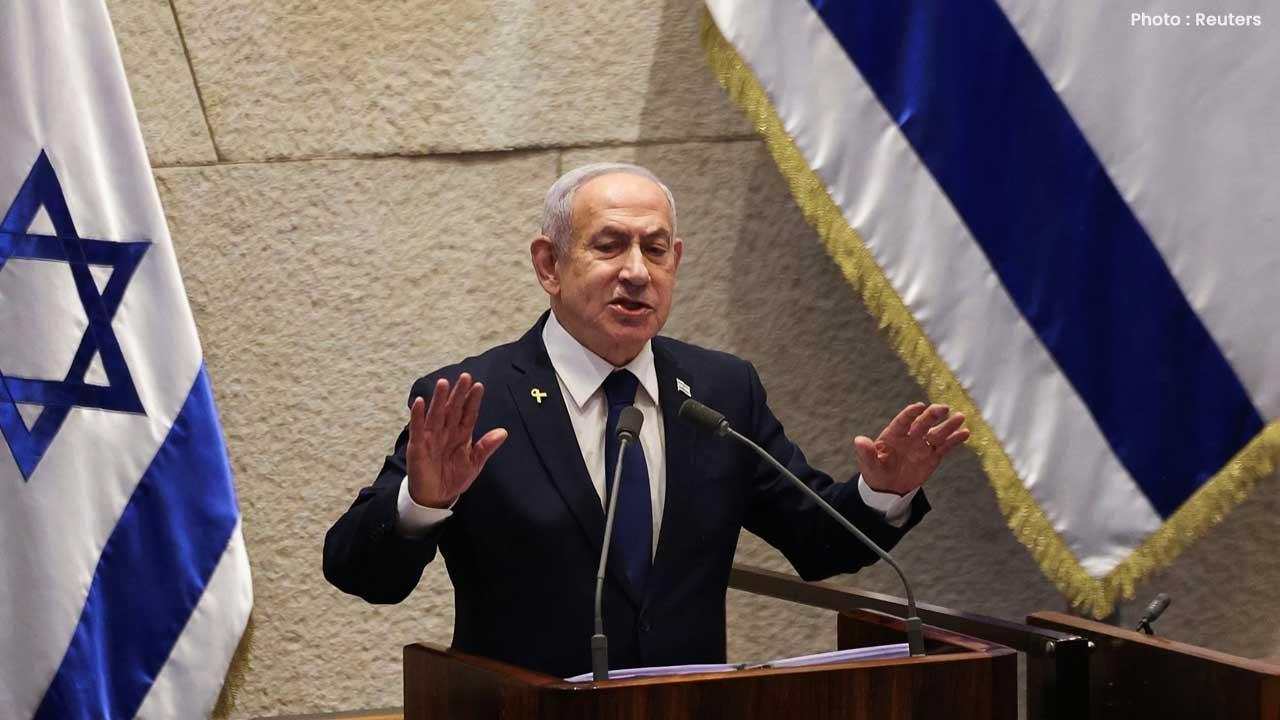
Israeli Prime Minister Benjamin Netanyahu issued a call on Tuesday for the expulsion of Hamas from Gaza, signifying a stark opposition to the US-supported UN initiative aimed at resolving the ongoing conflict. His statement follows a day after the UN Security Council backed President Donald Trump's 20-point peace framework, which includes provisions for Hamas members to gain amnesty should they choose peaceful coexistence.
Having previously endorsed the Trump plan during a September visit to the White House, Netanyahu's recent comments indicate a shift towards a more hardline strategy. In a series of posts on X, he commended Trump's efforts while asserting that Hamas and its allies must be eradicated from the region. “Israel welcomes peace and prosperity for all our neighbors and urges others to help us remove Hamas and its supporters,” Netanyahu remarked.
A spokesperson clarified that this expulsion means ensuring Hamas loses any governing authority or influence over Gaza, effectively neutralizing the organization’s political and military power. This assertion diverges sharply from the 20-point initiative, which permits Hamas members to receive amnesty upon disarming and committing to a peaceful coexistence, as well as ensuring safe exit for those wishing to leave Gaza voluntarily without imposing required removal of the group.
Diplomats and regional experts indicate that Netanyahu’s stance highlights the deep-seated rifts between Israel and Hamas, further complicating global efforts to realize the peace plan. The Trump initiative aims to pave the way for Palestinian self-determination and statehood while reforming governance in the West Bank under Palestinian Authority. However, Netanyahu remains staunchly against the notion of Palestinian statehood, influenced by domestic pressures from far-right coalition partners.
Hamas has also expressed its discontent regarding significant components of the plan, particularly about disarmament and governance. With both factions holding firm positions, the international community faces hurdles in transforming the plan into actionable measures on the ground.
Netanyahu’s declaration comes amid increasing scrutiny of Gaza’s security and governance structures, as world leaders contemplate strategies for achieving enduring peace while preventing further escalation. Experts warn that conflicting interpretations of the peace plan by Israel, Hamas, and global stakeholders may hinder progress and contribute to further instability in the region.
The Prime Minister’s statement underscores the precarious balancing act Israel must perform: pursuing security objectives while addressing international calls for peace and stability. As the UN-backed proposal progresses, Netanyahu’s aggressive stance signals a potential clash between diplomatic pursuits and Israel’s internal political dynamics.










DAE Achieves Remarkable Growth in Q1 2026 With Record Revenue
Dubai Aerospace Enterprise announces impressive financial results for Q1 2026, reflecting a surge in

Price Increase for Sony PS5 in Southeast Asia Effective May 1
Sony announces a price increase for the PS5 across Southeast Asia starting May 1, 2026, impacting ga

Potential ‘Super El Niño’ in 2026: Understanding the Climate Risks
Could a Super El Niño emerge in 2026? Discover its implications and potential global climate impacts

Global Energy Crisis Intensifies: Markets React to Oil Supply Challenges
Markets are on edge as oil disruptions escalate, influencing prices and economic stability. Explore

Must-See Tourist Spots in London You Can't Overlook
Explore London's essential attractions, from royal landmarks to vibrant markets, ensuring an unforge

Ultimate Guide to Snagging Cheap Flights in 2026
Unlock the secrets to booking affordable flights in 2026 with insightful tips and strategies tailore




