Post by : Bianca Suleiman
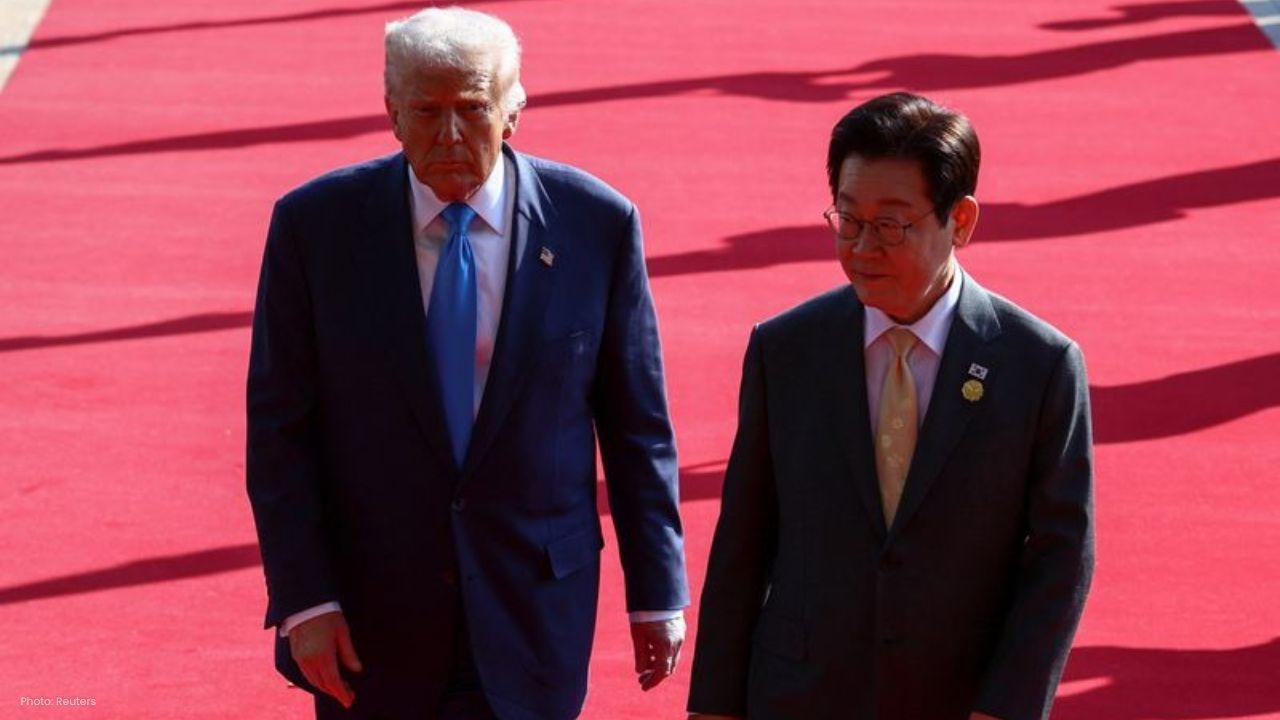
In a pivotal development for international trade relations, the United States and South Korea have announced a landmark agreement that reduces tariffs and increases investment in crucial sectors. This agreement comes on the heels of last month’s summit between U.S. President Donald Trump and South Korean President Lee Jae Myung.
As part of the deal, tariffs on U.S. imports of Korean automobiles and auto parts will be lowered from 25% to 15%, matching the rates applied to Japanese goods. This reduction will take effect retroactively from November 1, contingent on the approval of a $350 billion investment initiative by the South Korean government within the U.S. Congress. Import tariffs on South Korean wood products and pharmaceuticals will be limited to 15%, while aircraft parts and generic drugs will be exempt from tariffs.
Semiconductors, a significant industry for both nations, are also included in the agreement. South Korea will enjoy trade terms that are at least as favorable as those granted to Taiwan, providing a level playing field in this vital sector.
The agreement also aims to tackle non-tariff barriers in agriculture and digital services, working to enhance market access for U.S. meat, ease online platform regulations, and enable the cross-border transfer of location data.
Although South Korea will not directly invest in the Alaska LNG project proposed by Trump, it remains committed to purchasing liquefied natural gas from the U.S. The government-controlled entity Korea Gas has entered into long-term agreements to receive approximately 3.3 million metric tons each year.
The investment package of $350 billion includes a total of $200 billion in phased cash payments to be capped at $20 billion per year to ensure currency stability. Funding for these payments will be managed to avoid significant market disruption and will occur in relation to project milestones determined by U.S. officials.
The other $150 billion focuses on collaborations in shipbuilding, featuring loans, guarantees, and investments from the private sector. Initial profits from these ventures will be equally distributed, with possible adjustments based on commercial success. Additionally, South Korea intends to finance these efforts using revenue from foreign assets, minimizing the necessity for domestic bond issuance.
This agreement marks a significant step in deepening economic ties between the U.S. and South Korea, balancing trade advantages, strategic investments, and collaboration in key sectors while promoting fair market conditions in critical industries.









DAE Achieves Remarkable Growth in Q1 2026 With Record Revenue
Dubai Aerospace Enterprise announces impressive financial results for Q1 2026, reflecting a surge in

Price Increase for Sony PS5 in Southeast Asia Effective May 1
Sony announces a price increase for the PS5 across Southeast Asia starting May 1, 2026, impacting ga

Potential ‘Super El Niño’ in 2026: Understanding the Climate Risks
Could a Super El Niño emerge in 2026? Discover its implications and potential global climate impacts

Global Energy Crisis Intensifies: Markets React to Oil Supply Challenges
Markets are on edge as oil disruptions escalate, influencing prices and economic stability. Explore

Must-See Tourist Spots in London You Can't Overlook
Explore London's essential attractions, from royal landmarks to vibrant markets, ensuring an unforge

Ultimate Guide to Snagging Cheap Flights in 2026
Unlock the secrets to booking affordable flights in 2026 with insightful tips and strategies tailore