Post by : Raina Nasser
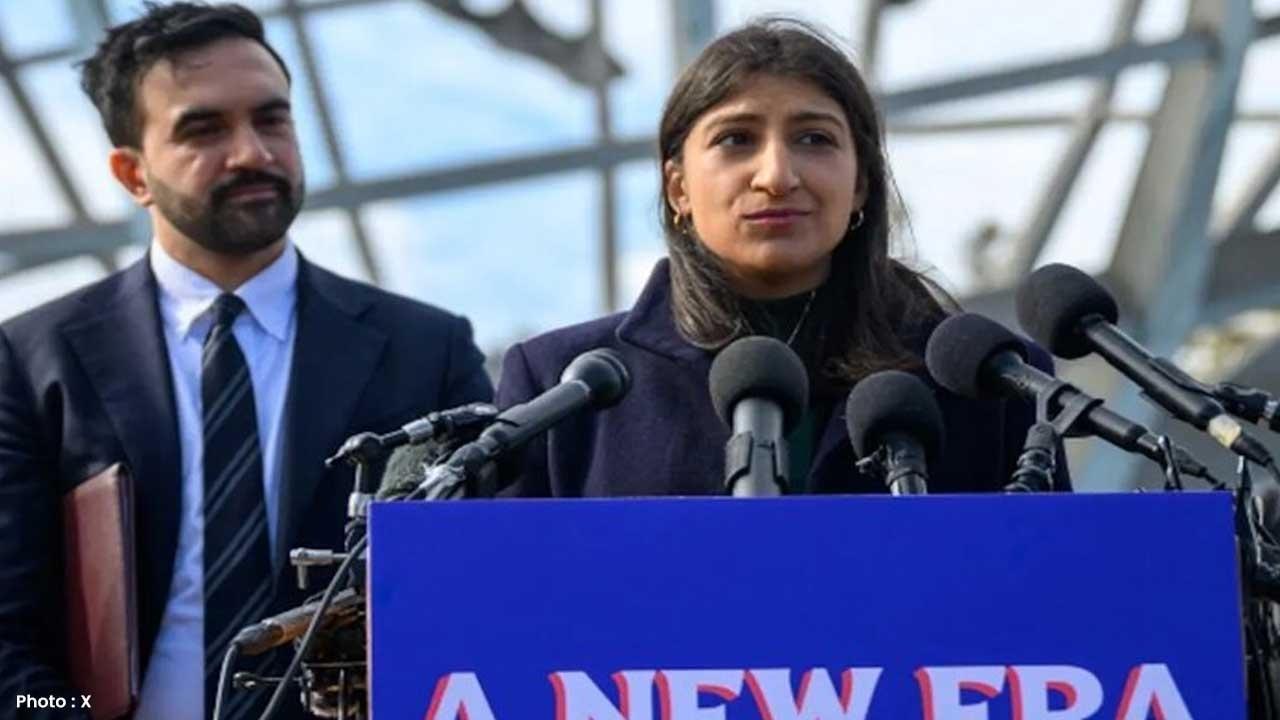
Lina Khan, the former chair of the United States Federal Trade Commission (FTC), is becoming a key figure in the incoming administration of New York City’s mayor-elect, Zohran Mamdani. Recently appointed as co-chair of Mamdani's transition team, Khan is now exploring the potential for the new mayor to capitalize on infrequently utilized legal authorities to push forward his ambitious agenda.
In an upcoming interview with Pod Save America host Tommy Vietor—airing in full on November 23—Khan shared her commitment to identifying underappreciated powers at the mayor's disposal. Her goal is to empower Mamdani to fulfill his vision of transforming affordability and public services in New York City.
Khan's background with the FTC has equipped her with insights into dormant legal tools. "I aim to thoroughly assess all laws and authorities the mayor can employ independently," she stated, noting that recognizing neglected avenues of executive power was a critical lesson from her time in Washington.
An Ambitious Progressive Vision Requires Significant Tools
Mamdani, at 34, stands as one of the city’s most progressive leaders, advocating for transformative initiatives—such as free citywide buses, universal childcare for children six months to five years, and a freeze on rents for over one million rent-stabilized apartments.
Executing this agenda entails a considerable price tag: around $10 billion in new annual revenue. Mamdani firmly believes that these funds must largely derive from increased taxes on billionaires and corporations. However, since state-level authorities oversee taxation, Governor Kathy Hochul has made it clear she has no intention of raising taxes, posing immediate challenges for the mayor-elect.
Moreover, Hochul has expressed doubts regarding free bus service, highlighting the Metropolitan Transit Authority’s (MTA) continuing dependence on fare revenues to service $17 billion in farebox bonds.
Khan: Managing Challenges Where Cooperation Isn't Assured
Recognizing the political and fiscal hurdles, Khan stated that while cooperation with the governor and state legislators will be crucial, the mayor retains significant independent authority to act.
"He also has a considerable ability to take unilateral actions," she remarked. "We want to ensure he understands those options."
According to a source familiar with her strategy, Khan is reviewing new and recently passed legislation concerning algorithmic pricing, junk fees, and surveillance pricing—factors that could empower the administration to regulate corporate behavior more effectively at the city level.
A Controversial Figure Faces Scrutiny
Khan, at 36, was regarded as a polarizing regulator during the Biden administration. As the youngest FTC chair, she often found herself in conflict with corporate interests. Her aggressive stance on antitrust enforcement has drawn criticism from Wall Street leaders and tech giants, especially after the FTC's initial legal setbacks against Meta and Microsoft.
Her involvement in Mamdani’s transition has already elicited pushback. Hedge fund billionaire Daniel Loeb, a vocal opponent of Mamdani’s candidacy, chastised Khan on X, suggesting that her influence might lead to “Soviet-style centralized control” and could “harm the economy.”
Despite his admonitions, Loeb sarcastically added, “But we should give @ZohranKMamdani a chance.”
Revitalizing Underused Laws for Modern Challenges
One of Khan’s concluding acts at the FTC was to revive the Robinson-Patman Act, a long-dormant 1936 statute, to address violations against Southern Glazer’s Wine and Spirits. She cited this experience as evidence of how seemingly outdated laws can serve as powerful resources—an approach she plans to introduce at New York City Hall.
“It was startling to discover how much unused authority was lying dormant,” she commented. “We want to fully grasp the city’s legal capabilities.”
Confronting Big Tech Locally
Khan also indicated that under Mamdani's leadership, New York City might enhance its stance against technology platforms via the city's Department of Consumer and Worker Protection—an agency parallel to the FTC.
“They possess a comprehensive set of laws aimed at preventing companies from abusing their power,” she pointed out. “I am eager to see those measures enacted.”
A Transition Team Ready for Confrontation
As Mamdani approaches his inauguration on January 1, Khan’s approach signals an administration poised to challenge traditional limits on executive power. With high hopes from progressive supporters and staunch opposition from establishment and business sectors, the new mayor may rely heavily on Khan’s ability to unveil every legal option accessible to him.
Her methodology could shape whether Mamdani's grandest vows remain mere campaign rhetoric or actually redefine governance in New York City.









DAE Achieves Remarkable Growth in Q1 2026 With Record Revenue
Dubai Aerospace Enterprise announces impressive financial results for Q1 2026, reflecting a surge in

Price Increase for Sony PS5 in Southeast Asia Effective May 1
Sony announces a price increase for the PS5 across Southeast Asia starting May 1, 2026, impacting ga

Potential ‘Super El Niño’ in 2026: Understanding the Climate Risks
Could a Super El Niño emerge in 2026? Discover its implications and potential global climate impacts

Global Energy Crisis Intensifies: Markets React to Oil Supply Challenges
Markets are on edge as oil disruptions escalate, influencing prices and economic stability. Explore

Must-See Tourist Spots in London You Can't Overlook
Explore London's essential attractions, from royal landmarks to vibrant markets, ensuring an unforge

Ultimate Guide to Snagging Cheap Flights in 2026
Unlock the secrets to booking affordable flights in 2026 with insightful tips and strategies tailore




