Post by : Saif Nasser
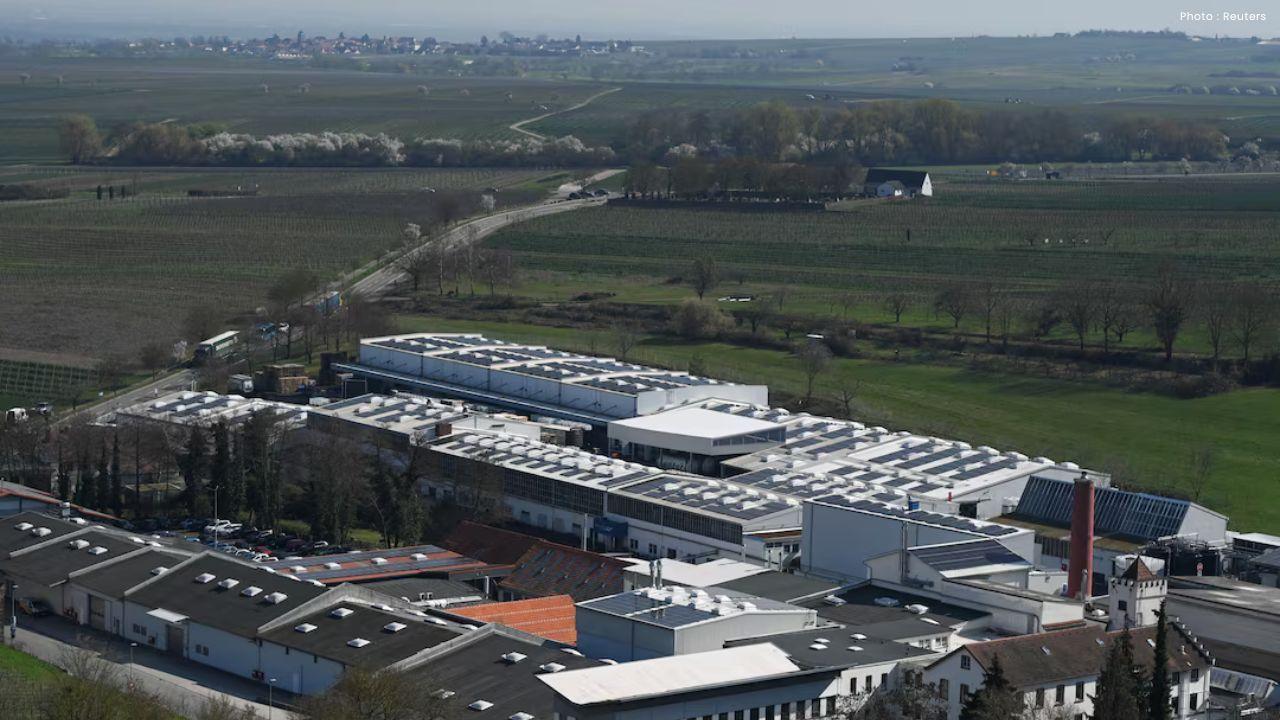
Europe’s industrial sector is facing a fresh and serious challenge as the ongoing war involving Iran continues to disrupt global energy supplies. What was already a difficult economic situation has now become worse, especially for countries like Germany, which depend heavily on energy for manufacturing.
The conflict has pushed up the cost of oil, gas, and raw materials. These are essential for industries such as chemicals, steel, plastics, and automobiles. As prices rise, companies are finding it harder to continue normal operations. Reports suggest that oil prices have surged close to $120 per barrel, putting heavy pressure on businesses.
One of the biggest problems is the disruption of energy supply routes. The war has affected key shipping paths, especially the Strait of Hormuz. This route carries a large share of the world’s oil and gas. When it is blocked or threatened, global supply becomes uncertain, and prices rise quickly.
For Europe, this situation is especially serious because its industries already face higher energy costs compared to countries like the United States. Now, with further increases, many companies are struggling to stay competitive.
Small and medium-sized businesses, often called the backbone of Europe’s economy, are among the hardest hit. In Germany, some companies have already stopped expansion plans, while others are thinking about cutting jobs to reduce costs. Larger firms have also started raising prices or reducing production.
The problem does not stop at energy. The war has also disrupted the supply of raw materials. Many industries depend on imports from different parts of the world. When shipping routes are affected or suppliers cannot deliver goods, production slows down. In some cases, suppliers have even cancelled contracts due to the uncertain situation.
This is creating a chain reaction across industries. For example, if chemical companies face shortages, it affects plastics, automotive parts, and even everyday products like toys. The impact spreads quickly from one sector to another.
From an economic point of view, the situation is worrying. Experts say that if high energy prices continue, Europe could face slower growth, rising inflation, and even a risk of recession. Energy-intensive industries like steel and chemicals are especially vulnerable.
Another concern is investment. Many companies are now delaying new projects because of uncertainty. When businesses are not sure about future costs, they avoid spending money on expansion. This slows down economic growth and reduces job creation.
From an editorial point of view, this crisis shows how deeply connected the global economy is. A conflict in one region can quickly affect industries thousands of kilometers away. Europe’s dependence on imported energy has made it more vulnerable to such shocks.
The situation also highlights a long-term issue. Europe has been trying to move toward cleaner and more sustainable energy sources. However, this transition takes time. Until it is complete, industries remain dependent on traditional fuels like oil and gas.
Governments in Europe are now under pressure to respond. Some are considering support measures such as subsidies or tax cuts to help industries manage rising costs. However, these solutions may only provide temporary relief.
There is also a risk that prolonged high costs could lead to permanent changes. Some companies may move production to countries where energy is cheaper. This could weaken Europe’s industrial base over time.
At the same time, workers are also affected. If companies reduce production or shut down plants, jobs are at risk. This can create social and economic problems, especially in regions that depend on manufacturing.
In conclusion, the ongoing war involving Iran is not just a regional conflict. It has become a global economic issue, especially for Europe’s industrial sector. Rising energy costs, supply disruptions, and uncertainty are putting pressure on businesses and workers alike.
The coming months will be critical. If the conflict continues, the impact on Europe’s economy could become even more severe. For now, industries are trying to adapt, but the situation remains uncertain and challenging.







Anticipated Dates for UAE Eid Al Adha 2026 Unveiled by Astronomical Experts
Experts predict Eid Al Adha 2026 in the UAE to start on May 27, prompting early holiday planning amo

DAE Achieves Remarkable Growth in Q1 2026 With Record Revenue
Dubai Aerospace Enterprise announces impressive financial results for Q1 2026, reflecting a surge in

Price Increase for Sony PS5 in Southeast Asia Effective May 1
Sony announces a price increase for the PS5 across Southeast Asia starting May 1, 2026, impacting ga

Potential ‘Super El Niño’ in 2026: Understanding the Climate Risks
Could a Super El Niño emerge in 2026? Discover its implications and potential global climate impacts

Global Energy Crisis Intensifies: Markets React to Oil Supply Challenges
Markets are on edge as oil disruptions escalate, influencing prices and economic stability. Explore

Must-See Tourist Spots in London You Can't Overlook
Explore London's essential attractions, from royal landmarks to vibrant markets, ensuring an unforge




