Post by : Shweta
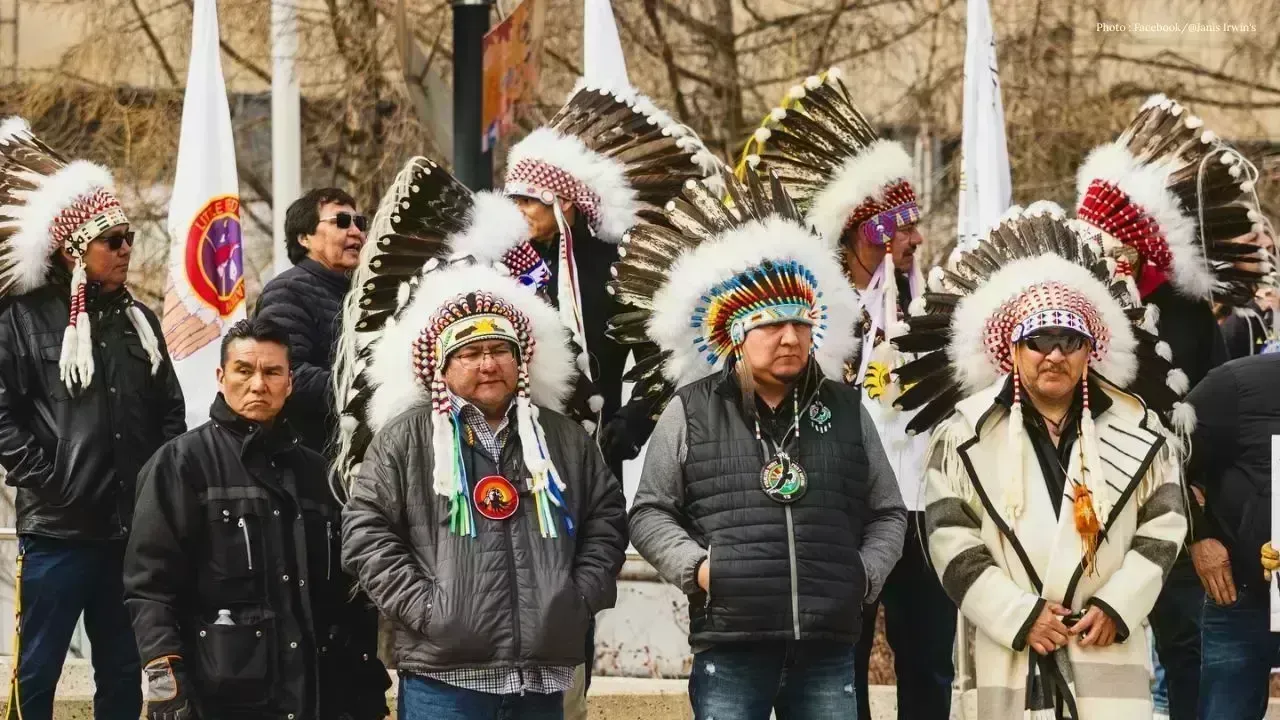
First Nations representatives in Alberta have issued a stark warning regarding the potential for civil disobedience should the provincial government push ahead with a proposed referendum deemed harmful to treaty rights and Indigenous stakes. This warning underscores escalating tensions between Indigenous leaders and the Alberta administration as they navigate the political landscape and the province’s evolving relationship with Ottawa.
Concerns were sparked when Alberta's administration indicated support for legislation aimed at simplifying the process for citizens to initiate provincial referendums on significant issues. Although a definitive referendum question has yet to take shape, discussions are increasingly centering on matters pertaining to provincial autonomy, constitutional powers, and Alberta’s future within Canada.
Numerous chiefs from First Nations have expressed staunch opposition to any referendum that could sway treaty agreements or alter constitutional frameworks without adequate engagement with Indigenous communities. They maintain that treaties are legally binding pacts between First Nations and the Crown, impervious to changes via a simple provincial vote.
Indigenous leaders affirm that they are vigilantly tracking developments and stand ready to defend their treaty rights through legal, political, and public means if deemed necessary. Certain chiefs have articulated that civil disobedience remains among the various responses they might consider if they perceive that treaty obligations are being disregarded.
The issue raises broader dialogues surrounding Indigenous rights within Canada’s constitutional framework. First Nations leaders argue that treaties predate Alberta and should remain protected under Canadian law, necessitating that any political action impacting these agreements involve direct consultations with Indigenous entities.
The Alberta government reassures that any referendum would operate within the Canadian constitutional boundaries and wouldn’t inherently modify legal arrangements or treaty commitments. Provincial officials emphasize that the referendums serve primarily to gauge public sentiment on vital matters rather than directly influencing constitutional entitlements.
Despite such reassurances, many Indigenous communities remain unsettled regarding the potential repercussions of a referendum. Chiefs have contended that public votes on treaty-affiliated topics could incite uncertainty and jeopardize trust between governmental bodies and Indigenous peoples.
This contentious debate surfaces amid ongoing national discussions about reconciliation and partnership with Indigenous groups. Both federal and provincial administrations have repeatedly vowed to enhance ties with Indigenous communities, bolster consultation processes, and honor treaty responsibilities.
Legal experts affirm that treaty rights are safeguarded by the Canadian Constitution and cannot simply be annulled through a provincial referendum. Nonetheless, they recognize that political movements regarding constitutional matters can breed substantial public discourse and challenge questions about governance, jurisdiction, and Indigenous sovereignty.
Organizations representing Indigenous interests across Canada are closely monitoring Alberta's situation. Some leaders are advocating for proactive and meaningful dialogue between the provincial government and First Nations communities to avert unwanted conflict and ensure that concerns are adequately addressed prior to any referendum proceedings.
Political analysts suggest that this controversy mirrors broader tensions concerning provincial independence, resource management, Indigenous rights, and the Canadian constitutional framework. Alberta has persistently sought increased authority over various policy areas, while Indigenous communities assert that treaty commitments are distinct from provincial political considerations.
As discussions evolve, numerous First Nations leaders are imploring governments to prioritize genuine consultation and uphold existing agreements. They contend that collaborative approaches are far more effective than unilateral actions in grappling with intricate constitutional and treaty-related issues.
If discussions about a referendum advance, the federal government might face pressure to clarify its stance. Ottawa holds legal obligations regarding treaty relationships, and any proposal that raises concerns from Indigenous communities could garner nationwide scrutiny.
Currently, no final referendum question has been sanctioned, and discussions remain in the preliminary stages. However, statements from First Nations chiefs suggest that opposition could escalate if Indigenous concerns go unaddressed. The forthcoming months are expected to bring further negotiations, legal insights, and political commentary as Alberta’s plans unfold.
As the scenario progresses, the dynamic between provincial objectives, constitutional principles, and treaty responsibilities will remain a crucial issue for governments, Indigenous leaders, and Canadians nationwide.
For comprehensive updates and extensive coverage, stay engaged with us.








Achieve Radiant Skin with This Simple Rice Flour Treatment
Transform your skincare routine! Discover how a rice flour mix can restore your skin's glow without

Meta Unveils Subscription Plans for Instagram, Facebook, and WhatsApp
Meta introduces new subscription plans for users of Instagram, Facebook, and WhatsApp, featuring enh

Suvarna Joy on Education Leadership, Resilience, and Building Purpose Through Adversity in the UAE
Suvarna Joy shares her journey of education leadership, motherhood, faith, and resilience within the

Anticipated Dates for UAE Eid Al Adha 2026 Unveiled by Astronomical Experts
Experts predict Eid Al Adha 2026 in the UAE to start on May 27, prompting early holiday planning amo

DAE Achieves Remarkable Growth in Q1 2026 With Record Revenue
Dubai Aerospace Enterprise announces impressive financial results for Q1 2026, reflecting a surge in

Price Increase for Sony PS5 in Southeast Asia Effective May 1
Sony announces a price increase for the PS5 across Southeast Asia starting May 1, 2026, impacting ga




