Post by : Bianca Suleiman
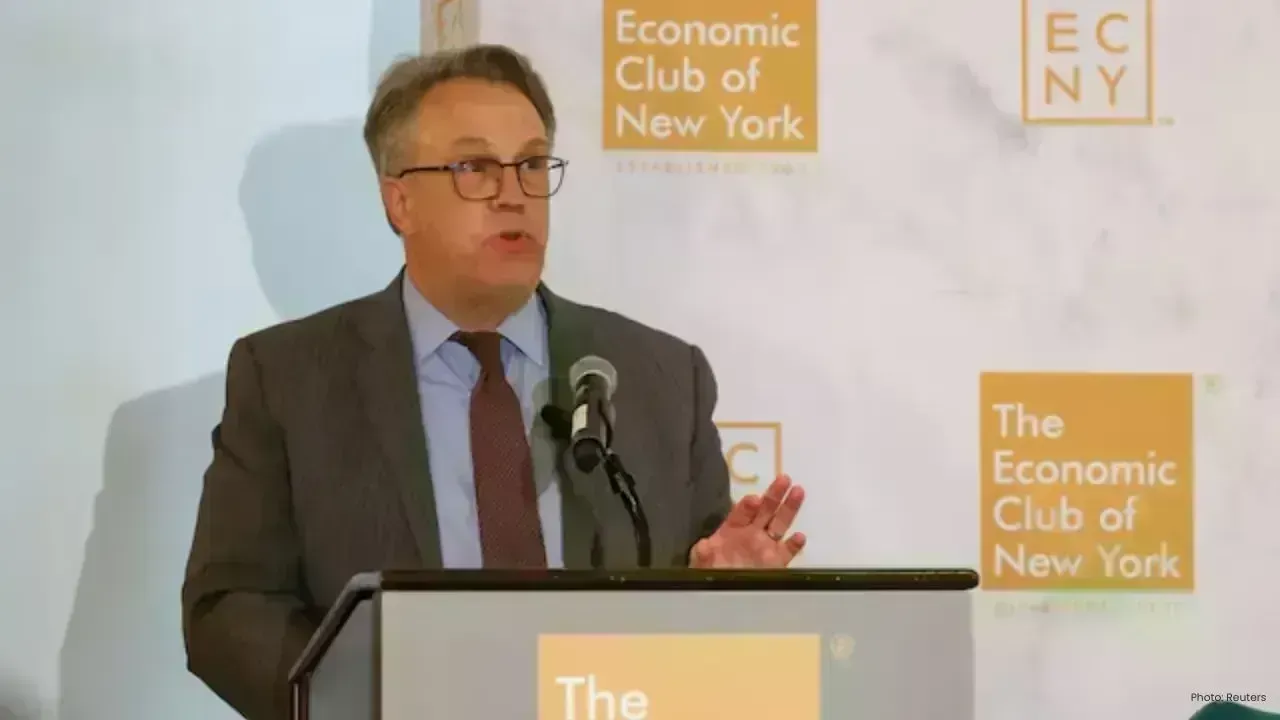
The ongoing discourse around the future of the U.S. Federal Reserve's monetary policy gained traction on Friday as New York Fed President John Williams indicated that interest rates might be reduced “in the near term.” This announcement shifted market sentiments toward a potential cut in December.
During his appearance at a Central Bank of Chile event, Williams characterized the existing monetary policy as “modestly restrictive” and highlighted the possibility of adjusting the federal funds rate to align with a more neutral range. His perspective is significant, given his position as a permanent voter on the Federal Open Market Committee and the current economic context.
Traders quickly reacted to his comments, flipping bets that had previously favored holding rates steady. Investors are now anticipating about a 60% probability of a quarter-point reduction during the Fed's meetings on December 9–10. Prior to this, inflation fears had dampened such expectations.
Despite this development, the broader landscape remains complex. Williams acknowledged that inflation progress has “temporarily stalled,” with prices remaining above the Fed’s 2% target. He remains hopeful, however, that tariff-induced pressures will ease, coupled with labor market data indicating a cooling trend, as indicated by an uptick in the unemployment rate to 4.4%, akin to pre-pandemic levels.
Conversely, not all Fed officials are in favor of an immediate rate cut. Boston Fed President Susan Collins expressed her reluctance to further ease policies, labeling the current rate range of 3.75%–4% as apt for managing inflation, particularly in light of the economy’s resilience. Her stance has significantly influenced market sentiment away from hopes of an early cut in recent weeks.
Likewise, Dallas Fed President Lorie Logan reiterated caution, emphasizing in her address in Zurich that the October rate cut may have been premature. She advocates for maintaining the current rate level “for a time” to thoroughly evaluate the true restrictiveness of the policy. Her voting power will be a factor next year, which adds more weight to her position.
The divisions among policymakers come at a time when the Fed lacks the usual economic data due to delays from the recent U.S. government shutdown. With inflation metrics and employment reports still awaited, uncertainty looms over the December decision.
As the countdown to the upcoming meeting commences, the internal rift within the Fed—between those advocating for changes and those preferring to remain steadfast—sets the stage for one of the year's most closely scrutinized policy decisions.










Price Increase for Sony PS5 in Southeast Asia Effective May 1
Sony announces a price increase for the PS5 across Southeast Asia starting May 1, 2026, impacting ga

Potential ‘Super El Niño’ in 2026: Understanding the Climate Risks
Could a Super El Niño emerge in 2026? Discover its implications and potential global climate impacts

Global Energy Crisis Intensifies: Markets React to Oil Supply Challenges
Markets are on edge as oil disruptions escalate, influencing prices and economic stability. Explore

Must-See Tourist Spots in London You Can't Overlook
Explore London's essential attractions, from royal landmarks to vibrant markets, ensuring an unforge

Ultimate Guide to Snagging Cheap Flights in 2026
Unlock the secrets to booking affordable flights in 2026 with insightful tips and strategies tailore

The Impact of Consistent Small Investments on Wealth Building
Discover how investing small amounts regularly can positively transform your financial future over t




