Post by : Anees Nasser
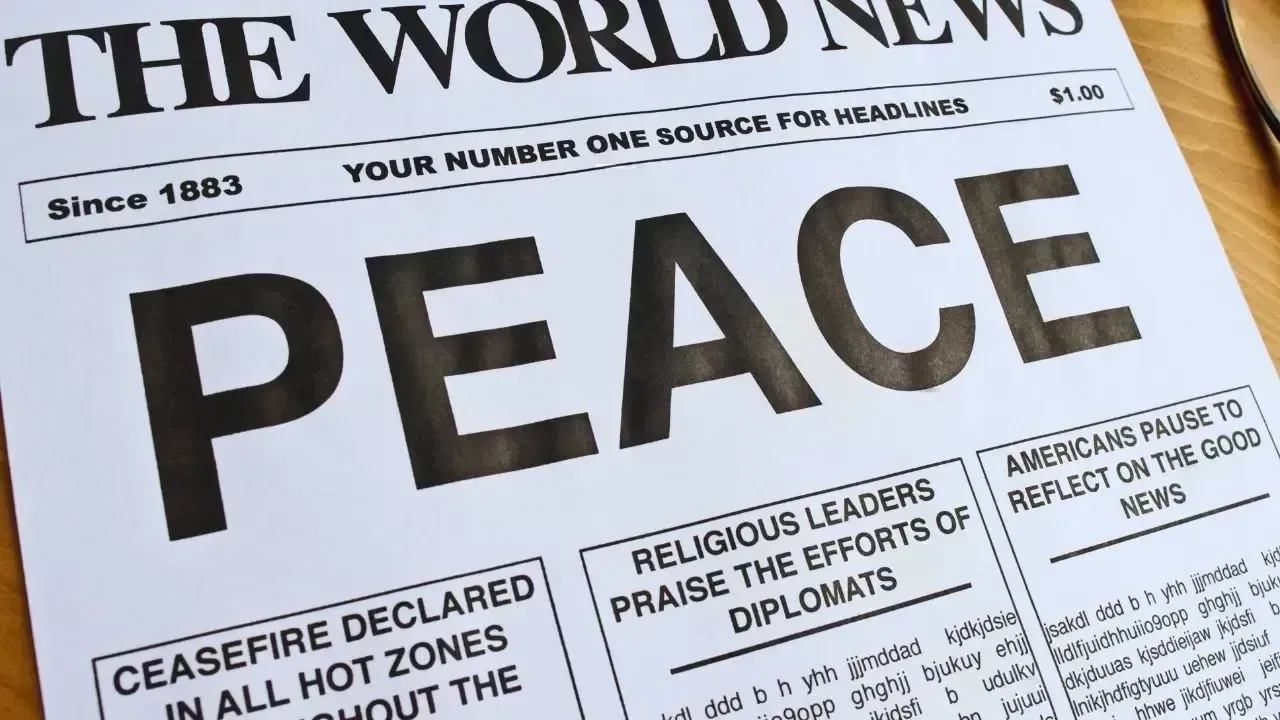
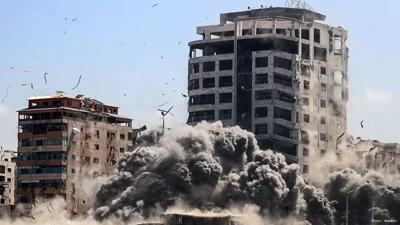
Though war captures the headlines, the true foundations of peace are constructed in secrecy—through confidential discussions, late-night conversations, and diplomatic negotiations where the quiet often conveys more than the loudest bombs. While explosions demand attention, it’s the murmurs of peace that herald transformations.
In conflict-stricken regions worldwide, from West Asia to Eastern Europe, the pursuit of ceasefires transcends mere cessation of hostilities. It aims to reshape the global equilibrium, redefine alliances, and restore a fragile stability.
The onset of negotiations has immediate effects on markets. Currency values fluctuate, diplomatic ties evolve, and humanitarian routes are reconfigured. Ordinary lives, even those distanced from frontline conflicts, experience the ripple effects—be it shifting grocery costs, travel prices, or energy rates.
Peace, by nature, extends its influence beyond local confines.
It resonates globally.
In contemporary warfare, victories are not easily defined through traditional means. Even formidable militaristic efforts often fall short of achieving lasting peace, shifting the emphasis onto negotiation as a pragmatic strategy rather than a display of weakness.
Military endeavors disrupt structures.
Conversely, negotiation is the means by which they are restored.
These dialogues create the blueprints for:
Control of boundaries
Shared resources
Exchanging prisoners
Humanitarian access
Security assurances
Reconstructing economies
Without negotiations, wars are trapped in unending cycles.
Dialogues transform them into narrative arcs.
Contemporary power dynamics hinge on the ability to:
Engage at the negotiation table
Shape the narrative
Establish compromises
Craft agreements
Ensure adherence
Real influence lies in the capacity to facilitate peace rather than incite conflict.
A ceasefire functions not merely as a halt in violence.
It serves as an indicator.
Financial markets treat it as a glimpse into future stability.
When the guns fall silent:
Market indices surge
Oil market stabilizes
Insurance premiums lessen
Trade routes reopen
Fluctuations in currency level out
Should negotiations derail:
Investors retreat
Commodity prices surge
Borders become stringent
Refugee movements escalate
Military expenditures inflate
Currently, economic climates are being swayed by discussions of peace faster than by central banks.
No conflict is isolated.
Every war prompts:
Mass refugee movements
Food supply disruptions
Instability in fuel supplies
Political radicalization
Realignments in security
Each peace agreement gradually counters these ramifications on a widespread scale.
Peace signifies relief that resonates globally.
Energy and food represent the most volatile resources amidst conflict.
In war-torn areas, supply networks falter.
The onset of peace enables logistics to bounce back.
Critical energy infrastructure is often situated in conflict zones for reasons such as:
Proximity of oil reserves to borders
Pipelines traversing unstable territories
Ports becoming militarized
Increased insurance costs
Food supplies face similar challenges due to:
Destruction of agricultural land
Closed trade routes
Delays in shipping
Currency pressures
Export limitations
Negotiating peace alleviates the instability discount affecting supply.
As conflict subsides:
Price levels stabilize.
A single farmer can feed families across borders.
However, wars disrupt those unseen connections.
As negotiations commence:
Shipments recommence
Storage capacities increase
Trust in trade returns
Price levels become stable
Ultimately, politics influences agricultural yield as much as nature does.
In today's global landscape, security encompasses:
Digital safeguards
Economic stability
Environmental protection
Information privacy
Cybersecurity measures
Current negotiations also touch upon:
Regulating cyber warfare
Information-sharing protocols
Arms control treaties
Surveillance agreements
Nuclear safety measures
Peace agreements increasingly dictate how information flows as much as they delineate territorial boundaries.
Cyber warfare can incapacitate critical financial systems.
Information manipulation can disrupt democratic processes.
Modern conflicts occur in the shadows, devoid of traditional weapons.
Peace negotiations serve as the bulwark against such invasions.
Not all wars conclude seamlessly.
Some endure due to:
An elusive victory
Fragmented power structures
Rooted ideologies
Unresolved historical grievances
A vacuum of trust
In these scenarios, negotiations may not conclude wars, but they can contain them.
Containment isn’t resolution.
Yet it remains a method of survival.
Compromises seldom satiate all parties involved.
Peace treaties can:
Incite anger among extremists
Displease idealists
Frustrate traditionalists
Challenge existing power dynamics
Nevertheless, peace persists because chaos delivers greater suffering.
Third-party facilitators often emerge as the architects behind peace.
Their contributions include:
Defining the discussions
Providing incentives
Exerting influences
Ensuring security provisions
Coordinating recovery efforts
Mediators typically do not win conflicts.
However, they possess the capability to conclude them.
While adversaries may shout during discussions, mediators interpret hostility into agreements.
Without these intermediaries:
Negotiations can devolve into accusations.
War inflates military expenditures.
Peace reallocates resources toward:
Healthcare services
Infrastructure development
Educational advancements
Job creation
Social welfare
A secure border leads to:
Diminished arms acquisitions
Reduced troop movements
Lower urgent funding
Streamlined budget management
Peace presents an economic advantage.
Conflict drains financial resources.
Nations observe conflicts they are not engaged in because:
Investment environments transform
Alliances are redefined
Currency markets fluctuate
Refugees migrate
The balance of diplomatic power shifts
Conflict anywhere generates uncertainty everywhere.
Even the absence of involvement has a strategy.
Not engaging doesn’t equate to not having an effect.
Diplomatic language often obscures human suffering.
During negotiations, terms like:
Safety zones
Aid routes
Relief packages
Resettlement efforts
Civilian protections
Beneath each term lies:
A family without shelter
A home in ruins
A child going hungry
A parent enduring trauma
Peace restores dignity.
Not merely land.
Distrust multiplies when:
Conversations falter
Leaders hesitate on decisions
Conflict resumes
Pledges go unfulfilled
People then turn to the idea that strength holds more weight than dialogue.
Such notions fuel warfare more than conviction.
Peace necessitates:
Creativity
Endurance
Trust
Bravery
Without these, warfare can become entrenched.
Discussions have evolved beyond pure physical presence.
They now encompass:
Secure online channels
Simulations for intelligence
Data enhanced by AI
Monitoring via satellites
Cyber verification tactics
Modern diplomacy operates in real-time.
Not stretched out over weeks, but responsive in seconds.
Merely signing an agreement does not conclude conflicts.
Fulfillment does.
Verification processes include:
Observers on the ground
Surveillance from satellites
Monitoring along borders
Oversight of communications
Independent inspections
Trust is uncommon.
Accuracy is paramount.
When peace is achieved:
Businesses restart operations
Educational institutions open
Healthcare systems recover
Borders become more lenient
Tourism resumes
Investment flourishes
Normalcy blooms into a joyous renaissance.
Peace is not boisterous.
Yet, it is immensely potent.
The forthcoming decade will see less influence from firearms and more from:
Mastery in negotiations
Innovative diplomacy
Preventive strategies for conflict
Sharing of resources
Courage in politics
War is antiquated.
However, peace necessitates creativity.
Wars escalate quickly.
Peace demands perseverance.
But it is only peace that reshapes history with compassion.
Each ceasefire carries more potency than a multitude of battles.
Because while weapons annihilate, words reconstruct.
From today’s negotiation chambers arise the foundations of tomorrow’s peace, security, and prosperity.
When world leaders converse, all ears are inclined towards their words.
And as the world listens…
The future transforms.
DISCLAIMER
This article serves solely for informational and educational purposes. It does not represent political, legal, or strategic counsel. Readers should consult reliable international sources and experts for detailed analyses and updates on global issues.





Anticipated Dates for UAE Eid Al Adha 2026 Unveiled by Astronomical Experts
Experts predict Eid Al Adha 2026 in the UAE to start on May 27, prompting early holiday planning amo

DAE Achieves Remarkable Growth in Q1 2026 With Record Revenue
Dubai Aerospace Enterprise announces impressive financial results for Q1 2026, reflecting a surge in

Price Increase for Sony PS5 in Southeast Asia Effective May 1
Sony announces a price increase for the PS5 across Southeast Asia starting May 1, 2026, impacting ga

Potential ‘Super El Niño’ in 2026: Understanding the Climate Risks
Could a Super El Niño emerge in 2026? Discover its implications and potential global climate impacts

Global Energy Crisis Intensifies: Markets React to Oil Supply Challenges
Markets are on edge as oil disruptions escalate, influencing prices and economic stability. Explore

Must-See Tourist Spots in London You Can't Overlook
Explore London's essential attractions, from royal landmarks to vibrant markets, ensuring an unforge




