Post by : Saif Nasser
Israel and Lebanon have agreed to continue their ceasefire for another 45 days after diplomatic talks aimed at reducing tensions along the border. The decision has provided temporary relief to thousands of civilians who have spent months living under the fear of conflict and violence.
The agreement followed discussions held in Washington with international support. Officials hope the extension will create more time for dialogue and help prevent another serious military confrontation between the two sides.
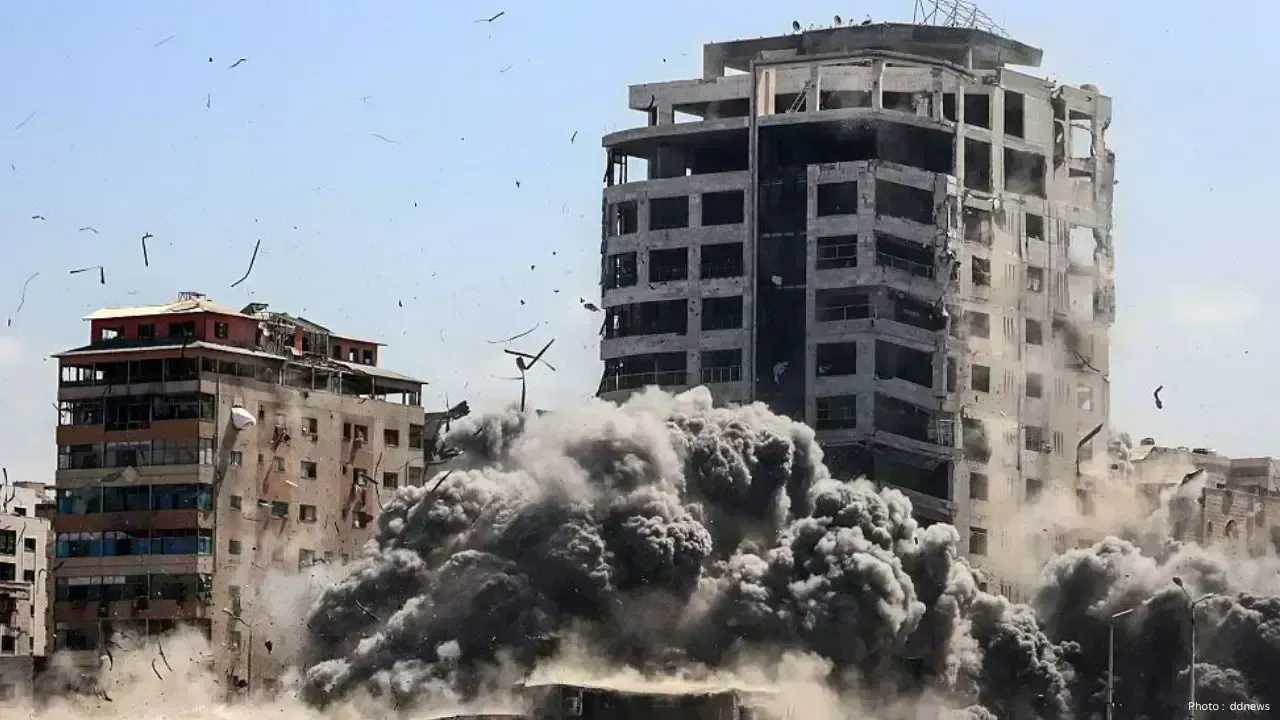
The border region between Israel and Lebanon has witnessed repeated clashes in recent months. Airstrikes, rocket attacks, and military operations forced many families to leave their homes, especially in southern Lebanon and northern Israel. Villages and towns near the border suffered damage, while schools, businesses, and public services were disrupted.
For many civilians, daily life became filled with uncertainty. Families worried about safety, while local economies struggled because of the ongoing tensions. The ceasefire extension now offers at least a short period of calm for communities affected by the conflict.
Despite the agreement, the situation remains delicate. Small security incidents and military activity have continued in some areas even during previous ceasefire periods. This shows that trust between both sides is still very weak and the risk of renewed violence remains present.
One major issue behind the tensions is Hezbollah, the armed group based in Lebanon. Israel considers Hezbollah a major threat to its security and has repeatedly demanded stronger action against the group. Lebanon, meanwhile, faces political and economic difficulties that make the situation more complicated.
The United States has been actively involved in encouraging negotiations and preventing a wider regional conflict. International leaders fear that another major war between Israel and Lebanon could increase instability across the Middle East.
The ceasefire extension is not a final peace agreement, but it is an important diplomatic step. It gives both sides more time to discuss security concerns and search for ways to avoid future violence.
For people living near the border, peace remains the biggest hope. Many displaced families want to return home safely and rebuild their lives after months of fear and destruction. Businesses and local communities also hope stability can return so economic activity can recover.
The coming weeks will be important for the future of the ceasefire. If talks continue positively, tensions may slowly decrease. But if negotiations fail or violence rises again, the region could face another dangerous period of conflict.






Anticipated Dates for UAE Eid Al Adha 2026 Unveiled by Astronomical Experts
Experts predict Eid Al Adha 2026 in the UAE to start on May 27, prompting early holiday planning amo

DAE Achieves Remarkable Growth in Q1 2026 With Record Revenue
Dubai Aerospace Enterprise announces impressive financial results for Q1 2026, reflecting a surge in

Price Increase for Sony PS5 in Southeast Asia Effective May 1
Sony announces a price increase for the PS5 across Southeast Asia starting May 1, 2026, impacting ga

Potential ‘Super El Niño’ in 2026: Understanding the Climate Risks
Could a Super El Niño emerge in 2026? Discover its implications and potential global climate impacts

Global Energy Crisis Intensifies: Markets React to Oil Supply Challenges
Markets are on edge as oil disruptions escalate, influencing prices and economic stability. Explore

Must-See Tourist Spots in London You Can't Overlook
Explore London's essential attractions, from royal landmarks to vibrant markets, ensuring an unforge




