Post by : Saif Nasser
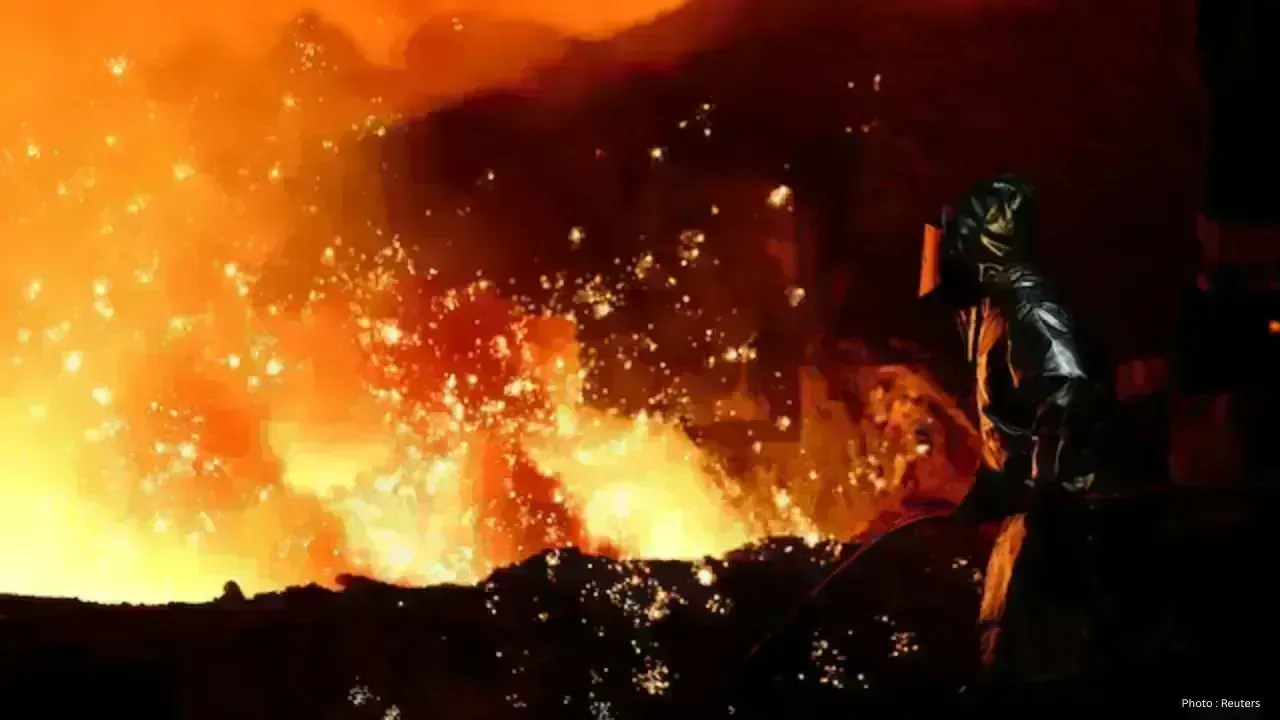
The global steel industry is facing a major shift as the ongoing Iran war continues to disrupt energy supply and trade routes. While the crisis has created challenges for many countries, it has also opened new opportunities for European steelmakers. Recent developments show that steel companies in Europe may see a recovery, while their Asian competitors face greater pressure.
Reports indicate that steel prices in Europe have increased significantly in recent months. In fact, prices for key products like hot rolled coil have risen by around 20 percent over the past six months. This rise is linked to higher energy costs, reduced imports, and new trade measures introduced by the European Union. These changes are helping European companies improve their position in the global market.
One of the main reasons for this shift is the impact of the Iran war on energy supply. The conflict has disrupted oil and gas flows, making energy more expensive around the world. Steel production depends heavily on energy, so rising costs affect all manufacturers. However, Asian countries are more dependent on Middle Eastern energy, which makes them more vulnerable to disruptions.
Because of this dependence, Asian steel producers are facing higher production costs compared to their European rivals. This has reduced their competitiveness in global markets. At the same time, European companies are benefiting from local demand and changes in trade policies.
Shipping costs have also increased due to the conflict. The war has made important routes less stable, leading to delays and higher transport expenses. As a result, European buyers are now turning more towards domestic suppliers instead of importing steel from Asia. This shift is giving a boost to local steel industries in Europe.
Another factor helping European steelmakers is new trade safeguards introduced by the European Union. These include limits on imports and policies that support local industries. Such measures are reducing competition from foreign producers and allowing European companies to grow.
However, the situation is not completely positive. Demand for steel remains weak in some sectors, and overall growth forecasts have been lowered. The World Steel Association has reduced its global demand growth estimate, showing that the industry still faces uncertainty.
High energy prices continue to be a challenge for European producers as well. Although they are currently benefiting from the situation, long-term success will depend on stable energy supply and strong demand. If energy costs remain high, it could limit future growth.
The broader global economy is also feeling the effects of the Iran war. Rising fuel prices, disrupted supply chains, and increased production costs are affecting many industries. From manufacturing to transport, businesses are facing higher expenses and lower confidence.
The steel industry is especially sensitive to such changes because it is closely linked to construction, infrastructure, and manufacturing. When economic growth slows, demand for steel also falls. This means that even if European companies gain short-term advantages, long-term stability is not guaranteed.
The current situation highlights how global conflicts can reshape industries. A war in one region can affect supply chains, energy prices, and trade patterns across the world. In this case, the Iran war has shifted the balance in the steel industry, giving European producers an edge while putting pressure on Asian competitors.
At the same time, the crisis is pushing countries to rethink their energy and trade strategies. Reducing dependence on unstable regions and building stronger local industries may become a priority for many governments.
The coming months will be important for the steel industry. If tensions continue and energy prices remain high, the gap between European and Asian producers may widen further. But if the situation improves, global competition could return to normal levels. For now, the Iran war is acting as a powerful force shaping the future of the global steel market.






Potential ‘Super El Niño’ in 2026: Understanding the Climate Risks
Could a Super El Niño emerge in 2026? Discover its implications and potential global climate impacts

Global Energy Crisis Intensifies: Markets React to Oil Supply Challenges
Markets are on edge as oil disruptions escalate, influencing prices and economic stability. Explore

Must-See Tourist Spots in London You Can't Overlook
Explore London's essential attractions, from royal landmarks to vibrant markets, ensuring an unforge

Ultimate Guide to Snagging Cheap Flights in 2026
Unlock the secrets to booking affordable flights in 2026 with insightful tips and strategies tailore

The Impact of Consistent Small Investments on Wealth Building
Discover how investing small amounts regularly can positively transform your financial future over t

7.5 Magnitude Earthquake Strikes Japan, Tsunami Alerts Issued
Japan experiences a hefty 7.5 quake, prompting tsunami alerts and safety measures. Stay updated on a