Post by : Naveen Mittal
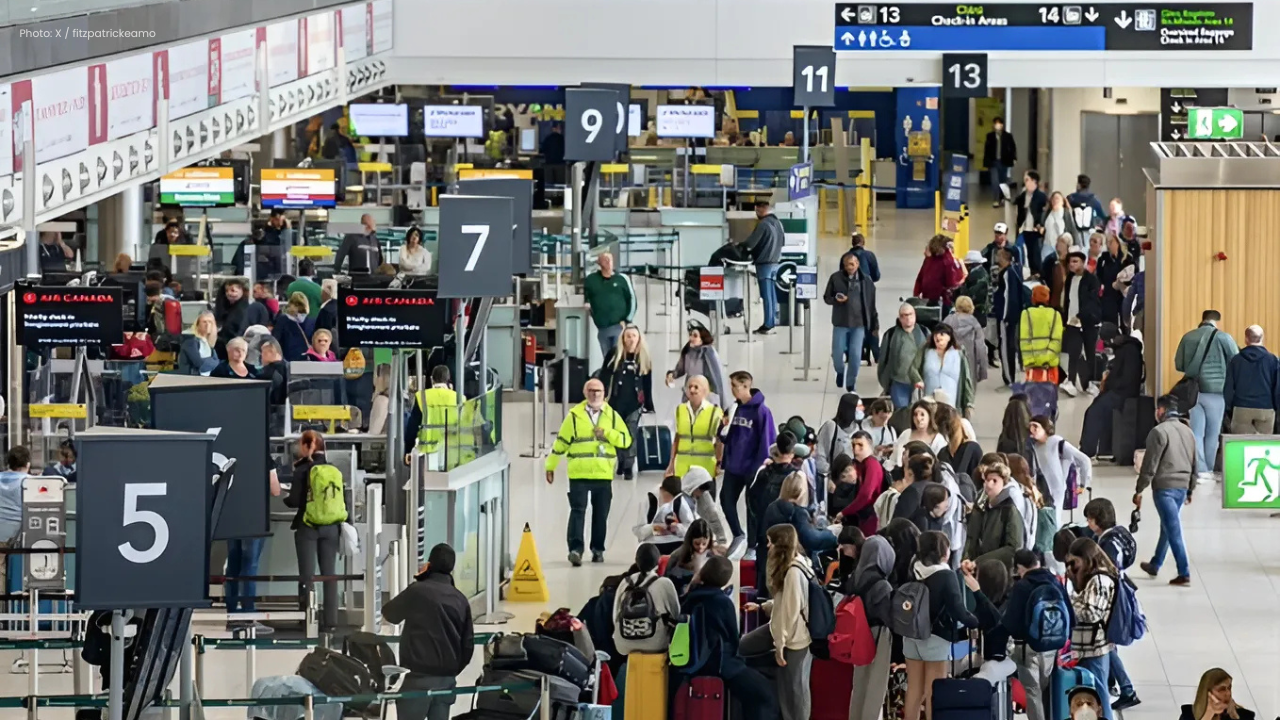
Passengers flying from Dublin Airport now have a much easier experience at security. They no longer need to take out laptops, tablets, or liquids from their hand luggage. Most importantly, the strict rule that only allowed 100ml of liquids in bottles has been removed. Now, people can carry bottles up to two litres and bring as many liquid items as they like.
This is a major shift in travel rules that have been in place since 2006, when strict security measures were introduced after international terror incidents. For almost two decades, passengers across the world had to squeeze their liquids into tiny bottles and place them in plastic bags. Now, Dublin Airport has officially put an end to that stressful practice.
The change has been made possible because of a multi-million euro upgrade in airport security technology. The airport has installed about 30 brand-new C3 scanners and body scanners. These machines work in a similar way to CT scanners used in hospitals, creating clear 3D images of bags. This makes it easier for security staff to see what is inside luggage without passengers needing to unpack.
The airport’s managing director, Gary McLean, called the upgrade a “very positive and welcome development.” He said passengers had been waiting a long time for this day. Now, traveling will be quicker, less stressful, and more comfortable for everyone.
In addition to new scanners in both terminals, the airport has also set up a new screening area in Terminal 1. This space will include a dedicated fast-track facility, designed for passengers who want to move through security more quickly.
The installation of all these scanners was finished earlier than expected. The airport had planned to complete the project by October 2025, but the work is already done well before the official deadline of December 2025.
While the liquid rules have changed, some security measures will remain the same:
Belts, jackets, and heavy footwear must still be removed.
All pocket items like wallets, phones, and keys must be placed in trays.
Sharp objects over six centimeters are still not allowed in carry-on luggage.
So, while the experience has improved, security officers are still making sure that flights remain safe.
Dublin Airport is one of the first airports in Europe to fully switch to the new system. Cork Airport will soon follow, according to the Dublin Airport Authority.
However, many other airports across the UK and Europe are still using the older system, which means that passengers returning to Dublin should check the rules at their departure airport. In some places, the 100ml liquid rule is still in place.
In 2024, the European Union even had to temporarily bring back the 100ml limit because of problems with new scanners. Installing these machines is not always easy. They are very heavy, and some airports even had to reinforce their floors to handle the weight. Also, only a few companies in the world manufacture these machines, which means supply is limited.
The 100ml liquid rule was first introduced in 2006 after several terror-related incidents. It became one of the most frustrating rules for air travelers. Passengers had to purchase travel-sized toiletries, pour liquids into tiny bottles, and keep them in see-through plastic bags. Security lines often became long and stressful.
By removing this rule, Dublin Airport has become a pioneer in making travel smoother and more passenger-friendly, while still keeping safety as a top priority.









Anticipated Dates for UAE Eid Al Adha 2026 Unveiled by Astronomical Experts
Experts predict Eid Al Adha 2026 in the UAE to start on May 27, prompting early holiday planning amo

DAE Achieves Remarkable Growth in Q1 2026 With Record Revenue
Dubai Aerospace Enterprise announces impressive financial results for Q1 2026, reflecting a surge in

Price Increase for Sony PS5 in Southeast Asia Effective May 1
Sony announces a price increase for the PS5 across Southeast Asia starting May 1, 2026, impacting ga

Potential ‘Super El Niño’ in 2026: Understanding the Climate Risks
Could a Super El Niño emerge in 2026? Discover its implications and potential global climate impacts

Global Energy Crisis Intensifies: Markets React to Oil Supply Challenges
Markets are on edge as oil disruptions escalate, influencing prices and economic stability. Explore

Must-See Tourist Spots in London You Can't Overlook
Explore London's essential attractions, from royal landmarks to vibrant markets, ensuring an unforge




