Post by : Raina Nasser
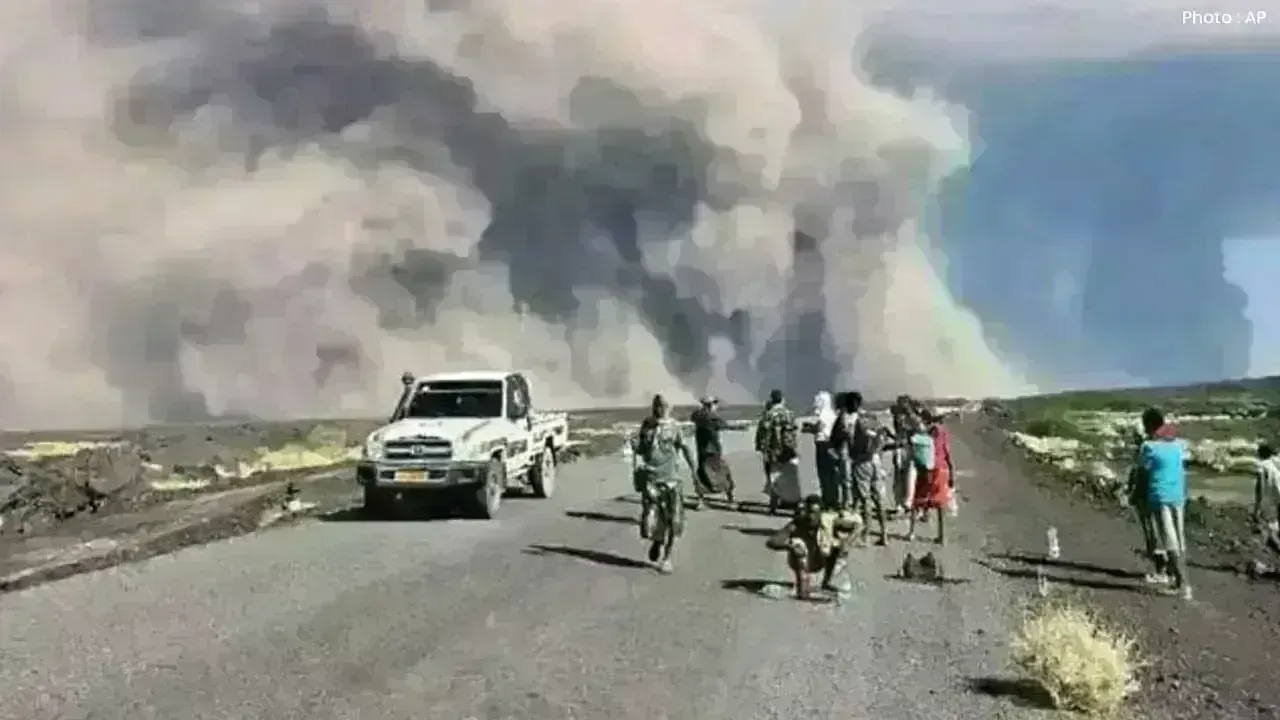
The recent volcanic eruption from the Hayli Gubbi volcano in Ethiopia has unleashed ash clouds that are impacting several nations, including India, raising critical concerns for air travel safety. In response, the Directorate General of Civil Aviation (DGCA) of India has urgently advised all airlines to steer clear of areas and altitudes affected by volcanic ash to ensure passenger and aircraft safety.
On November 23, 2025, this volcano erupted after resting for over 10,000 years, sending dense plumes of smoke and volcanic ash up to 14 kilometers high. The ash clouds have made their way across Yemen, Oman, Pakistan, and various regions in northern, eastern, and northeastern India. There's anticipation that the ash will continue to disperse through these areas for the upcoming days.
Volcanic ash poses significant danger to aircraft, as it consists of abrasive components that can damage engines, resulting in potential engine failure. Additionally, it may harm other parts of the aircraft and disrupt sensor operations, creating substantial risks mid-flight. Consequently, the DGCA has mandated revisions to flight plans, routing, and fuel calculations. Airlines are also instructed to report any signs of ash encounters, such as unusual engine responses or concerning cabin conditions.
Several flights have already experienced disruptions due to ash clouds. For instance, an IndiGo flight from Kannur to Abu Dhabi had to be redirected to Ahmedabad, alongside various cancellations in impacted regions.
To safeguard aircraft and passengers, the DGCA requires airlines to perform comprehensive checks on engines and airframes after flights conducted near ash-affected zones. Airport operations impacted by ash may need to be delayed or suspended if conditions deteriorate. Flight dispatchers are responsible for keeping a close watch on volcanic ash advisories, satellite imagery, weather forecasts, and ash trajectory predictions, ensuring timely communication.
Airports facing ash contamination must also conduct inspections and clean runways, taxiways, and aprons before resuming standard operations. Should contamination be severe, airport activities could be restricted or temporarily halted to avoid accidents.
The DGCA’s advisory follows the International Civil Aviation Organization (ICAO) guidelines, reinforcing a commitment to safety regulations and equipment recommendations to protect the aviation sector during this natural event.
This situation emphasizes the urgent need for coordinated efforts among aviation authorities, airlines, and airports to navigate the threats arising from volcanic eruptions and maintain safety in the air travel sector across the afflicted regions.









Price Increase for Sony PS5 in Southeast Asia Effective May 1
Sony announces a price increase for the PS5 across Southeast Asia starting May 1, 2026, impacting ga

Potential ‘Super El Niño’ in 2026: Understanding the Climate Risks
Could a Super El Niño emerge in 2026? Discover its implications and potential global climate impacts

Global Energy Crisis Intensifies: Markets React to Oil Supply Challenges
Markets are on edge as oil disruptions escalate, influencing prices and economic stability. Explore

Must-See Tourist Spots in London You Can't Overlook
Explore London's essential attractions, from royal landmarks to vibrant markets, ensuring an unforge

Ultimate Guide to Snagging Cheap Flights in 2026
Unlock the secrets to booking affordable flights in 2026 with insightful tips and strategies tailore

The Impact of Consistent Small Investments on Wealth Building
Discover how investing small amounts regularly can positively transform your financial future over t




