Post by : Raina Nasser
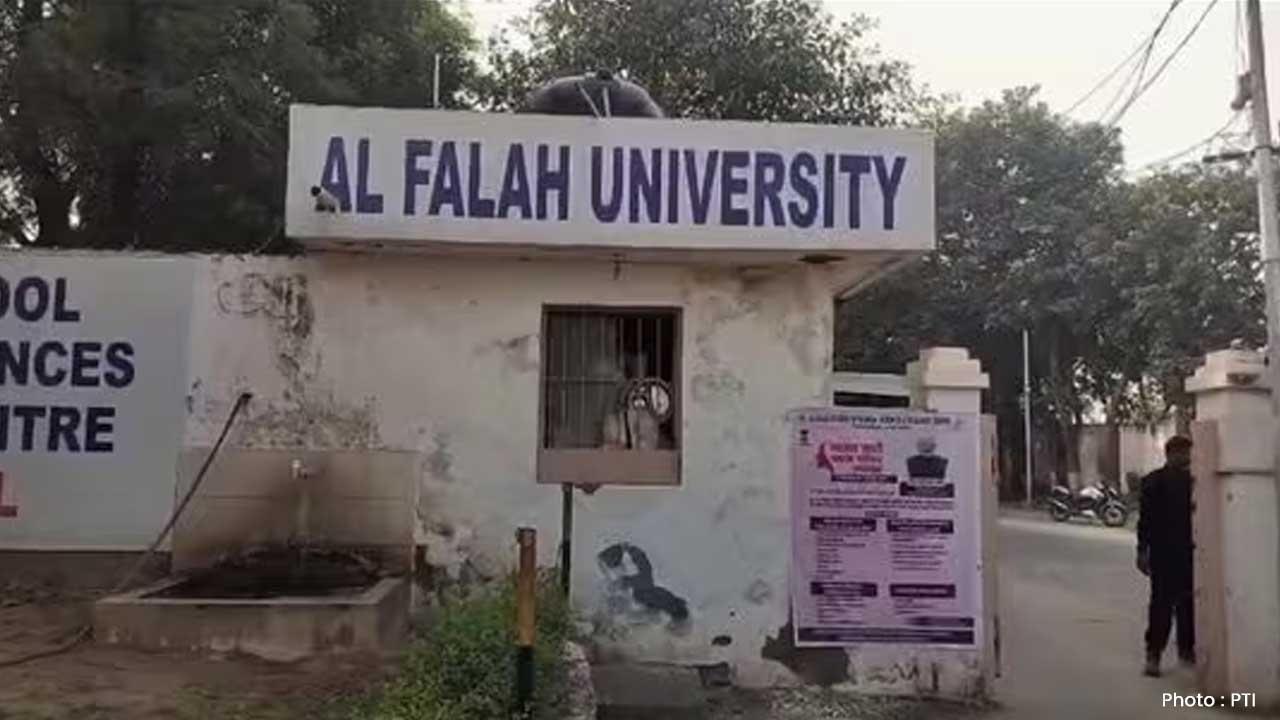
The inquiry into last Monday's deadly explosion in Delhi has increasingly targeted four physicians from Al Falah University in Faridabad, located about 45 km from the capital. These individuals are linked to the Pakistan-based militant group Jaish-e-Mohammad, although the institution asserts it bears no responsibility for their alleged activities.
The blast, situated near the Red Fort Metro Station, claimed the lives of at least 13 people. DNA analysis has confirmed Dr. Umar Mohammad as the individual operating the Hyundai i20 involved in the attack. The other detainees—Dr. Muzammil Shakeel, Dr. Adeel Rather, and Dr. Shaheed Saeed—are currently in police custody.
Sources within the investigation have revealed that the quartet managed to gather funds amounting to Rs 20 lakh to facilitate terror operations throughout Delhi. Investigators suggest they intended to execute a series of explosions in the National Capital Region on December 6, marking the anniversary of the Babri Masjid demolition in 1992. The entire sum was entrusted to Dr. Umar, who also played a pivotal role in acquiring around 26 quintals of NPK fertilizer from nearby markets for approximately Rs 3 lakh, aiming to use it for creating improvised explosive devices (IEDs).
The expansive 70-acre campus of Al Falah University has emerged as a significant location for orchestrating these activities. Investigators have identified room 13 in building 17, where Dr. Muzammil is said to reside, as a site for crucial planning sessions concerning the attacks in Delhi and Uttar Pradesh.
Furthermore, authorities have uncovered instances of chemical smuggling from the university's laboratory to facilitate bomb-making. Reports indicate that Dr. Umar and Dr. Shaheed arranged for specific chemicals that were subsequently stored in rented facilities in the villages of Dhauj and Taga. Forensic examinations discovered chemical traces, digital evidence, and encrypted notebooks containing coded messages linked to the suspects and the university lab.
The blast was reportedly executed using ANFO, a powerful explosive consisting of ammonium nitrate and fuel oil. Police operations in Faridabad have recovered over 2,000 kg of explosive materials, including 350 kg of ammonium nitrate
In light of these developments, Al Falah University has publicly denounced the blast and insists it has no affiliation with the seized doctors other than their official roles. Vice-Chancellor Bhupinder Kaur Anan has expressed concern over attempts to tarnish the university's reputation.
As the investigation progresses, authorities are meticulously dissecting the network, financial backing, and planning involved in the attack, resulting in increased security measures in Delhi and its adjacent areas.








DAE Achieves Remarkable Growth in Q1 2026 With Record Revenue
Dubai Aerospace Enterprise announces impressive financial results for Q1 2026, reflecting a surge in

Price Increase for Sony PS5 in Southeast Asia Effective May 1
Sony announces a price increase for the PS5 across Southeast Asia starting May 1, 2026, impacting ga

Potential ‘Super El Niño’ in 2026: Understanding the Climate Risks
Could a Super El Niño emerge in 2026? Discover its implications and potential global climate impacts

Global Energy Crisis Intensifies: Markets React to Oil Supply Challenges
Markets are on edge as oil disruptions escalate, influencing prices and economic stability. Explore

Must-See Tourist Spots in London You Can't Overlook
Explore London's essential attractions, from royal landmarks to vibrant markets, ensuring an unforge

Ultimate Guide to Snagging Cheap Flights in 2026
Unlock the secrets to booking affordable flights in 2026 with insightful tips and strategies tailore




