Post by : Shakul
The humanoid robotics sector in China is advancing rapidly, establishing the nation as a leader on the global robot manufacturing stage. Despite the technological prowess showcased by local companies and the volume of orders they've secured, experts argue that the primary challenge lies in creating demand that can keep pace with the soaring production rates.
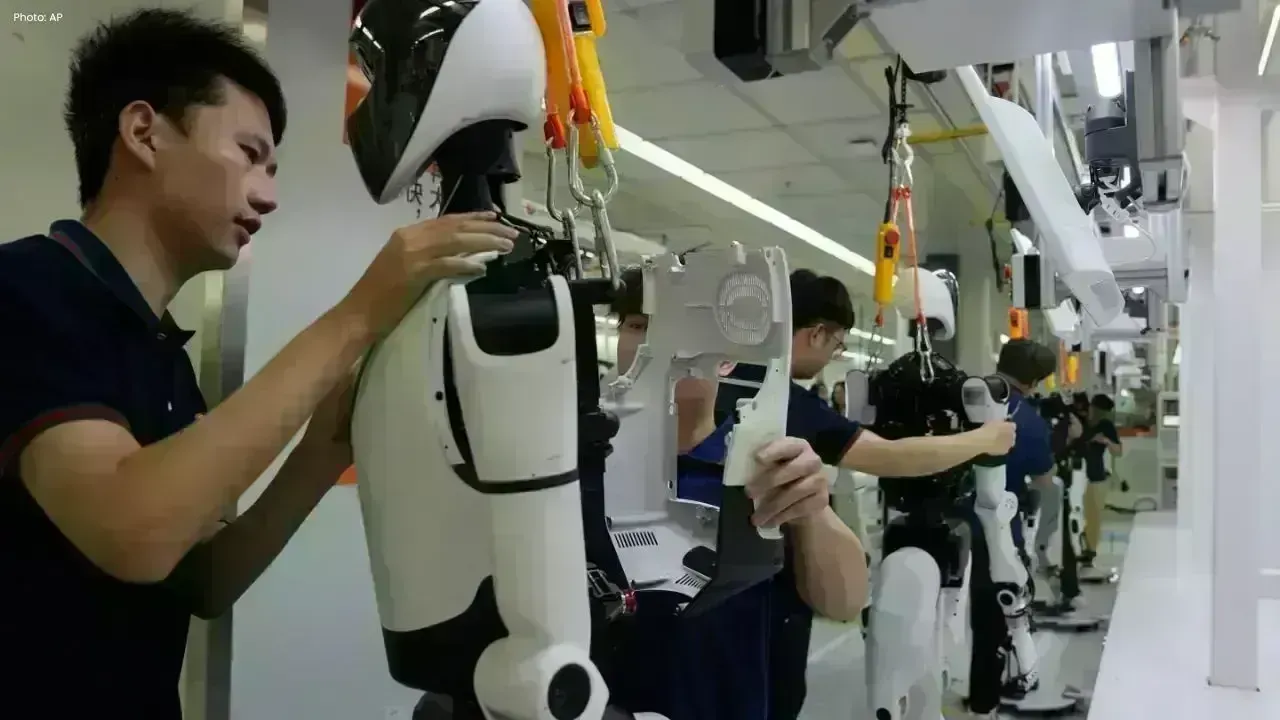
Humanoid robots are increasingly on display throughout China, performing tasks like brewing coffee, directing visitors, organizing packages, managing traffic, and aiding in customer service. These showcases demonstrate the country's aspiration to dominate a market that could potentially reach trillions in value over the next few decades.
Top robotics firms in China, such as Matrix Robotics and EngineAI, are making substantial investments to develop AI-driven humanoid machines capable of various commercial and industrial tasks. With robust manufacturing frameworks and government support, these enterprises are expediting production faster than many competitors abroad.
However, experts warn that the practical applications of many humanoid robots remain limited. While these machines excel in controlled settings, adapting to the unpredictability common in homes, factories, and public areas poses significant challenges. Thus, widespread commercial adoption is slower than projected.
Analysts observe that, although China leads the global market for humanoid robot shipments, a large portion of the sales are made to research bodies, state enterprises, and pilot initiatives, rather than stemming from consumer demand. The high production costs, maintenance needs, and limited versatility restrict broader usage across various sectors.
Recognizing the importance of robotics and AI for future economic development, China’s government is heavily investing in these sectors. This support, along with favorable policies and technological progress, has enabled local companies to gain a competitive edge. Currently, Chinese manufacturers dominate the majority of global humanoid robot shipments and are continuously offering more cost-effective models.
Looking forward, industry experts anticipate that advancements in AI, data analysis, and machine learning will progressively enhance robot functionalities and lower production costs. If technology evolves as expected, humanoid robots could become prevalent in logistics, manufacturing, healthcare, and homes. Nonetheless, achieving widespread acceptance will depend both on manufacturing capabilities and proving the utility of these robots in daily life.










Achieve Radiant Skin with This Simple Rice Flour Treatment
Transform your skincare routine! Discover how a rice flour mix can restore your skin's glow without

Meta Unveils Subscription Plans for Instagram, Facebook, and WhatsApp
Meta introduces new subscription plans for users of Instagram, Facebook, and WhatsApp, featuring enh

Suvarna Joy on Education Leadership, Resilience, and Building Purpose Through Adversity in the UAE
Suvarna Joy shares her journey of education leadership, motherhood, faith, and resilience within the

Anticipated Dates for UAE Eid Al Adha 2026 Unveiled by Astronomical Experts
Experts predict Eid Al Adha 2026 in the UAE to start on May 27, prompting early holiday planning amo

DAE Achieves Remarkable Growth in Q1 2026 With Record Revenue
Dubai Aerospace Enterprise announces impressive financial results for Q1 2026, reflecting a surge in

Price Increase for Sony PS5 in Southeast Asia Effective May 1
Sony announces a price increase for the PS5 across Southeast Asia starting May 1, 2026, impacting ga




