Post by : Shweta
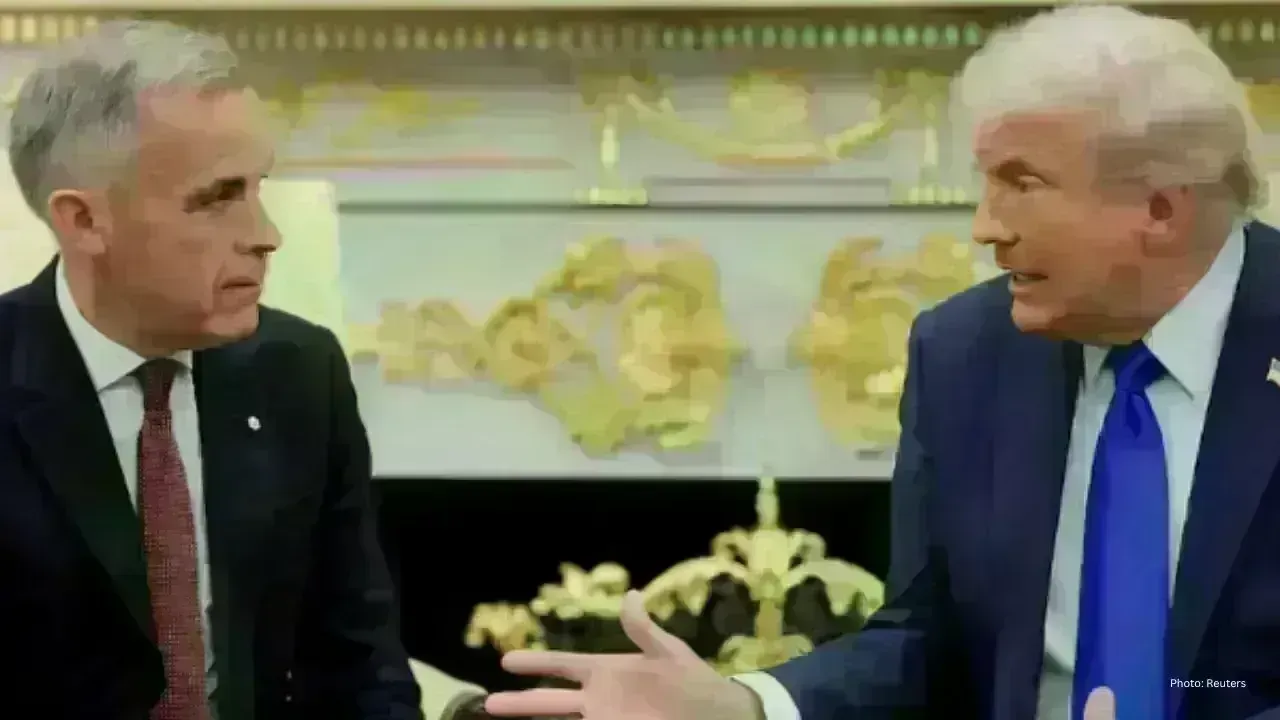
With a strong majority under his belt, Mark Carney now faces a crucial hurdle—overhauling Canada's trade relationship with the United States during Donald Trump's presidency. This strengthened political position enables Carney to engage in negotiations more freely, even when faced with tough or unpopular choices.
A significant deadline approaches on July 1 for Canada, the United States, and Mexico regarding their current North American trade pact. The nations must make a decision: preserve the existing agreement, renegotiate its stipulations, or implement annual reviews until its expiration in 2036. Carney is anticipated to advocate for a reformed deal, mainly to resolve persistent U.S. tariffs on Canadian steel, aluminum, and automotive products, which have posed challenges for Canadian sectors.
Previously, Carney asserted that a majority government would afford him the authority to tackle trade disputes with Washington more efficiently. Now that he possesses that mandate, both analysts and the public have elevated expectations. There's a common belief that Canadians are looking for definitive outcomes, particularly in diminishing tariffs and bolstering economic conditions domestically.
Despite Carney's vigorous global diplomacy and the many international trade agreements ratified over the past year, Canada remains heavily reliant on the U.S., with almost 70% of its exports directed there. This dependency has ignited concerns within his administration, prompting Carney to label it a "weakness" that requires attention. His overarching plan encompasses diversifying trade with other nations, but immediate focus is needed to resolve U.S. issues.
Experts posit that Carney's solid majority provides him the latitude to explore concessions that may have been challenging under a less stable government. This might involve easing restrictions in Canada's protected dairy sector or revising provincial trade conventions. However, these actions may encounter pushback domestically from industry representatives and regional authorities.
Meanwhile, critics, including Pierre Poilievre, have lambasted Carney for not hastening efforts against U.S. tariffs and failing to initiate formal negotiations. Detractors contend that while Carney has concentrated on international leadership, he must now direct his focus towards domestic economic hurdles.
Economic issues are increasingly pertinent to Canadians. Recent statistics reveal rising unemployment alongside soaring food prices, making living costs a pivotal concern. Analysts caution that while Carney isn't entirely to blame for the present economic strain, public tolerance may dwindle if visible improvements are not forthcoming.
In the upcoming months, Carney's leadership will be scrutinized on two primary fronts: securing a favorable trade deal with the United States and addressing domestic economic issues. His majority government offers an opportunity for decisive action but also raises the bar for expected results.









Price Increase for Sony PS5 in Southeast Asia Effective May 1
Sony announces a price increase for the PS5 across Southeast Asia starting May 1, 2026, impacting ga

Potential ‘Super El Niño’ in 2026: Understanding the Climate Risks
Could a Super El Niño emerge in 2026? Discover its implications and potential global climate impacts

Global Energy Crisis Intensifies: Markets React to Oil Supply Challenges
Markets are on edge as oil disruptions escalate, influencing prices and economic stability. Explore

Must-See Tourist Spots in London You Can't Overlook
Explore London's essential attractions, from royal landmarks to vibrant markets, ensuring an unforge

Ultimate Guide to Snagging Cheap Flights in 2026
Unlock the secrets to booking affordable flights in 2026 with insightful tips and strategies tailore

The Impact of Consistent Small Investments on Wealth Building
Discover how investing small amounts regularly can positively transform your financial future over t




